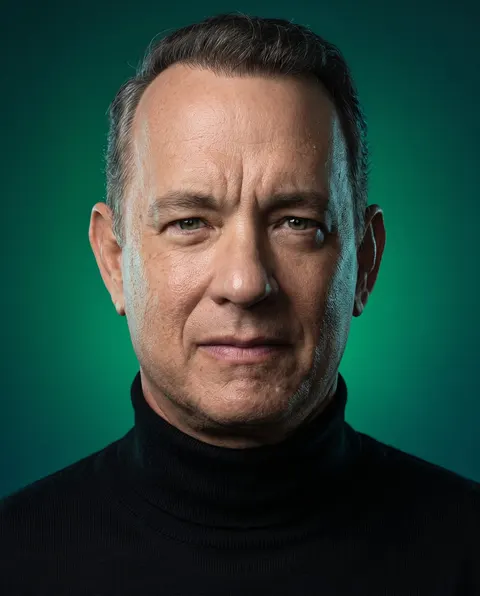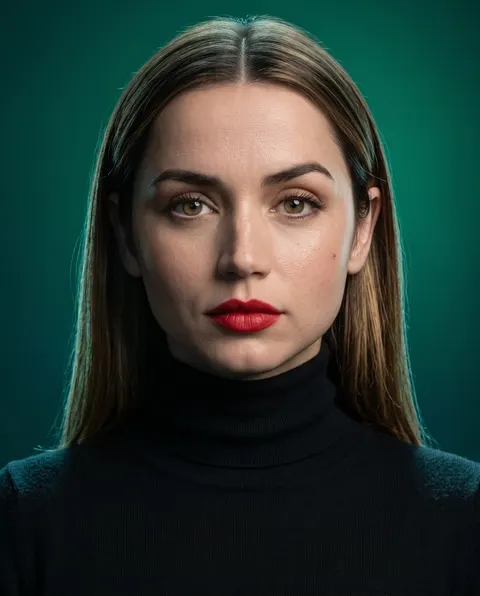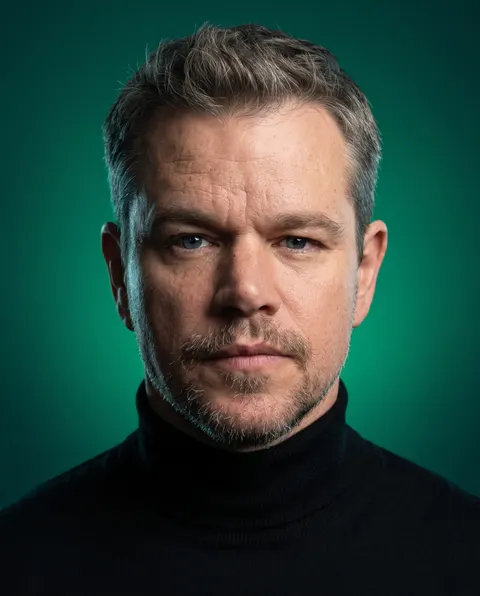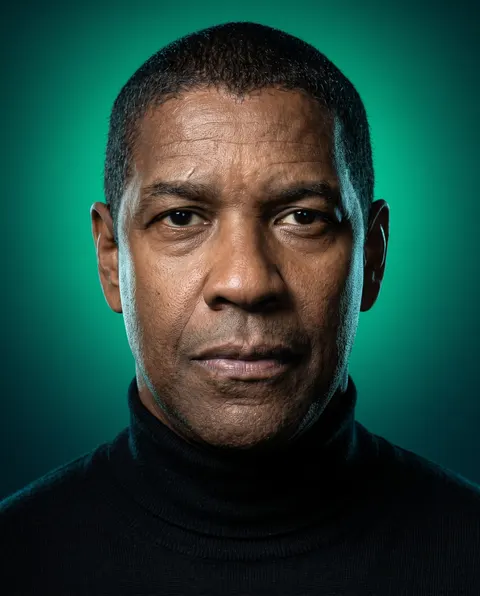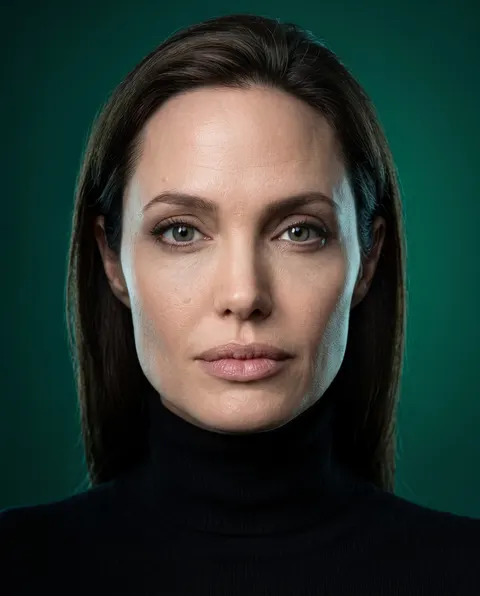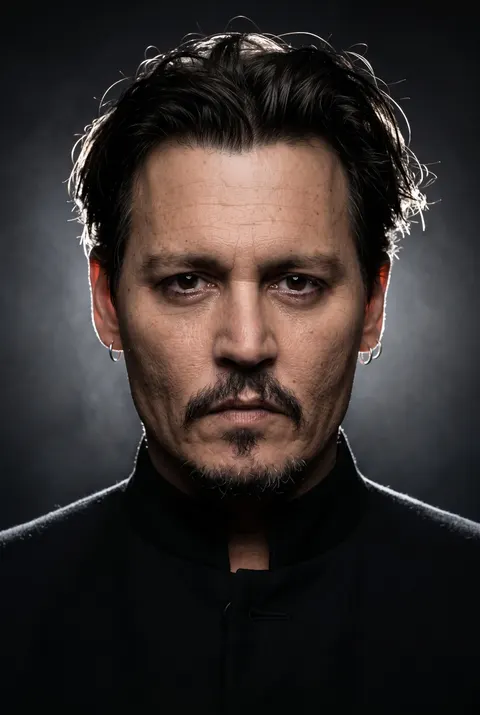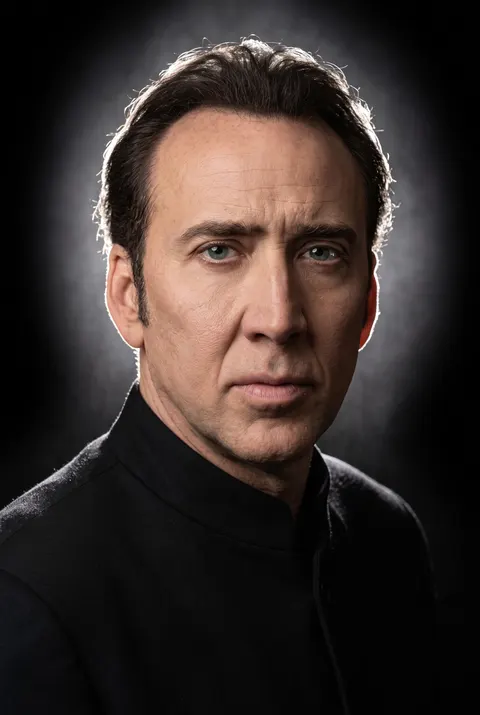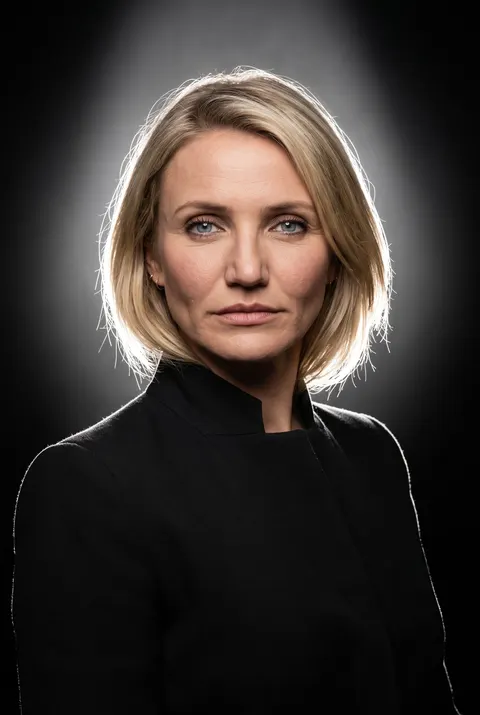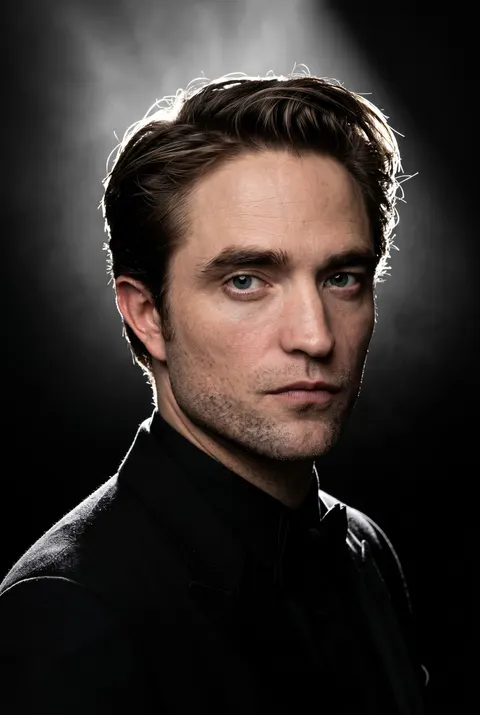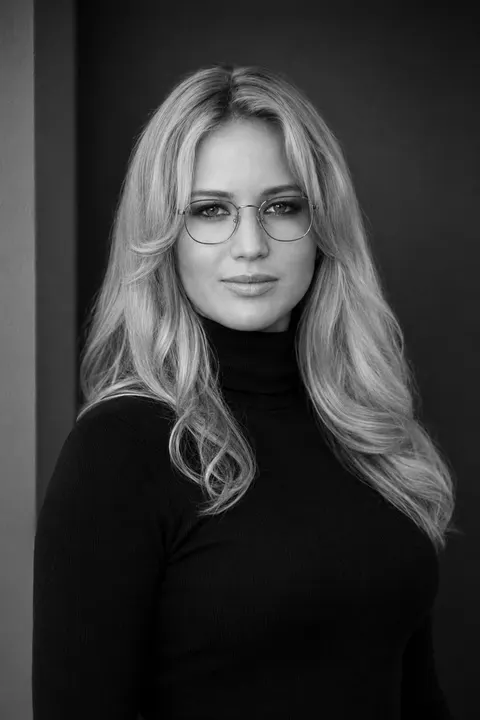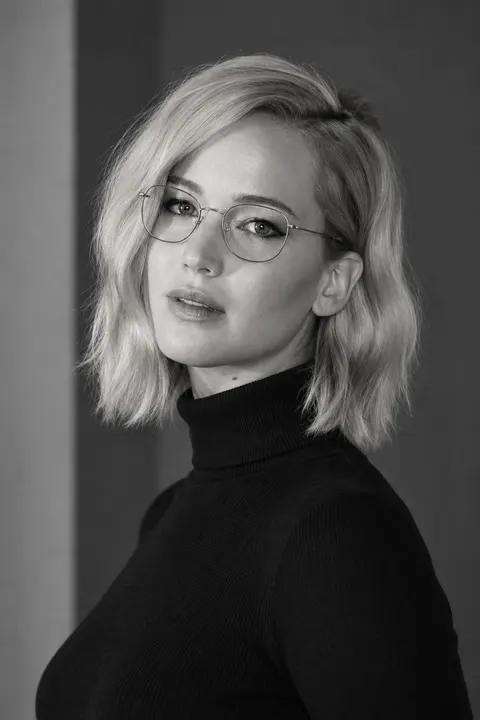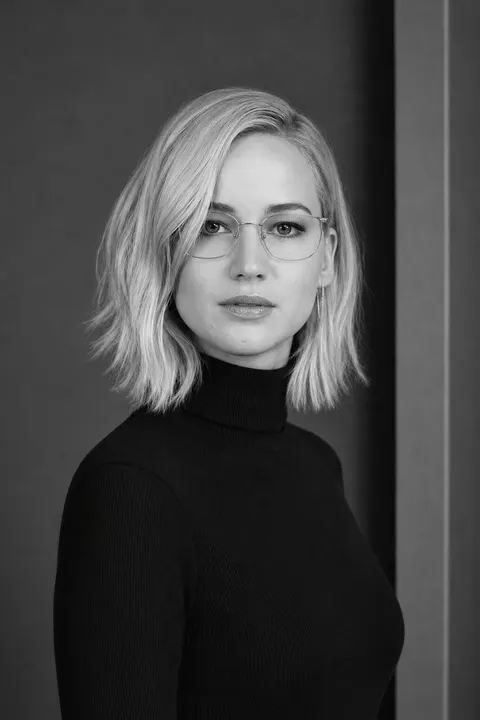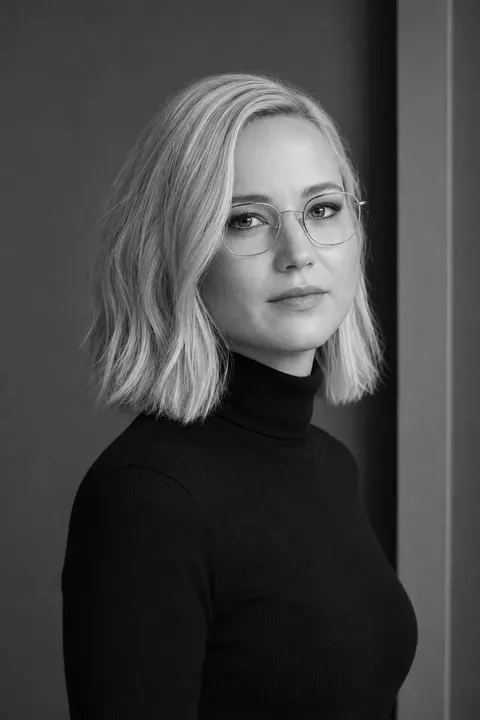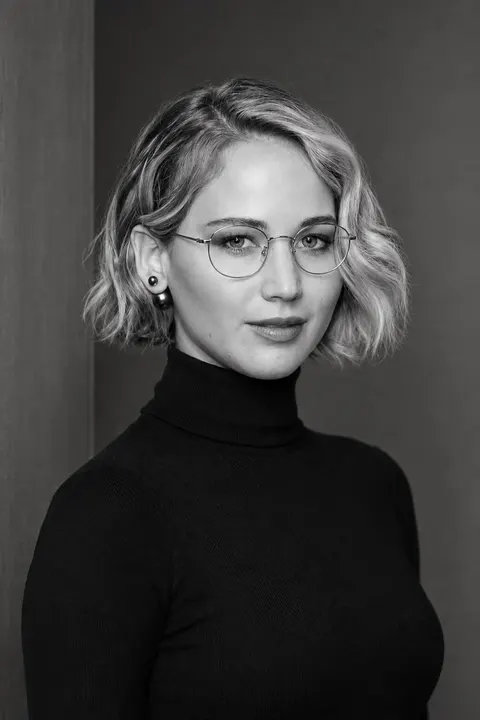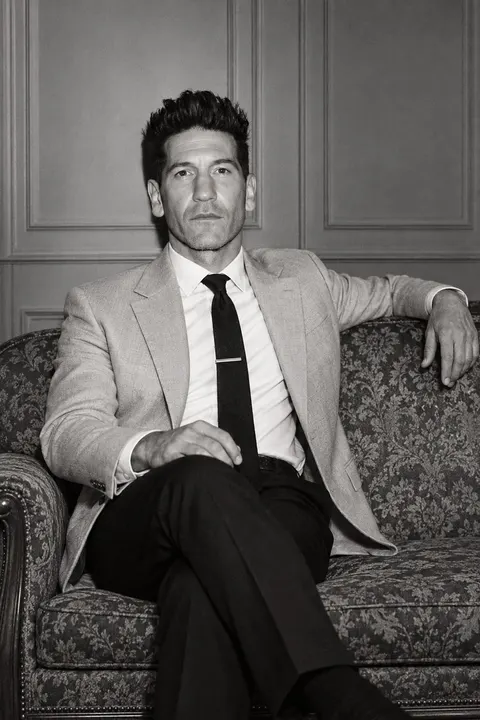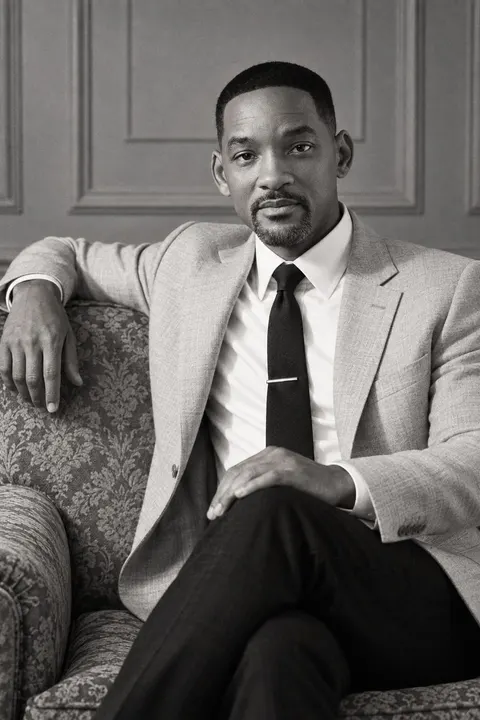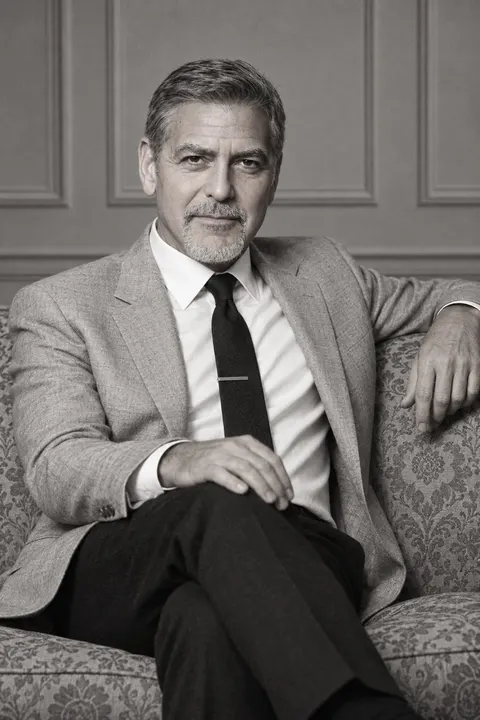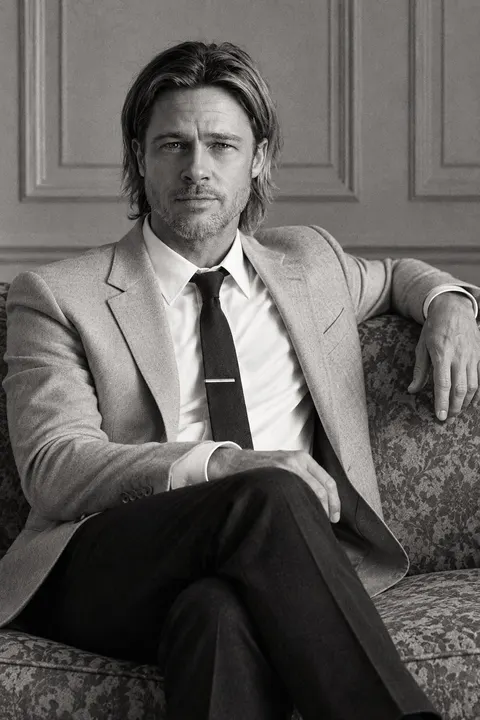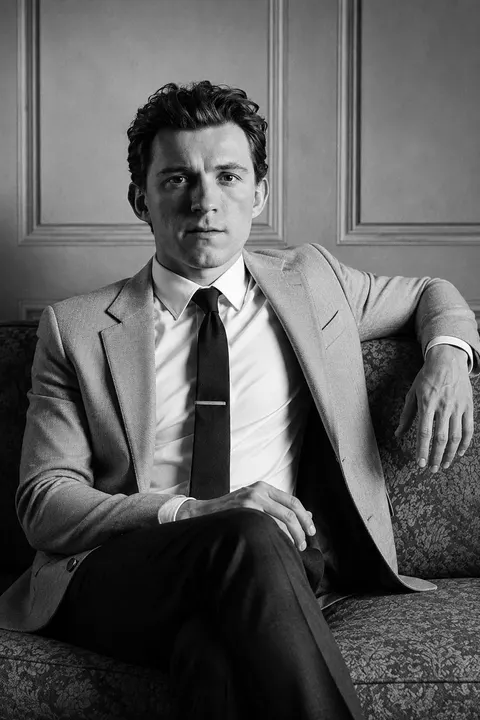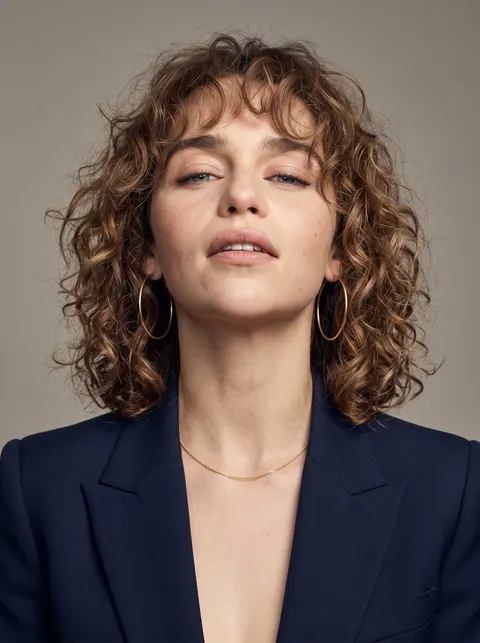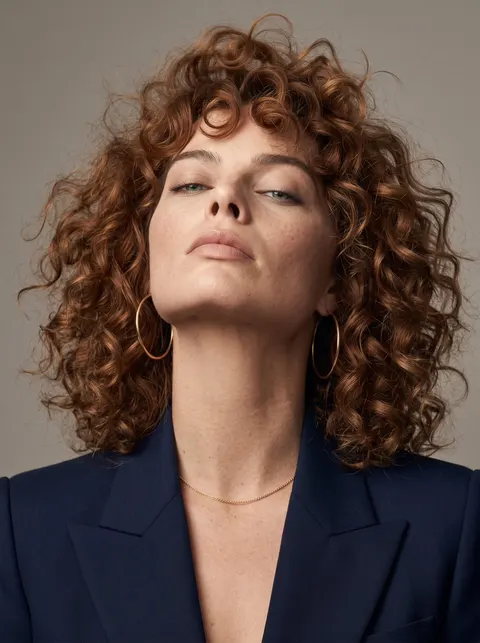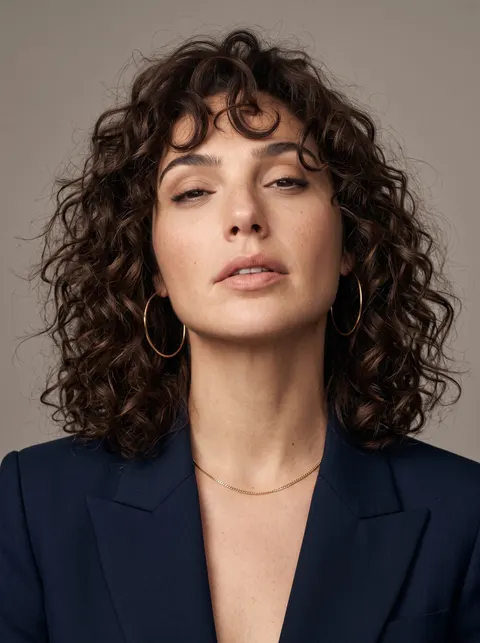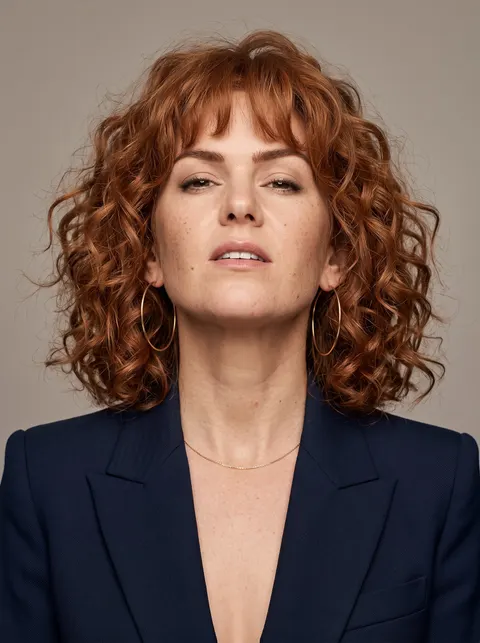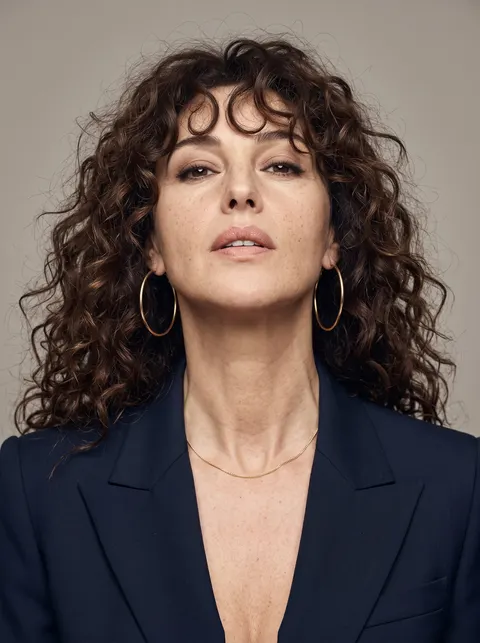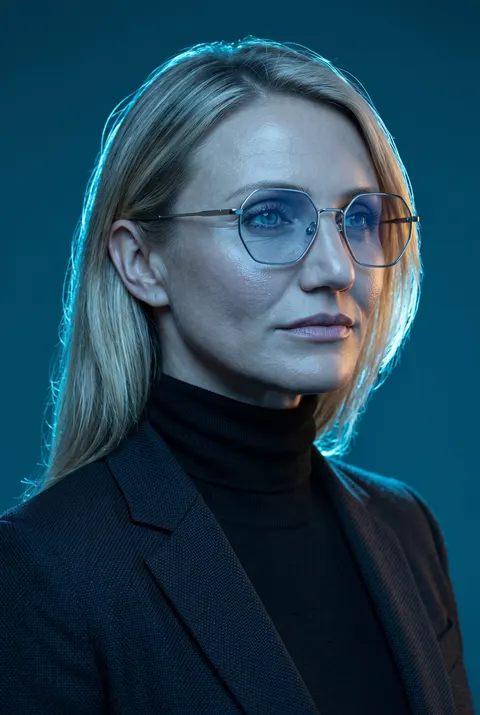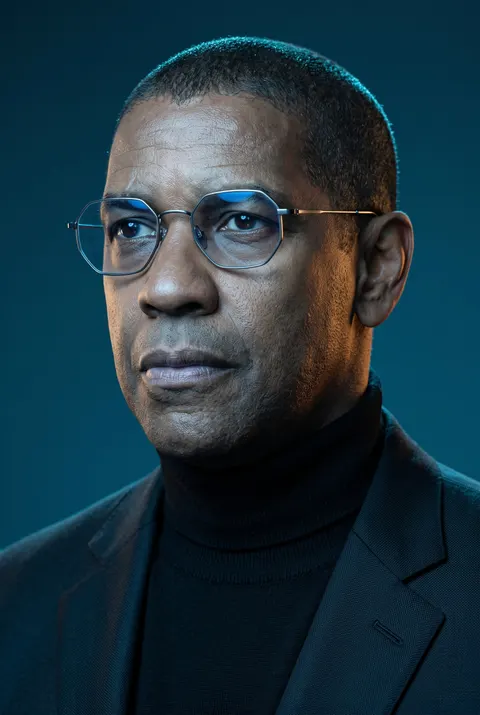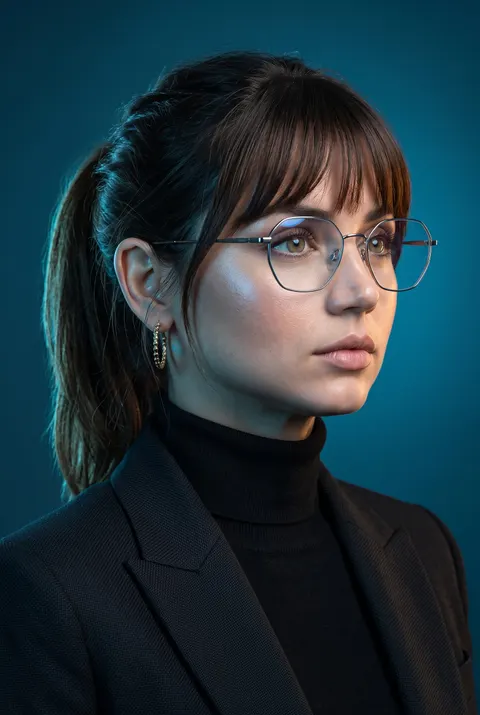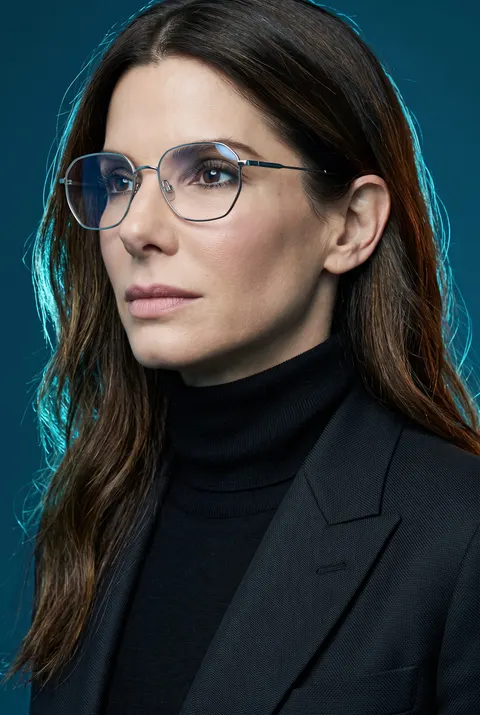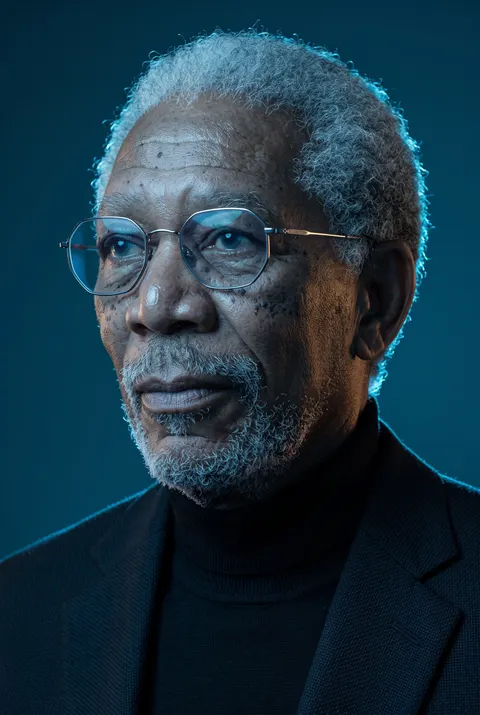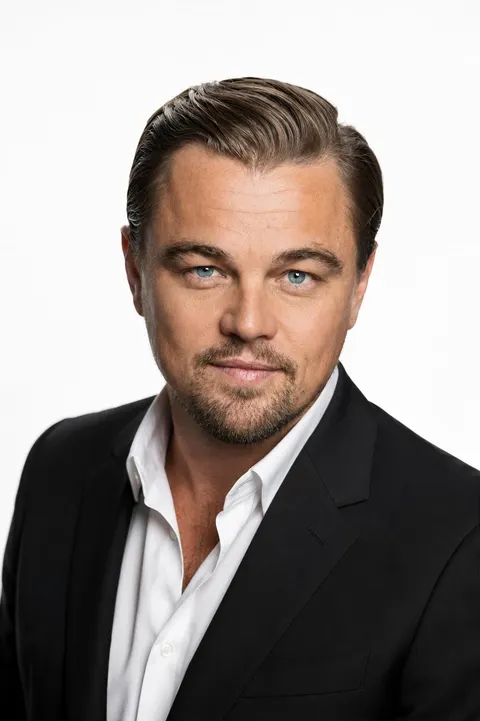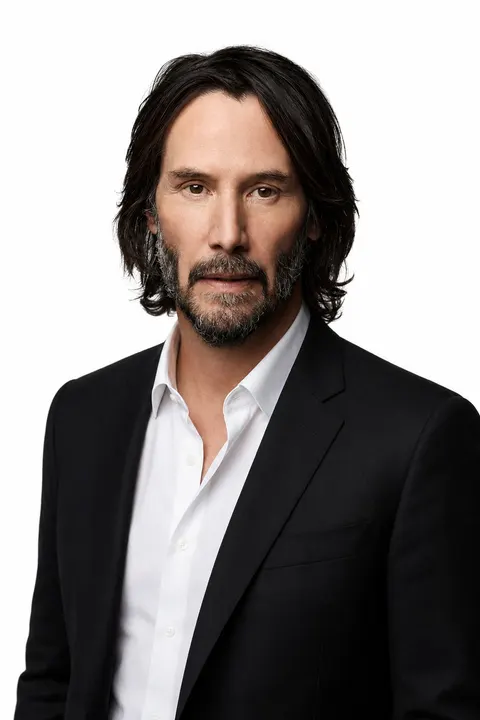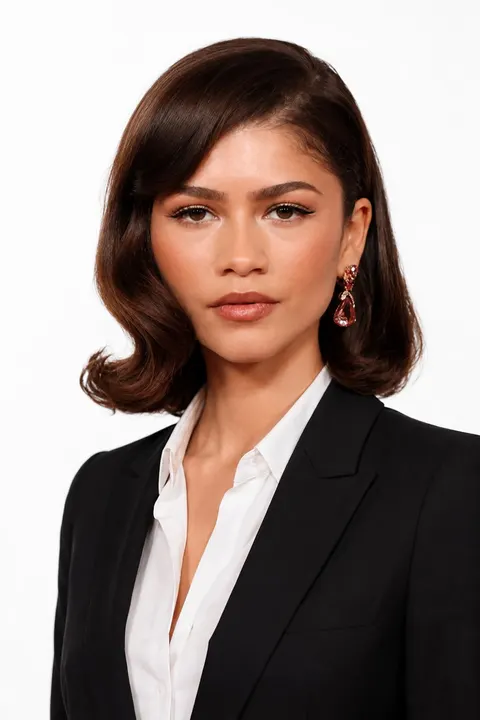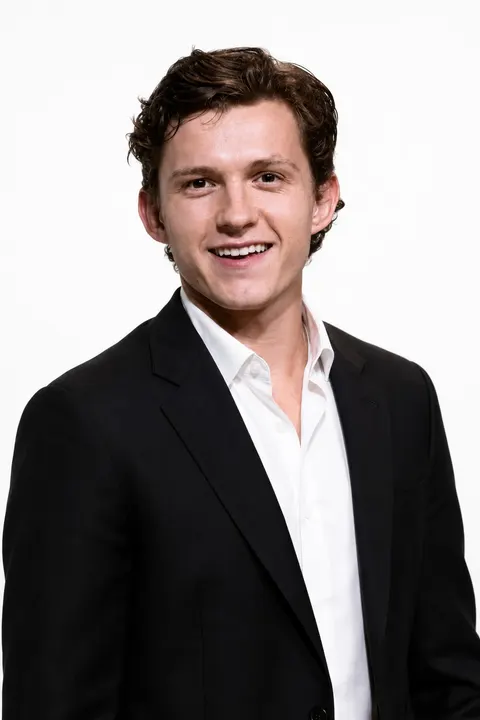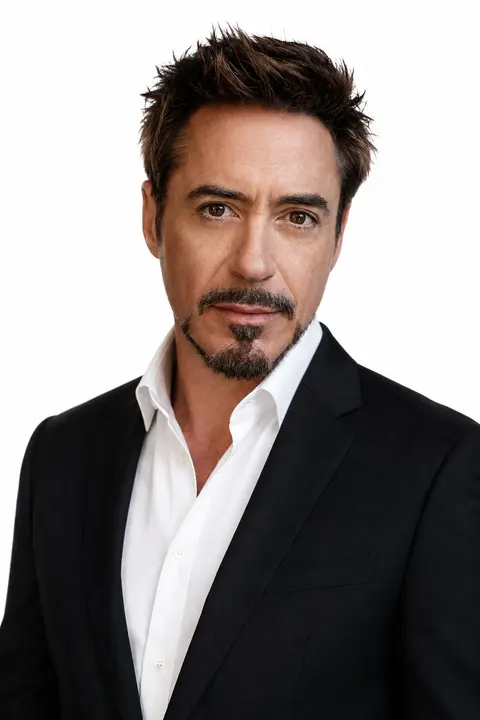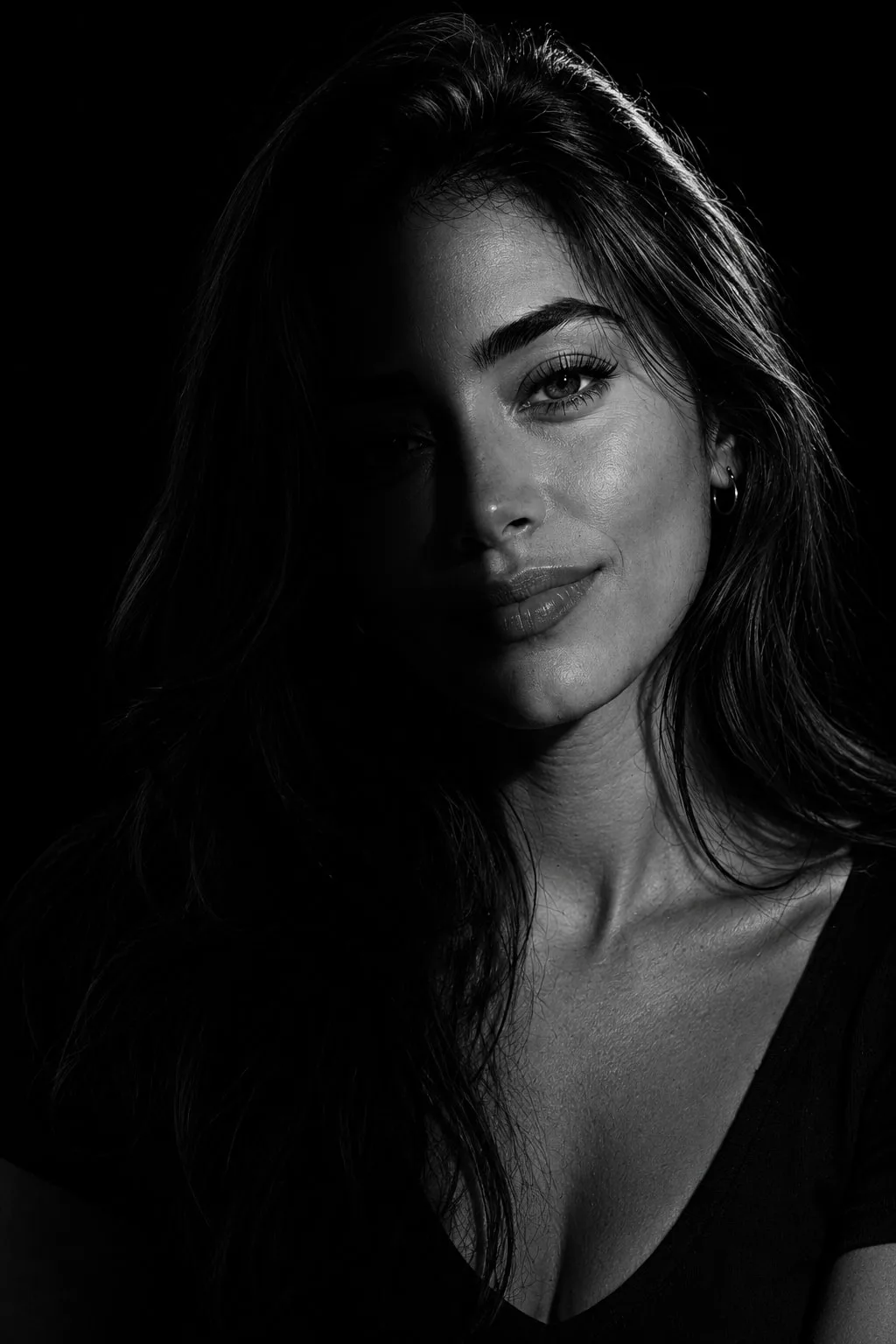
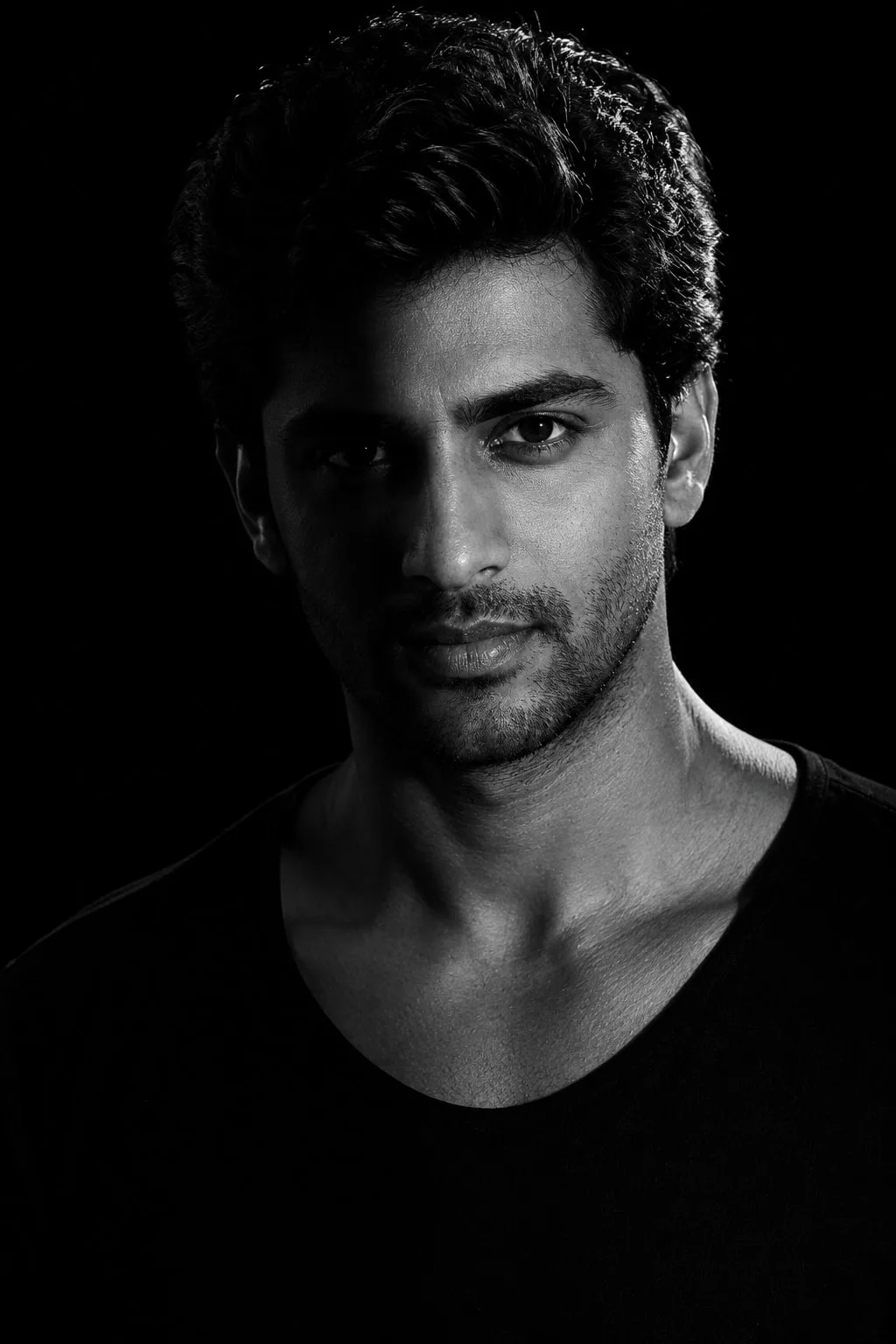
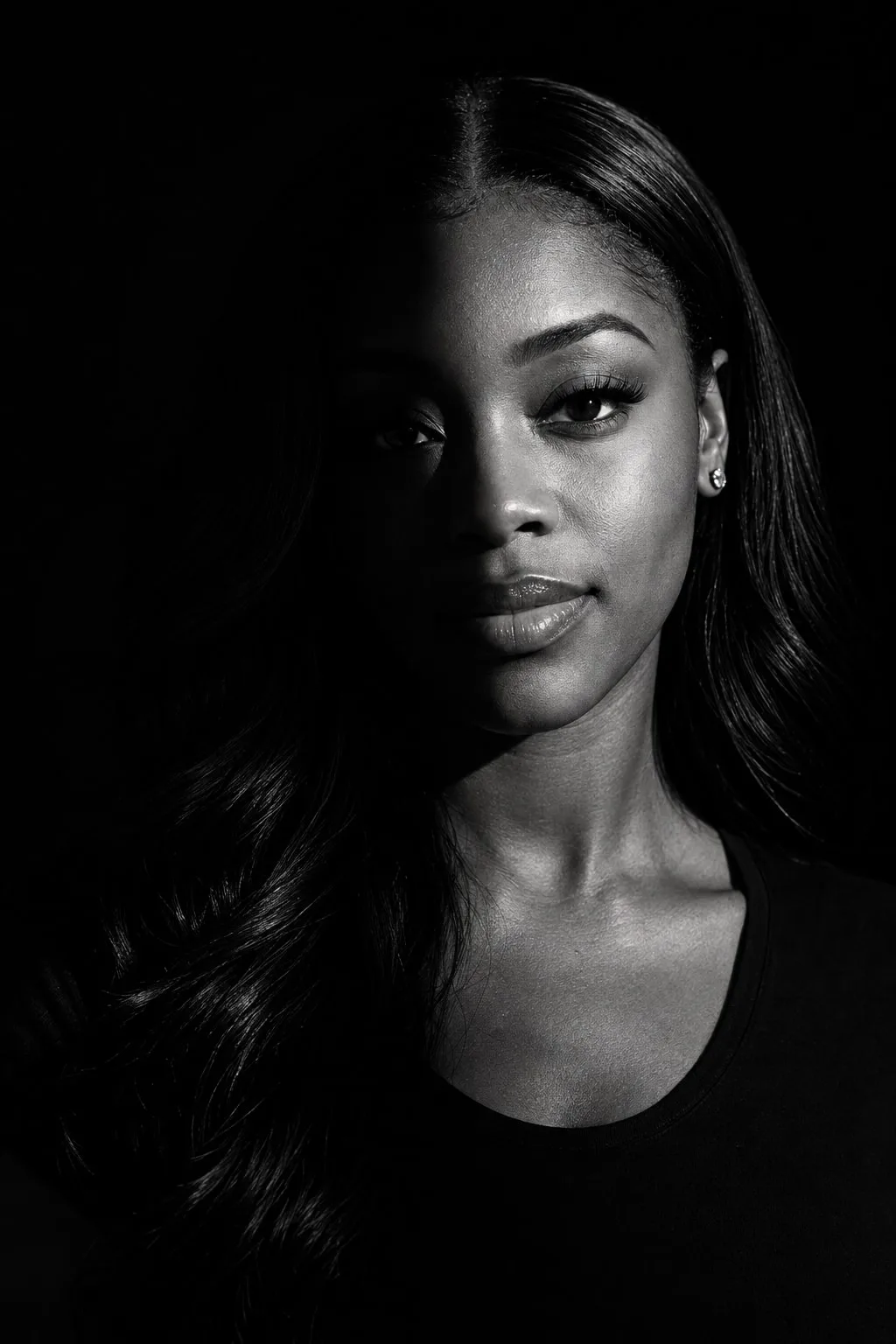
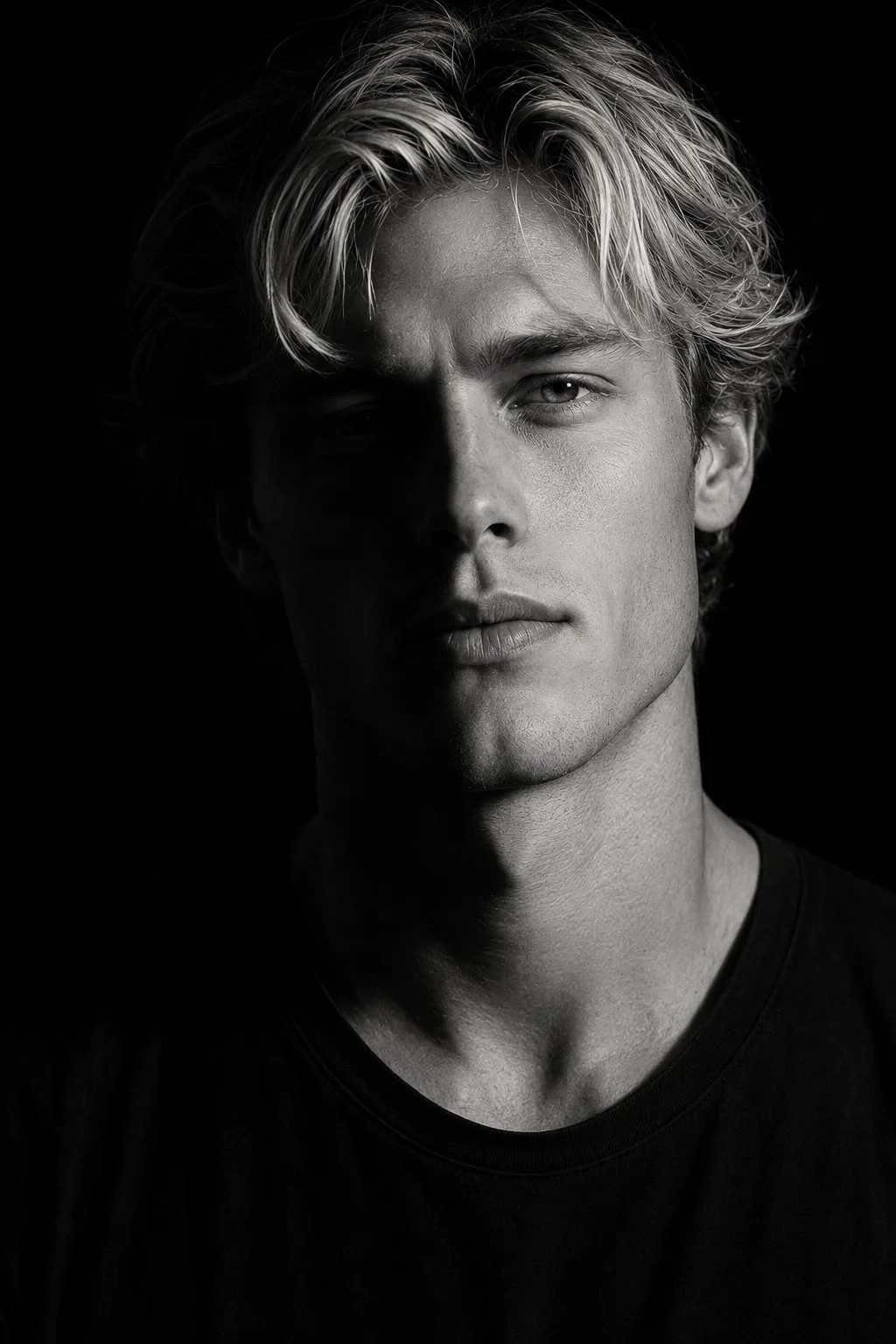
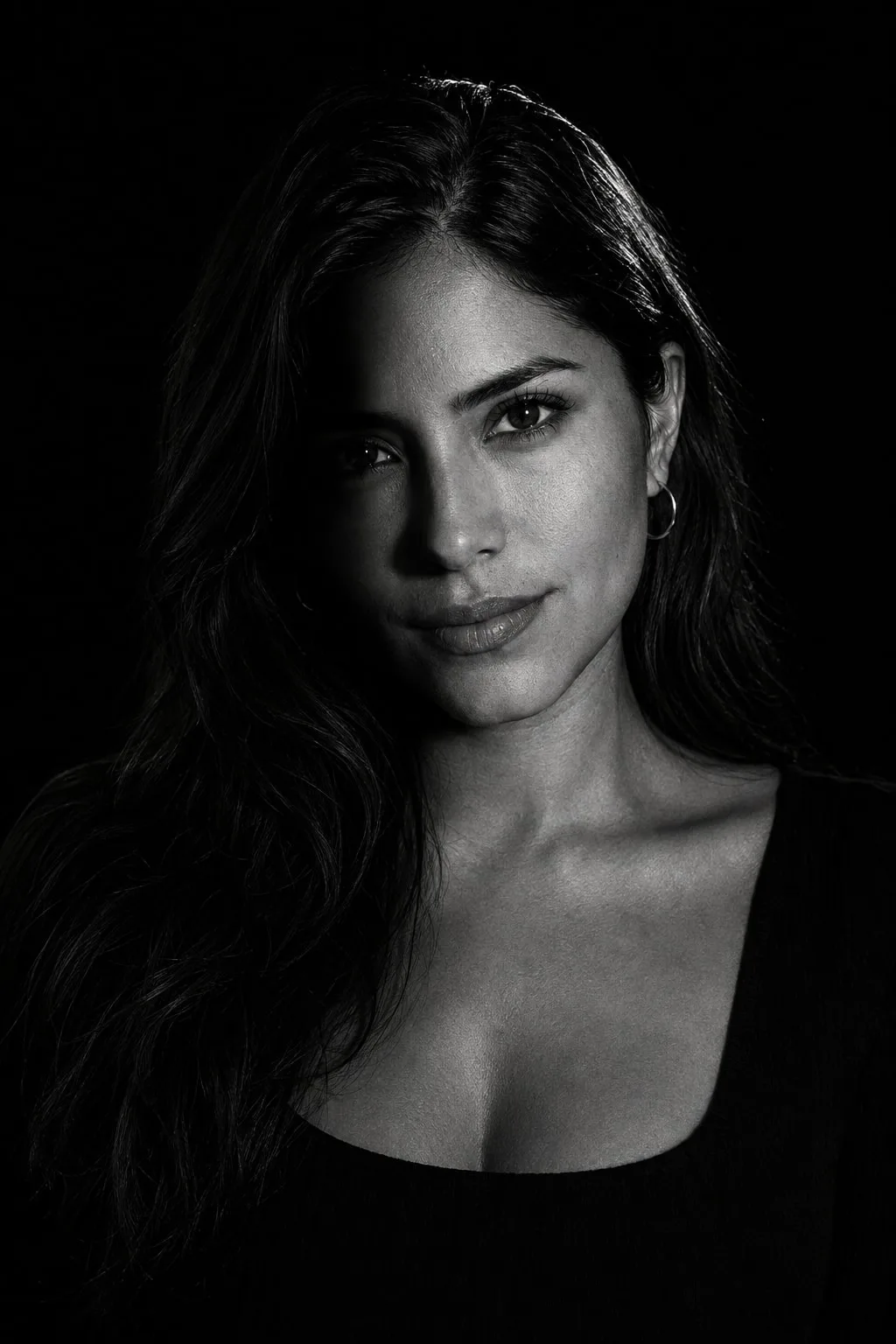
Low-Key Monochrome Chiaroscuro Portrait
Fine-art black and white portrait prompt: single hard light, deep chiaroscuro shadows, film-grade monochrome look. Copy the full locked master prompt.
Prompt
# LOCKED MASTER PROMPT — LOW-KEY MONOCHROME CHIAROSCURO PORTRAIT

## ROLE

You are a world-class black-and-white fine-art portrait photographer working in a blacked-out studio with a single hard light source.
Create a premium, photorealistic low-key monochrome portrait using the **ATTACHED REFERENCE IMAGE as the identity source**.
The output must look like a professionally lit, film-grade editorial portrait captured on a high-end full-frame or medium-format camera — NOT like an AI-generated image, a desaturated color photo, a 3D render, or a phone-app "dramatic" filter.

Aspect ratio: **2:3 vertical.**

---

# 1. IDENTITY LOCK — ABSOLUTE PRIORITY

Use the person from the **ATTACHED REFERENCE IMAGE**.
Preserve the person's identity with maximum fidelity.
DO NOT redesign, beautify, reinterpret, slim, widen, or idealize the person.

Preserve exactly:

* Facial geometry and skull proportions
* Face shape and width-to-height ratio
* Forehead height and hairline shape
* Brow ridge projection
* Eyebrow shape, thickness and spacing
* Eye shape, size, spacing and eyelid structure
* Nose bridge, tip and nostril structure
* Cheekbone height and projection
* Jawline definition and angle
* Chin shape and projection
* Lip shape, thickness and proportions
* Natural facial asymmetry
* Skin tone value (how light or dark the skin renders in monochrome)
* Natural skin texture, pores and surface irregularity
* Hair color value, density, growth pattern and hairline position
* Facial hair density, length and growth pattern, if present
* Neck thickness and shoulder width
* Age and apparent age
* Any moles, scars or distinguishing marks

The person must remain unmistakably the same individual as the reference.

**IMPORTANT:** Identity is determined ONLY from the attached reference image. Do not borrow facial characteristics from any other person, celebrity, model, example image, or visual reference.

### SKIN VALUE NOTE
When converting the reference person's skin tone to monochrome, preserve its **relative luminance**. A darker-skinned reference must render as a darker mid-tone, a lighter-skinned reference as a lighter mid-tone. Do NOT normalize every subject to the same grey value.

---

# 2. COMPOSITION LOCK — CRITICAL

### Camera position
Place the camera at **eye level, within 5 degrees above or below** the subject's eye line.
The lens axis is horizontal and aligned with the eyes.

Do NOT use a low hero angle.
Do NOT use a high angle looking down.
Do NOT tilt the camera (no dutch angle).
Do NOT introduce wide-angle perspective distortion.

### Orientation
The subject's head is rotated approximately **10–20 degrees** away from the lens axis, toward the shadow side, so that slightly more of the lit side of the face is presented to the camera.
The far ear on the lit side remains **fully visible**.
The shoulders are rotated approximately **15–25 degrees**, squarer than a classic three-quarter pose but not perfectly frontal.

Do NOT produce a perfectly symmetrical straight-on pose.
Do NOT produce a profile or near-profile pose.

---

# 3. FRAMING LOCK — CRITICAL

Use a **tight close-up portrait**, framed from the top of the head to the upper chest.

Show:

* Head, with the hair mass reaching and **slightly cropped by the top frame edge**
* Full face
* Neck
* Visible collarbone and sternal notch area
* The neckline of a plain dark t-shirt at the lower portion of the frame

The head (top of hair to chin) occupies approximately **55–62% of the total frame height**.
The face at its widest occupies approximately **38–45% of the frame width**.
The eye line sits approximately **28–34% down from the top of the frame**.
The chin sits at approximately **55–60%** down from the top.

### HEADROOM LOCK
Headroom is **intentionally minimal to zero**. The top of the hair may be lightly clipped by the upper frame edge.
Do NOT add generous empty space above the head.
Do NOT push the subject down into the lower half of the frame.

### CROP LOCK
Shoulders are **partially cropped** by the left and right frame edges; the full shoulder line is not shown.
Do NOT crop into the forehead or above the eyebrows.
Do NOT crop the chin.
Do NOT pull back into a medium or waist-up shot.
Do NOT produce a full-torso composition.

---

# 4. SUBJECT POSITION

Place the head **slightly right of frame center**, offset by approximately **5–10% of frame width** toward the lit side.
The left portion of the frame — approximately the leftmost **25–35% of frame width** — is occupied by the subject's unlit shadow side dissolving into the black background.
Negative space is deliberately **asymmetric**: heavy darkness on the shadow side, tighter margin on the lit side.

---

# 5. HEAD, GAZE & EXPRESSION

The head is level, with no more than **5 degrees** of lateral tilt.
The chin is level or lowered by a maximum of **5 degrees** — never raised.

The subject looks **directly into the lens** with a hard, unbroken stare.
Both eyes are open. The eye on the lit side is fully readable with a small, hard specular catchlight. The eye on the shadow side is only faintly discernible within deep shadow.

Expression:

* Intense
* Serious
* Emotionally restrained
* Slightly confrontational
* Brow subtly furrowed, with a faint vertical crease between the eyebrows
* Lips closed, relaxed, neither pursed nor tense

Do NOT smile.
Do NOT open the mouth.
Do NOT produce a soft, warm, friendly or approachable expression.
Do NOT produce an exaggerated scowl, snarl or theatrical anger.
Do NOT direct the gaze away from the lens.

---

# 6. WARDROBE LOCK

Dress the subject in a **plain black cotton t-shirt with a wide crew or scoop neckline**.

* Matte black jersey cotton
* Fine knit texture, faintly readable only where the key light grazes the shoulder
* No collar, no buttons, no zips
* Simple, unstyled, and almost entirely absorbed into the darkness

The garment is a **background element**, not a subject. It should occupy the lower portion of the frame at near-black density, with only the neckline edge and a narrow lit shoulder area separating it from the background.

Do NOT add logos, prints, text, graphics or patterns.
Do NOT add a jacket, shirt, hoodie, collar or layered garment.
Do NOT add jewelry, chains, necklaces or accessories unless present in the identity reference.
Do NOT render a white, grey or colored garment.

---

# 7. BACKGROUND LOCK — CRITICAL

Use a **pure, featureless black background** filling the entire frame behind the subject.

* The background is unlit black studio space, not a lit grey backdrop
* Density is near-absolute black across the whole frame, with no gradient, vignette or falloff pattern
* There is **no visible separation** between the subject's shadow side and the background — the unlit half of the face and body merges seamlessly into darkness

NO objects.
NO furniture, architecture, walls, corners or windows.
NO visible studio equipment, stands, cables, modifiers or light sources.
NO texture, fabric weave, wrinkles or backdrop seams.
NO smoke, haze, mist or atmospheric effects.
NO gradient, glow, halo or light pooling behind the head.
NO cast shadow of the subject on any surface.
NO text, watermark, border or graphic element.

---

# 8. LIGHTING LOCK — CRITICAL

Use a **single hard key light**. This is a one-light setup.

### KEY LIGHT
Position the key approximately **50–65 degrees** to the camera-right side of the lens axis, and approximately **30–40 degrees above** the subject's eye level, angled down toward the face.
The source is small and hard relative to the subject — a bare reflector, gridded beauty dish, or small undiffused source at distance.

The key produces:

* Bright specular highlights along the forehead, brow ridge, cheekbone, nose bridge, upper lip, lower lip, chin, jawline, side of the neck and the collarbone
* A visibly **glossy, slightly sheened skin surface** where the light strikes at a grazing angle
* Sharp micro-shadowing that reveals pores, stubble and fine skin texture
* One hard, small, defined catchlight in the lit eye
* Deep, opaque shadow immediately beyond the shadow terminator

### FILL
There is **effectively no fill light**. Key-to-fill ratio is approximately **10:1 or greater**.
The shadow side of the face falls to near-black and retains only the faintest trace of the brow and eye socket.

Do NOT add a fill light, reflector, or bounce.
Do NOT lift the shadow side in post.
Do NOT use a large softbox, octabox or umbrella that would soften the shadow edge.
Do NOT use flat, frontal or on-axis lighting.
Do NOT use ring light.
Do NOT produce butterfly, clamshell or beauty lighting.

---

# 9. SHADOW TERMINATOR LOCK — CRITICAL

This is the signature of the image and must be reproduced precisely.

A **hard, near-vertical shadow terminator runs down the face**, dividing it into a lit half and a dark half.

Path of the terminator:

* Enters at the hairline on the shadow side of the forehead
* Runs down across the forehead
* Crosses the inner end of the shadow-side eyebrow, leaving the shadow-side eye in darkness
* Passes along the side of the nose bridge, just off the centerline toward the shadow side
* Continues past the corner of the mouth
* Exits along the shadow-side jaw and neck

Terminator character:

* **Hard-edged but not razor-cut** — the transition from full highlight to full shadow occurs across a narrow band, roughly the width of a fingertip at real-world scale
* The transition band retains readable skin texture; it must not band, posterize or clip
* Once past the terminator, the shadow reaches near-black within a short distance

Approximately **35–45% of the visible face area** is in full shadow.

Do NOT soften the terminator into a gradual wraparound gradient.
Do NOT move the terminator to the outer edge of the face, leaving the face mostly lit.
Do NOT move the terminator past the centerline, leaving the face mostly dark.
Do NOT create a jagged, broken or double terminator.
Do NOT let the terminator cut across the lit eye.

---

# 10. RIM / EDGE LIGHT

Spill from the key light produces a **narrow bright edge** along:

* The upper contour of the hair on the lit side
* The outer rim of the visible ear
* The lit side of the jawline
* The lit side of the neck and the top of the shoulder

This is **not a separate rim light** — it is grazing falloff from the single key source and must behave accordingly.

Do NOT add a dedicated backlight or hair light.
Do NOT create a continuous outline tracing the entire subject.
Do NOT create a rim on the shadow side of the head, ear, jaw or shoulder.
Do NOT create a neon, glowing or luminous edge.

---

# 11. LIGHTING DIRECTION LOCK

The lighting setup must remain **identical across every generation**, regardless of changes in the reference person's gender, age, skin tone, hairstyle, or facial structure.

The identity changes.
The **lighting does NOT change.**
Key light side, key light angle, key light height, source hardness, absence of fill, and terminator placement stay fixed.
Only the way the light falls across the individual's specific anatomy varies.

---

# 12. CAMERA LOOK

Professional high-end fine-art portrait photography.
Simulate a premium full-frame or medium-format portrait system.

Focal length: approximately **100–135mm**, with clear portrait compression and no perspective distortion of the nose or forehead.
Approximate aperture: **f/2.8 to f/4**.

Focus:

* Critical focus on the **lit eye**
* Eyebrows, eyelashes, nose, lips, stubble and skin texture fully sharp across the lit side of the face
* Very slight focus falloff at the ear and the near shoulder
* The background carries no focus information at all, being pure black

Do NOT use extreme shallow depth of field.
Do NOT render visible bokeh shapes.
Do NOT introduce lens flare, chromatic aberration, or a heavy applied vignette — the darkness comes from lighting, not from a post vignette.

---

# 13. IMAGE QUALITY

Photorealistic.
Ultra-detailed natural skin with clearly visible pores across the lit half of the face.
Fine facial texture including subtle surface irregularity, faint lines and natural blemish character.
Individually resolvable hair strands, particularly along the lit upper hair contour.
Realistic short stubble on the jaw, chin and upper lip, rendered as discrete individual hairs, not as a painted grey mask.
Physically believable shadow density and falloff.
Natural highlight roll-off on the specular skin highlights, with detail retained inside the brightest areas of the forehead and cheekbone.
Fine, organic monochrome film grain at low to moderate intensity, slightly more visible in the darker mid-tones.

No plastic, waxy or airbrushed skin.
No skin smoothing or blemish removal.
No excessive sharpening or edge halos.
No artificial HDR tone-mapped appearance.
No beauty-filter effect.
No CGI, 3D-render or video-game surface quality.

---

# 14. MONOCHROME GRADE LOCK

The image is **true black and white**. There is no color anywhere in the frame.

Tonal structure:

* Deep, rich blacks occupying the majority of the frame area
* Blacks are dense but not banded or posterized
* Highlights are bright and contrasty, but the brightest skin highlights retain texture and are not clipped to flat white
* Mid-tones are compressed, producing a steep contrast curve
* The overall histogram is heavily weighted toward the shadow end

Grade character: high-contrast silver-gelatin print, clean neutral greys with no toning.

Do NOT output a color image.
Do NOT output a partially desaturated or muted-color image.
Do NOT apply sepia, cyanotype, blue-shadow, warm-highlight or split-toned grading.
Do NOT apply selective color or a color accent anywhere in the frame.
Do NOT lift the blacks into a faded, matte or filmic-crush look.
Do NOT flatten the contrast into a soft grey overall tonality.

---

# 15. VISUAL HIERARCHY

The viewer's attention should move in this order:

**Lit eye → Shadow terminator across the face → Jawline and stubble → Neck and collarbone → Surrounding black space**

The lit eye is the unambiguous primary focal point.
The darkness is an active compositional element, not empty filler — it must feel deliberate and controlled rather than underexposed.

---

# 16. NON-NEGOTIABLE RULES

These must NEVER change between generations:

1. True black-and-white monochrome output.
2. Eye-level camera, within 5 degrees.
3. Head rotated 10–20 degrees, shoulders 15–25 degrees.
4. Tight close-up, head to upper chest.
5. Head occupies 55–62% of frame height.
6. Hair reaches and is slightly clipped by the top frame edge.
7. Minimal to zero headroom.
8. Shoulders partially cropped at the side frame edges.
9. Head positioned slightly right of center.
10. Direct, unbroken eye contact with the lens.
11. Intense, serious, closed-mouth expression with a subtly furrowed brow.
12. Plain black wide-neck cotton t-shirt.
13. Pure featureless black background.
14. Single hard key light, camera-right, 50–65 degrees off axis, 30–40 degrees above eye level.
15. No fill light; key-to-fill ratio 10:1 or greater.
16. Hard near-vertical shadow terminator running down the face.
17. 35–45% of the visible face in full shadow.
18. Shadow side merges into the black background with no separation.
19. Rim highlights only on the lit side, as key-light spill.
20. 100–135mm portrait perspective at f/2.8–f/4.
21. Visible pores, skin texture and individual stubble hairs on the lit side.
22. Deep dense blacks with retained highlight detail.
23. 2:3 vertical aspect ratio.

---

# 17. REFERENCE PRIORITY SYSTEM

When interpreting the attached reference image:

### PRIORITY 1 — IDENTITY
The person's facial structure, hair, facial hair, relative skin luminance and natural likeness come exclusively from the attached reference.

### PRIORITY 2 — LIGHTING
The single-source hard key, the absence of fill, and the shadow terminator placement remain unchanged.

### PRIORITY 3 — COMPOSITION
The locked framing, crop, camera height, head rotation and subject placement remain unchanged.

### PRIORITY 4 — MONOCHROME GRADE
The high-contrast low-key black-and-white grade remains unchanged.

### PRIORITY 5 — BACKGROUND
The pure black studio void remains unchanged.

### PRIORITY 6 — WARDROBE AND CAMERA
The plain black t-shirt and the eye-level 100–135mm perspective remain unchanged.

If the reference image conflicts with any of these instructions, **preserve the person's identity, anatomy and natural likeness from the reference, and preserve the lighting, composition, grade, background, wardrobe and camera specification from this prompt.**

---

# 18. NEGATIVE CONSTRAINTS

### Composition and framing errors
Do NOT generate:

* Medium, waist-up or full-body framing
* Extreme close-up cropping into the forehead or chin
* Generous empty headroom above the hair
* Full, uncropped shoulder line
* Subject centered symmetrically in the frame
* Subject placed on the left side of the frame
* Low-angle hero perspective
* High-angle downward perspective
* Dutch or tilted camera angle
* Profile or near-profile head position
* Perfectly frontal, symmetrical pose
* Raised chin or upward head tilt
* Gaze directed away from the lens
* Closed eyes or mid-blink expression
* Wide-angle facial distortion

### Lighting and tonal errors
Do NOT generate:

* Fill light, reflector bounce or lifted shadows
* Soft, wrapped, gradual light falloff across the face
* Flat, frontal or on-axis lighting
* Butterfly, clamshell or ring-light patterns
* Two or more visible light sources
* A dedicated backlight or hair light
* A rim highlight on the shadow side
* A lit or grey background
* A gradient or glow behind the head
* Light pooling, haze or visible atmosphere
* An applied post-production vignette
* Overexposed, clipped, detail-free skin highlights
* Banded, posterized or blocked-up shadow areas
* Low-contrast, soft grey overall tonality
* Faded or lifted matte blacks

### Content errors
Do NOT generate:

* Any color, tint, tone or color accent
* Partial desaturation or muted color
* Sepia, cyanotype or split-toned grading
* Logos, prints, text or graphics on the garment
* Collared shirts, jackets, hoodies or layered clothing
* White, grey or colored clothing
* Jewelry, chains or accessories unless in the identity reference
* Hats, glasses, headphones or props
* Additional people or body parts of other people
* Hands, arms or gestures inside the frame
* Objects, furniture or architecture in the background
* Watermarks, borders, frames or captions

### AI artifacts and rendering errors
Do NOT generate:

* Plastic, waxy or airbrushed skin
* Beauty-filter smoothing or blemish removal
* Facial reshaping, face slimming or face widening
* Exaggerated or idealized jawline and cheekbones
* Different hairstyle, hair length or hairline than the reference
* Different facial-hair density or pattern than the reference
* Different apparent age than the reference
* Stubble rendered as a flat painted grey area rather than individual hairs
* Asymmetrical or misaligned eyes caused by generation error
* Two catchlights, mismatched catchlights or a missing catchlight
* A catchlight in the shadow-side eye
* Deformed or malformed ears
* Distorted teeth or unnatural dental geometry
* Extra or missing fingers if hands are inadvertently rendered
* Melted, smeared or discontinuous hair strands
* A glowing or neon outline around the subject
* Halo or fringing where the lit edge meets the black background
* Oversharpened edges with visible halos
* Artificial HDR appearance
* Heavy digital noise mistaken for film grain
* CGI, 3D render or video-game character look
* Illustration, painting, charcoal-drawing or stylized rendering

---

# FINAL INSTRUCTION

Create the image as if the **same photographer, same blacked-out studio, same single hard light in the same position, same camera, same lens, same wardrobe, same framing and same black-and-white print grade** photographed a completely different person.

Only the **identity of the subject** should change.

The result must belong to a single, consistent fine-art portrait series — not a set of unrelated AI generations.

**IDENTITY CHANGES. EVERYTHING ELSE STAYS LOCKED.**
Prompt copied — just paste it (Ctrl/Cmd+V) in the chat.