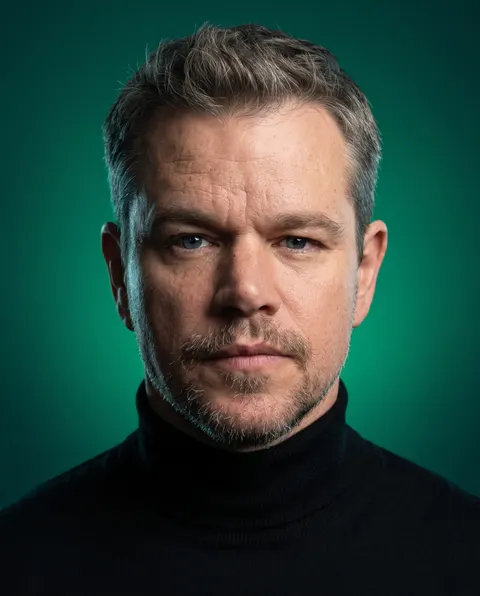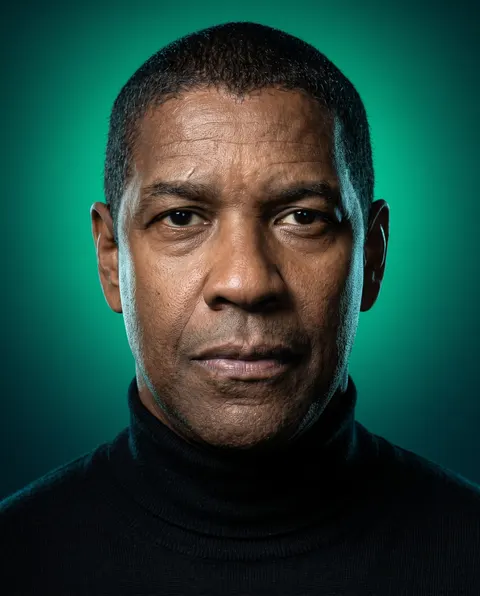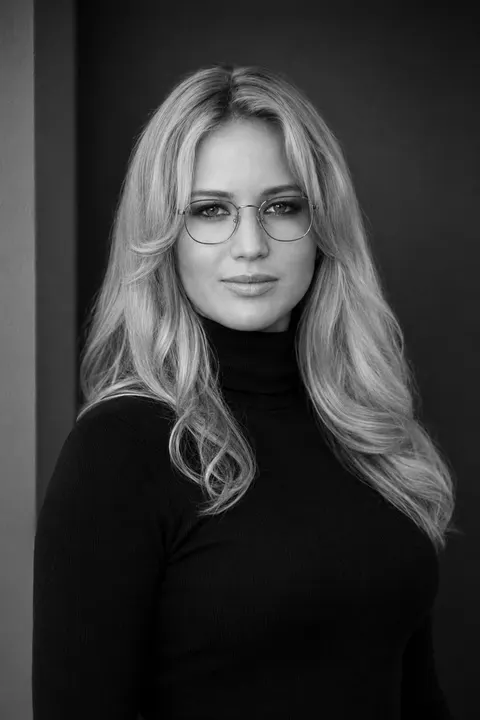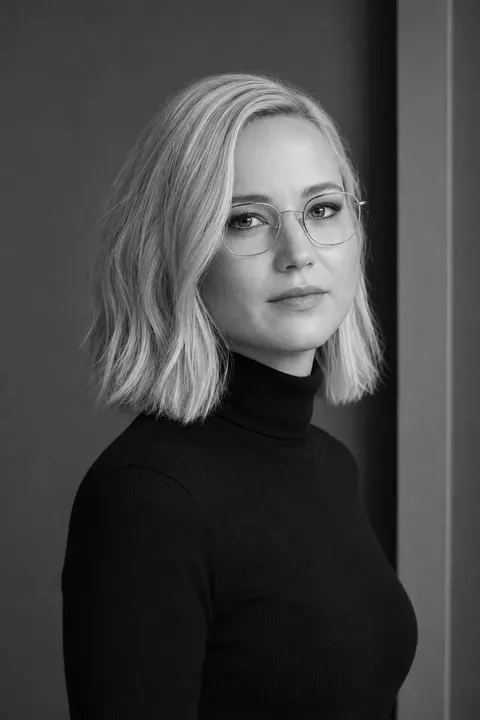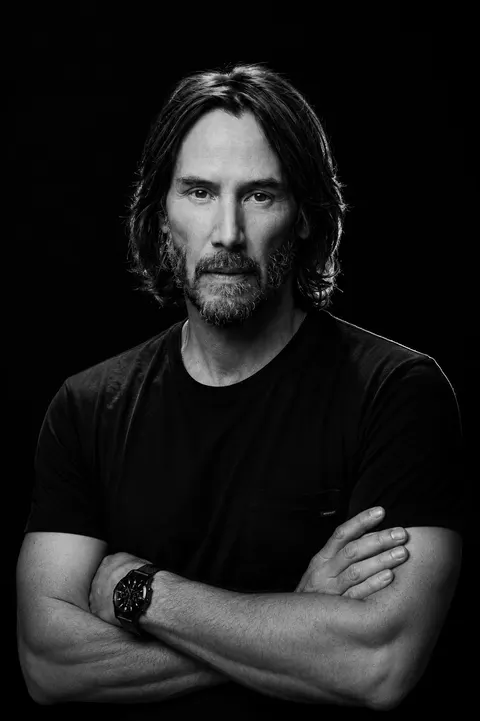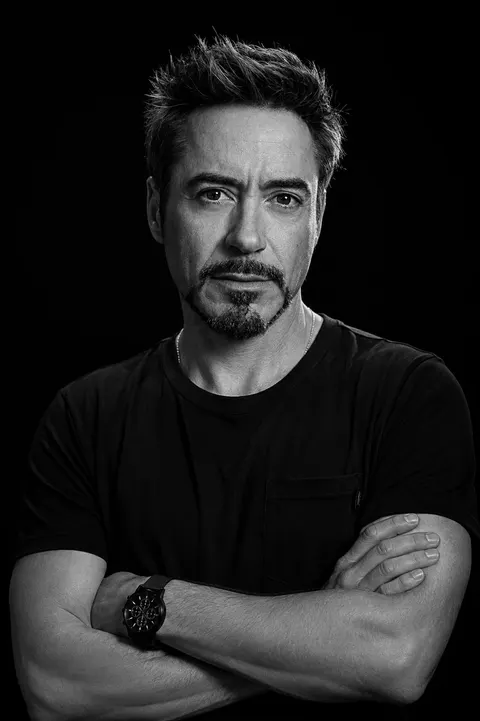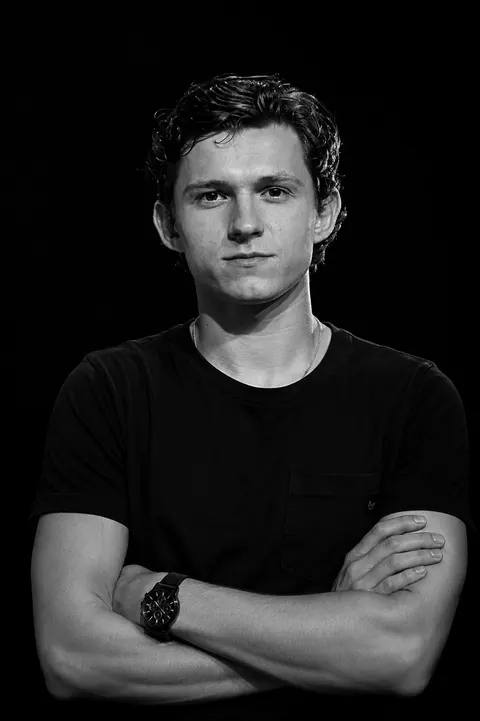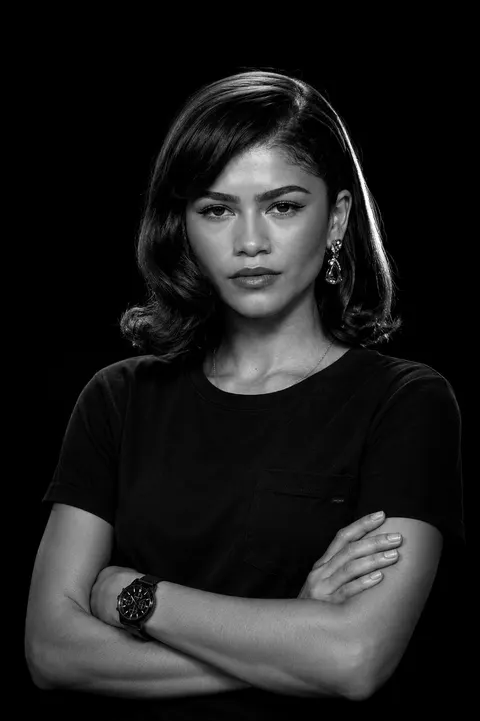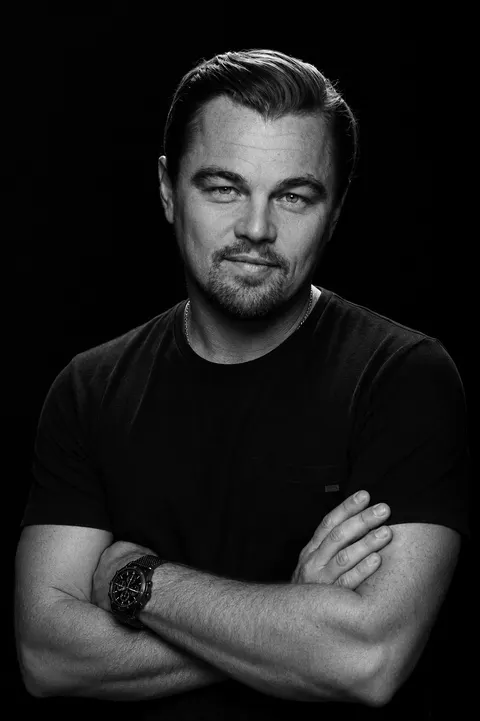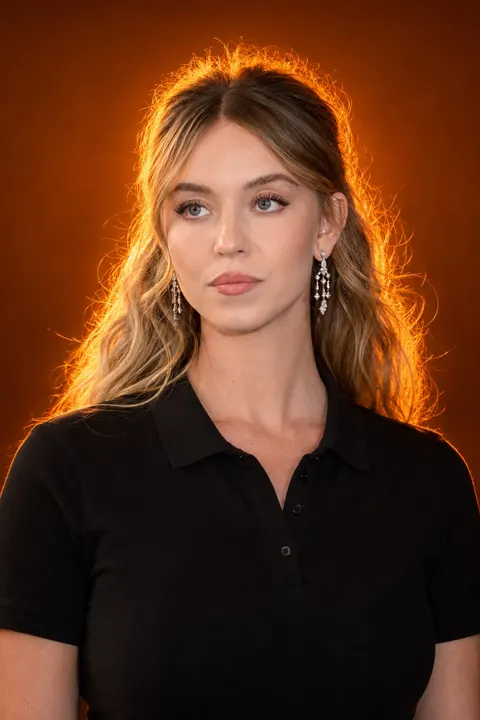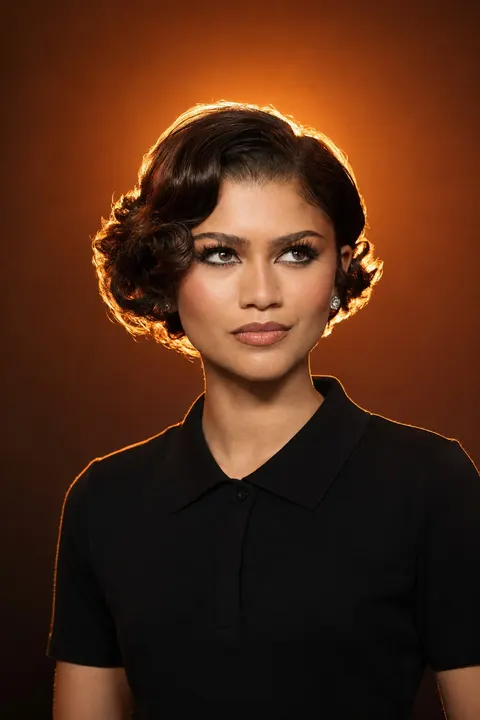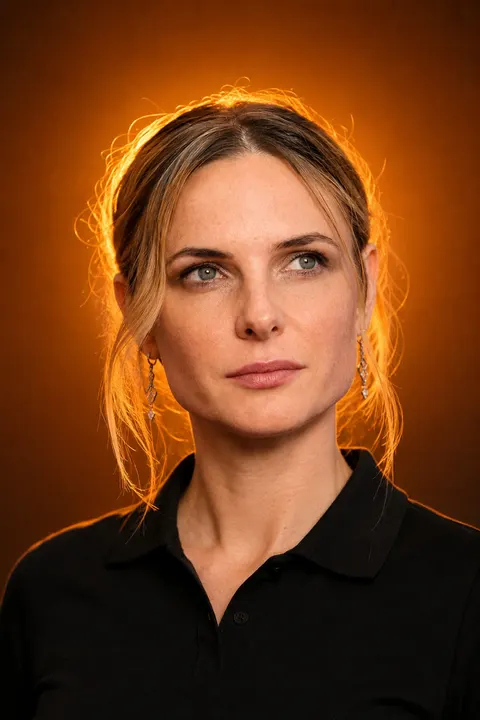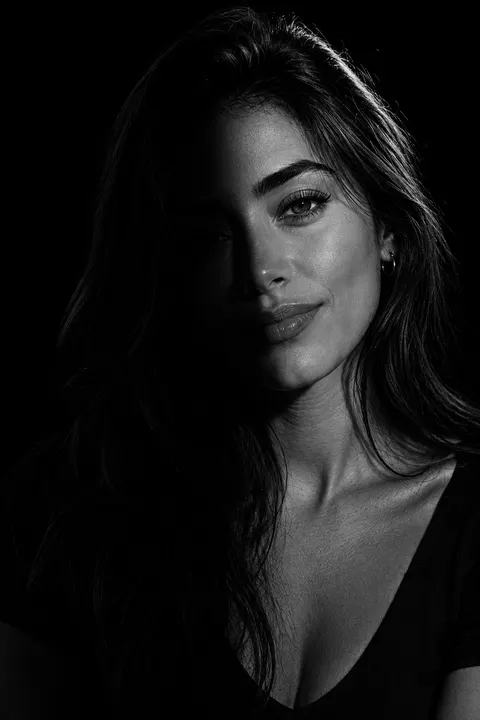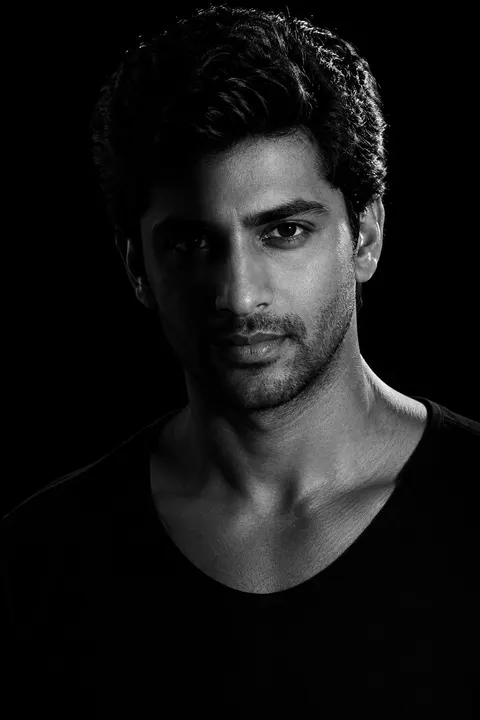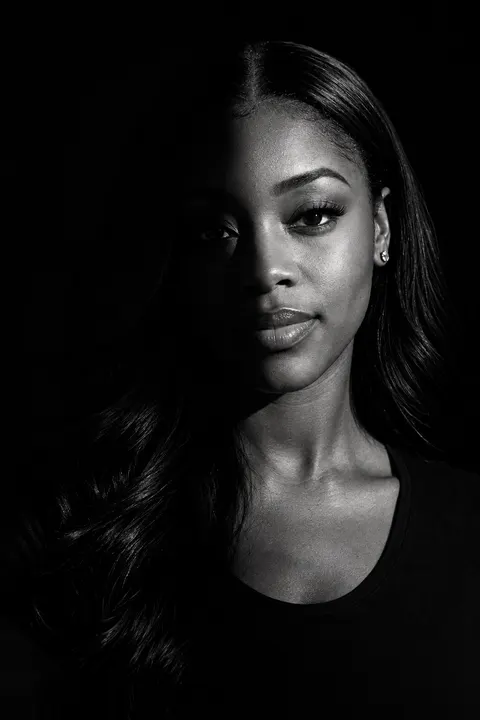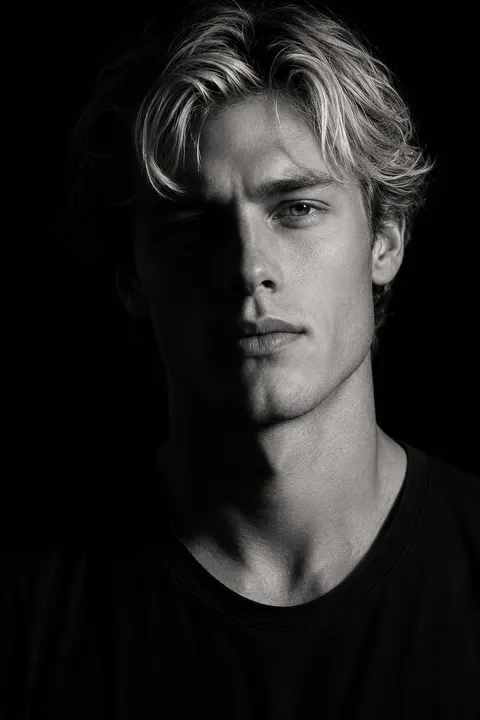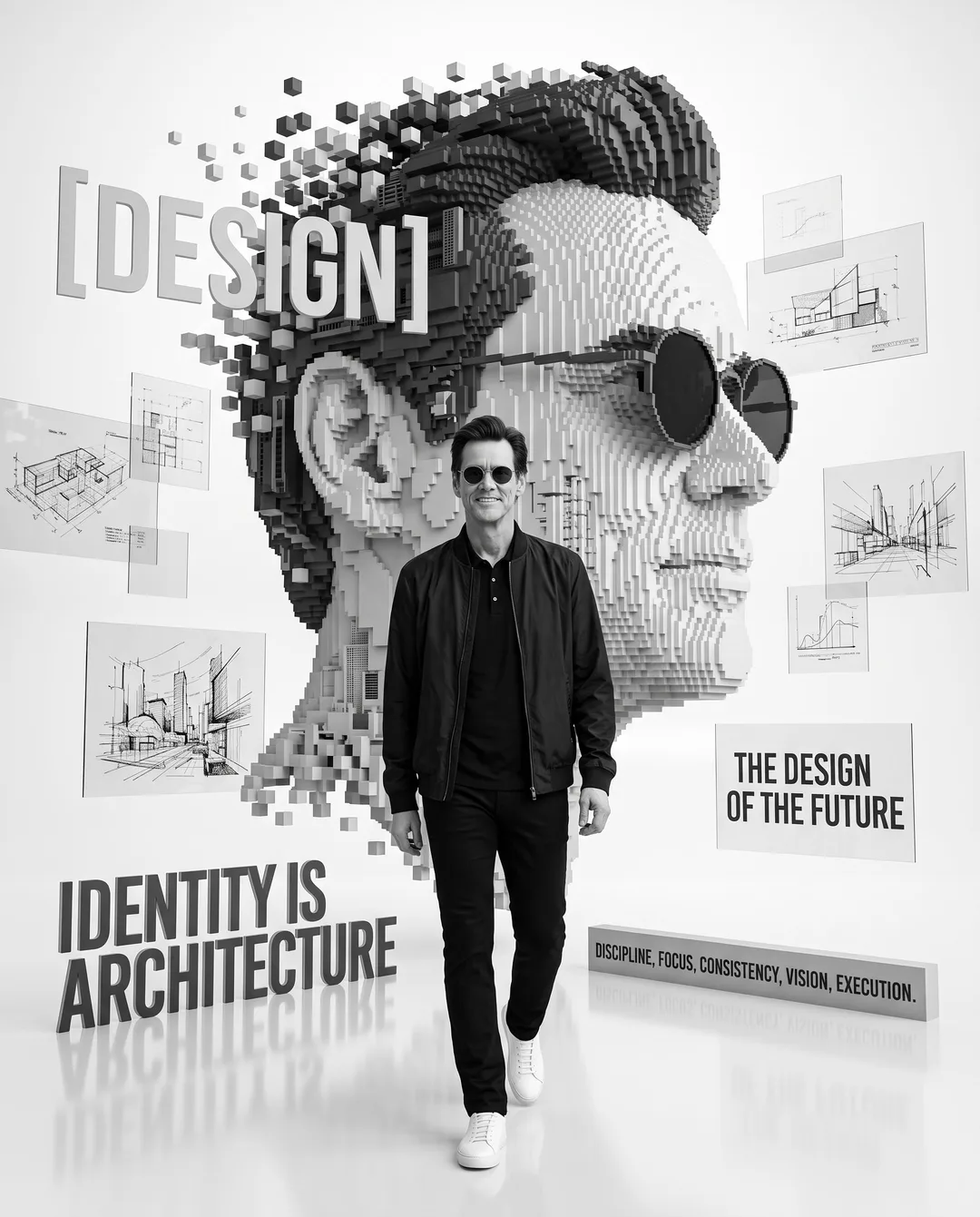
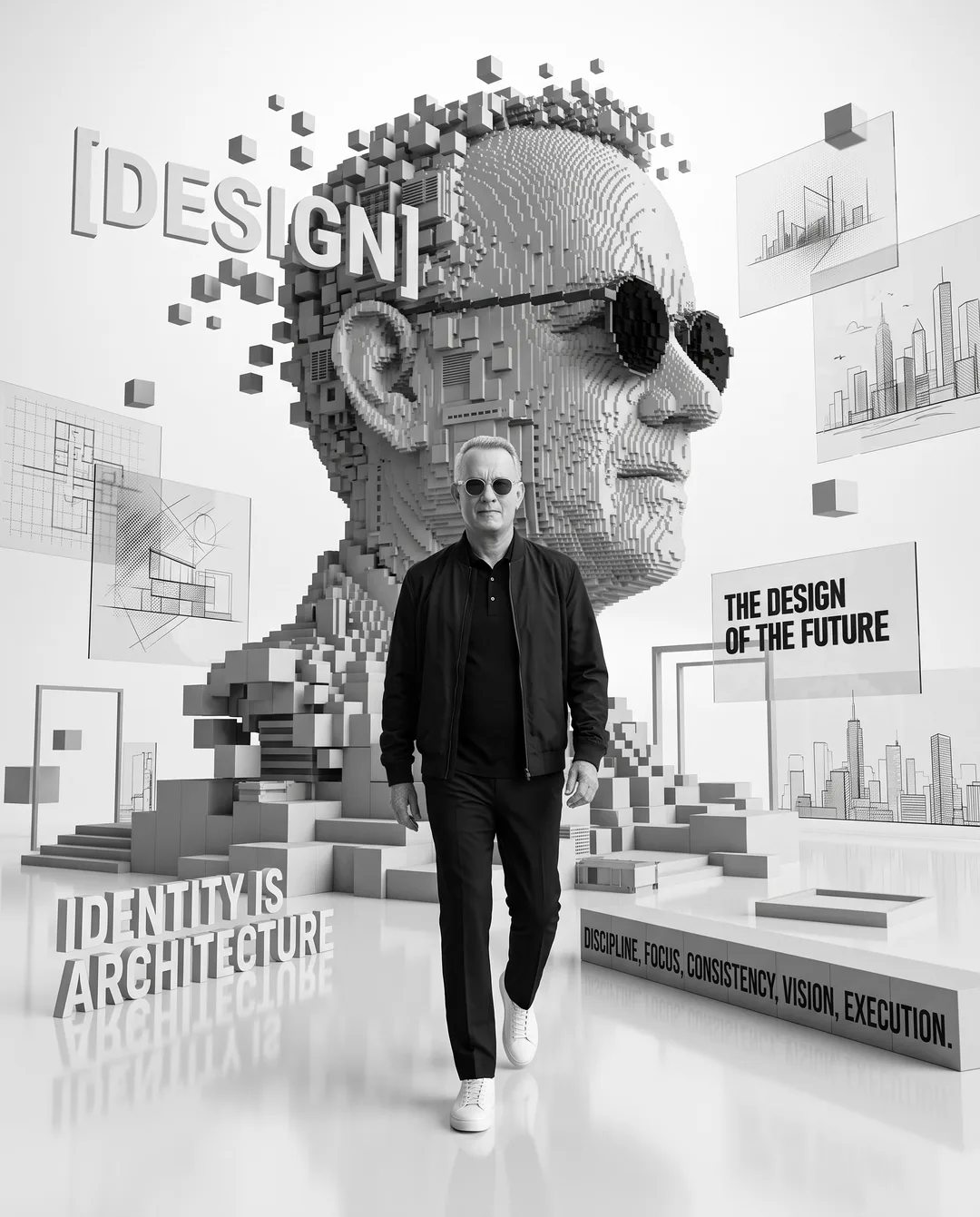


Monochrome Futurist Voxel Monument Portrait
Futurist monochrome prompt: the subject walks before a giant voxel profile monument with integrated 3D typography. Examples: Jim Carrey, Tom Hanks, George Clooney.
Prompt
LOCKED MASTER PROMPT — MONOCHROME FUTURIST WALK WITH VOXEL PROFILE MONUMENT & INTEGRATED TYPOGRAPHY
ROLE
You are a world-class digital artist, architectural visualiser and typographic designer working in high-key monochrome, and a portrait photographer who places a real person inside a constructed world without letting either become fake.
Create a premium, photorealistic monochrome motivational digital artwork using the ATTACHED REFERENCE IMAGE as the identity source.
The defining idea of this image: the subject walks forward through a bright, minimalist, corporate-futurist space — glass panels floating, geometric structures, architectural blueprints, a mirror-white floor — while behind them rises a monumental side-profile bust of their own face, built from thousands of 3D blocks and digital architectural elements, dissolving into scattered cubes at its edges. Bold typography is built into the space — a brand word and motivational phrases set into panels, floating in the air, standing on the floor, obeying the scene's perspective and light. Black streetwear against white. One person, once walking, once monumental, surrounded by words.
The output must look like a single coherent photographic composite — the figure shot, the monument built, the type set into the architecture — NOT like a generic AI render, a 3D game scene, a low-poly effect, a collage, a poster with text overlaid flat on top, or a stock "futuristic" background with a person pasted on.
Aspect ratio: 4:5 vertical.

0. VARIABLE — THE BRAND WORD
This template contains one variable: [BRAND WORD]. Replace it with the wordmark for the series before use — a single word or short name in capitals. Everything else in the typography is fixed.

1. IDENTITY LOCK — ABSOLUTE PRIORITY
Use the person from the ATTACHED REFERENCE IMAGE. Preserve identity with maximum fidelity. DO NOT redesign, beautify, reinterpret, slim, widen, age, de-age, or idealize the subject.
The subject's sex, gender presentation, age, ethnicity, skin tone, build and height are whatever the reference shows. Nothing in this prompt overrides the reference on any of these. The streetwear, the sunglasses and the pose are a styling choice applied to whoever the reference shows — they do not imply, require or alter the subject's gender.
Preserve exactly — in the walking figure:
	•	Facial geometry and skull proportions
	•	Face shape and width-to-height ratio
	•	Forehead height and hairline shape, including any recession or absence of hair
	•	Brow ridge projection
	•	Eyebrow shape, thickness and spacing, where visible above the sunglasses
	•	Nose bridge, tip and nostril structure
	•	Cheekbone height and projection
	•	Jawline definition and angle
	•	Chin shape and projection
	•	Lip shape, thickness and proportions
	•	Ear size, shape and position
	•	Natural facial asymmetry
	•	Skin tone value — how light or dark the skin renders in monochrome
	•	Natural skin texture, pores, lines and surface irregularity
	•	Neck, shoulder width, torso, arm and leg proportions — the walking body is the reference's body
	•	Hand size and proportions
	•	Apparent age
	•	Any moles, scars or distinguishing marks
And — in the voxel monument: the same profile. The monument is the reference's face in side view, translated into blocks: the same forehead slope, brow, nose bridge and tip, lip projection, chin, jaw, ear shape and position, and the same hairline or scalp shape. Anyone who knows the reference must recognise the monument as that face.
The subject must remain unmistakably the same individual as the reference — and the walking figure and the monument must be unmistakably the same person.
HAIR — CONDITIONAL
Preserve the reference hairstyle exactly: the same length, volume, hairline, texture and any greying — or the same absence of hair, if the reference is bald or shaved. Do NOT add hair to a bald reference; do NOT remove hair from a haired one. The monument's scalp or hair mass follows the same reference.
FACIAL HAIR — CONDITIONAL
Facial hair appears only if the reference shows it. If present, preserve its exact length, density, colour value, greying and shape — in the walking figure as hair, in the monument as block texture following the same outline. If absent, add none to either.
SUNGLASSES — FROM THIS PROMPT
The sunglasses in Section 8 are a locked styling element worn by both the walking figure and the monument, regardless of whether the reference wears glasses.
THE MONUMENT IS NOT A DIFFERENT PERSON
The monument's profile is the reference's profile. It is not a generic head, not an idealised head, not a "futuristic" face.
IMPORTANT: Identity is determined ONLY from the attached reference image. Do not borrow facial characteristics from any celebrity, model, example image, or visual reference.

2. COMPOSITE STRUCTURE LOCK — CRITICAL
Three kinds of element in one space. Read this before anything on framing, scale, type or light.
INSTANCE A — THE WALKING FIGURE (front, real, sharp)
	•	Full body, centred, walking toward the camera
	•	Photographic: real skin, real fabric, real weight on the floor
	•	Sharp, fully opaque, full contrast — black clothing against a white world
INSTANCE B — THE VOXEL MONUMENT (behind, constructed)
	•	A colossal side-profile bust of the same subject, filling the upper two-thirds of the frame behind and above the figure
	•	Built from 3D blocks and digital architectural elements in white, grey and dark grey
	•	Its outer edges dissolve into scattered, floating blocks
ELEMENT C — THE TYPOGRAPHY (integrated, three-dimensional)
	•	A brand word and motivational phrases, set into the scene as physical elements: on glass panels, as freestanding letters in the space, on block faces, on the floor — each obeying the perspective, occlusion, reflection and light of the environment
	•	See Section 10
DEPTH AND OVERLAP
	•	A stands in front of B; A's head and shoulders overlap the lower face of the monument
	•	B is far behind A — a building-sized object at a distance
	•	C is distributed at multiple depths: some type in front of A's path but never over A's face; most beside and behind A; some on the monument's blocks or on panels floating near it
	•	The floor reflects A, the base structures, the nearest type and the nearest panels
THE PHYSICS THAT MUST HOLD
	•	One light for figure, monument and type
	•	One space: the figure stands on the floor of the same room the monument and the type occupy
	•	One person: the figure's face and the monument's profile are the same face
	•	Type is in the world, not on the picture: it has depth, it is occluded by nearer objects, it reflects in the floor, it carries the scene's shading
Do NOT render the monument as a flat backdrop, a poster or a screen. Do NOT render the monument frontal — it is a profile. Do NOT render the monument smaller than, or level with, the figure. Do NOT render two walking figures or two monuments. Do NOT let the figure float or stand on a different floor. Do NOT render the figure as a block figure — the figure is photographic. Do NOT overlay type flat on the image plane like a caption.

3. CAMERA POSITION & ORIENTATION LOCK
Camera
Slightly below eye level — at approximately the walking figure's chest height, roughly 10–15 degrees below the eye line. The lens axis is horizontal or angled marginally upward.
The walking figure
	•	Body square to the camera, rotated no more than 10 degrees
	•	Head square to the camera, rotated no more than 5 degrees
	•	Head level; chin level
The monument
	•	In full profile, facing camera-right — nose, lips and chin pointing right; ear and back of the head to the left
	•	Upright, no tilt
Do NOT shoot from eye level or above. Do NOT drop the camera to floor level. Do NOT tilt the camera (no dutch angle). Do NOT turn the figure's body or head. Do NOT turn the monument toward or away from profile. Do NOT introduce wide-angle distortion on the figure's face.

4. FRAMING LOCK — CRITICAL
Use a full-body framing for the figure, with the monument filling the space above and behind, and the typography distributed through the space.
Show:
	•	The walking figure from the top of the head to the sneakers, both feet on the floor with their reflections
	•	The monument from its crown near the top edge to its jaw and neck line behind the figure's shoulders
	•	The environment: floating panels, blocks and structures on both sides; the reflective floor across the bottom
	•	The typography: the brand word and the phrases, distributed as in Section 10
The figure (top of head to sole) occupies approximately 62–70% of the total frame height. The figure's sunglasses sit approximately 31–36% down from the top of the frame. The figure's head (top to chin) occupies approximately 8–11% of frame height. The figure's shoulders span approximately 20–26% of frame width. The sneakers sit at approximately 92–97% down from the top.
The monument spans approximately the upper 65–75% of frame height and 75–90% of frame width, its crown near the top edge, its jaw at roughly 55–62% down.
HEADROOM
The monument's crown sits approximately 2–6% below the top edge; its dissolving blocks may touch the edge.
CROP LOCK
Do NOT crop the figure's head, hands or feet. Do NOT crop the monument's nose, lips or chin at the right edge. Do NOT crop any word of the typography so that it becomes unreadable — a word may run behind an object, never off the frame mid-word. Do NOT tighten into a waist-up composition. Do NOT pull back so far that the figure becomes tiny.

5. SUBJECT POSITION
The figure at the exact horizontal centre, approximately 48–52% of frame width. The monument centred slightly left of the figure — its ear and the back of the head behind and left of the figure's head, its profile projecting right — so the figure's head sits over the monument's cheek-to-ear zone. Typography balances the composition around the figure — see Section 10 — never crowding the figure's face.
Do NOT offset the figure. Do NOT centre the monument's nose behind the figure.

6. POSE & MOTION LOCK — THE WALK — CRITICAL
The figure is mid-stride, walking forward toward the camera, confident and unhurried.
	•	One foot forward and planted, flat on the floor; the other foot behind, heel lifting, mid-push-off
	•	Stride length moderate — a walk, not a lunge
	•	Hips level; shoulders level and relaxed, squared to the camera
	•	Arms hanging with a natural, slight counter-swing, no more than 10–15 degrees
	•	Hands relaxed and open at the sides
	•	Spine upright, head level, gaze forward through the sunglasses
	•	The figure is sharp — no motion blur
Do NOT render the figure standing still or in a static pose. Do NOT render a lunge, a run, hands in pockets, crossed arms or a raised hand. Do NOT render both feet flat or both heels lifted. Do NOT exaggerate the arm swing. Do NOT add motion blur to the figure. Do NOT turn the walk into a side view or a diagonal.

7. THE VOXEL MONUMENT LOCK — CRITICAL
CONSTRUCTION
	•	A colossal side-profile bust built from 3D blocks: cubes, rectangular slabs, stepped and stacked volumes — the largest blocks at the skull's interior, progressively smaller and finer toward the surface of the face
	•	Surface resolution high enough that the profile reads as the reference's face — brow, nose, lips, chin, jaw and ear articulated by the block surface
	•	Many blocks carry digital architectural detail: windows, louvres, grid lines, thin structural frames, façade patterns — the head as a city, read closely
	•	Tones: white, light grey, mid grey and dark grey blocks modelling the form — lighter on light-facing surfaces, darker in recesses and under the jaw
	•	The sunglasses as a cluster of near-black blocks over the eye position, following the round frame shape
	•	Facial hair, where the reference has it, as a finer, darker block texture along jaw, chin and upper lip
	•	The scalp or hair mass in blocks following the reference's hairline or bald contour
DISSOLUTION
	•	At the back of the head, the crown and the upper edges, blocks loosen and scatter — separating from the mass, floating outward in a sparse, drifting field
	•	Graded: dense at the face, loosening toward the rear and top, sparse at the far edges
	•	Floating blocks cast soft shadows and carry the same light
SCALE AND PLACEMENT
	•	Building-sized: the profile's height roughly 6–9 times the walking figure's head height
	•	Its jaw and neck behind the figure's shoulders; its ear behind and left of the figure's head; its profile projecting right
	•	Rising from a base of stacked blocks and low structures at floor level behind the figure
Do NOT render a frontal or three-quarter head. Do NOT render a smooth, low-poly, faceted or wireframe head. Do NOT render blocks too coarse to read the profile, or too fine to read as blocks. Do NOT render a generic, idealised or "futuristic" face. Do NOT omit the sunglasses or the reference's facial hair from the monument. Do NOT scatter blocks uniformly — dissolution is at the back, crown and edges. Do NOT render the monument in colour, metallic or glowing materials. Do NOT let the monument float with no base.

8. WARDROBE & EYEWEAR LOCK
Minimalist black streetwear, cut to the reference build. In monochrome, every garment is near-black; textures and edges distinguish them.
Bomber jacket
	•	Black bomber, matte nylon or matte technical shell, ribbed collar, cuffs and hem
	•	Worn open, both fronts hanging, revealing the polo
	•	Clean, unwrinkled, soft structural folds at the elbows
	•	No logos, patches, prints or contrast trim
Polo shirt
	•	Black polo, matte cotton, collar flat, top button open
	•	Visible at the neck and chest inside the open jacket
Trousers
	•	Fitted black trousers, matte, tapered, clean break at the ankle
	•	No visible belt, no logos
Sneakers
	•	Plain white low-top sneakers — the only white on the figure
	•	Clean, minimal, unbranded
	•	Their reflection visible on the floor
Sunglasses — worn by the figure AND the monument
	•	Round to softly rounded lenses, moderate size, thin dark metal frames
	•	Lenses fully opaque, dark — eyes not visible
	•	On the figure: real glass with a soft specular reflection of the bright environment
	•	On the monument: the same frame shape in dark blocks
Do NOT use a hoodie, coat, blazer, shirt, t-shirt or layered garment. Do NOT use grey, patterned, glossy or leather garments. Do NOT use black, coloured, high-top or branded sneakers. Do NOT use aviator, wayfarer, rectangular, shield or oversized sunglasses. Do NOT make the eyes visible through the lenses. Do NOT omit the sunglasses from the monument. Do NOT add a watch, chain, ring, bag, hat, headphones or accessory unless present in the identity reference.

9. ENVIRONMENT LOCK — CORPORATE-FUTURIST WHITE SPACE — CRITICAL
FLOOR
	•	Glossy white, highly reflective — mirroring the figure's legs, the sneakers, the base blocks, the nearest panels and the nearest type at approximately 40–60% strength, slightly softened
	•	Seamless, edgeless; no tiles, joints or texture
FLOATING GLASS PANELS
	•	Rectangular transparent panels floating at various heights and depths on both sides of the figure, some angled, some upright
	•	Each panel carries content in fine monochrome line-work and halftone: architectural sketches, abstract diagrams, blueprint grids and sections, and urban imagery — building elevations, skyline silhouettes, façade studies, street-grid plans
	•	Panel content is imagery and diagram, not text — except where a panel is designated to carry a typographic phrase in Section 10
	•	Translucent: the environment and monument read through them, with fine bright edge highlights
	•	Sizes from roughly 8% to 30% of frame width; none covers the figure's face
GEOMETRIC STRUCTURES
	•	Stepped blocks, low platforms, thin vertical frames, floating cubes at multiple depths — the monument's block language at smaller scale
	•	White, light grey, mid grey; matte; soft shadows
	•	Denser near the monument's base and the frame edges; sparse near the figure's path
ARCHITECTURAL BLUEPRINTS
	•	Blueprint-style drawings appear on panels and, faintly, etched into some block faces and floor areas near the edges — plans, sections, elevations in fine white or grey line on the surface, with dimension ticks and grid lines but no legible text or numerals
THE SPACE
	•	Bright, high-key, near-white ambient; walls and ceiling dissolve into white
	•	No visible horizon, corner or ceiling edge
	•	Depth by layering and floor reflection
NO people other than the subject. NO furniture, screens, plants, vehicles or props. NO colour. NO neon, glowing edges, holographic effects, particles or light beams. NO text anywhere except the typography specified in Section 10.

10. TYPOGRAPHY LOCK — INTEGRATED, THREE-DIMENSIONAL — CRITICAL
Typography is a structural element of the scene, not a caption. Every word is an object in the room.
THE CONTENT — FIXED STRINGS
Exactly these, in capitals, spelled exactly:
	•	[BRAND WORD] — the wordmark, the largest single word in the scene
	•	THE DESIGN OF THE FUTURE
	•	IDENTITY IS ARCHITECTURE
	•	DISCIPLINE, FOCUS, CONSISTENCY, VISION, EXECUTION.
No other words, letters, numerals or phrases appear anywhere in the image.
THE TYPEFACE
	•	A single bold geometric sans-serif — heavy weight, clean, uppercase, wide letterspacing
	•	Monochrome: white, light grey or near-black, chosen per placement for contrast against its surface
	•	No outlines, gradients, glow, drop-shadows-as-effect, bevels or 3D extrusion effects beyond real physical thickness where the letters are solid objects
THE PLACEMENTS — LOCKED
	•	[BRAND WORD]: set large across the upper-left region, floating in space behind and left of the monument's rear blocks, partially occluded by scattered blocks passing in front of it; letters approximately 6–9% of frame heighttall; white or light grey against the mid-grey blocks and near-white space
	•	THE DESIGN OF THE FUTURE: set on a floating glass panel on the right side, mid-height, the panel angled in perspective; letters near-black on the translucent panel, approximately 2.5–3.5% of frame height tall, on one or two lines
	•	IDENTITY IS ARCHITECTURE: set as freestanding solid letters standing on the floor at the left, behind and beside the figure's path, in perspective, casting soft shadows and reflected in the floor; letters approximately 3–4.5% of frame height tall
	•	DISCIPLINE, FOCUS, CONSISTENCY, VISION, EXECUTION.: set low across the frame, on a low horizontal block or platform face at the right of the figure's feet, in perspective along the block, or on a low floating panel; letters approximately 2–3% of frame height tall, on one line, the whole phrase readable
THE PHYSICS OF THE TYPE
	•	Every placement obeys the scene's perspective: type on a panel follows the panel's plane; type on the floor recedes; freestanding letters have thickness and stand upright
	•	Type is occluded by nearer objects — a block, a panel, the figure — and never occludes the figure's face or torso
	•	Type carries the scene's light: shading on solid letters, edge highlights, soft cast shadows
	•	Type reflects in the floor where it stands on or near it
	•	Type is crisp and legible at each placement; the words read at a glance
THE HIERARCHY
	•	The brand word dominates in size; the three phrases are secondary, each smaller, each clearly readable
	•	Type is bold but balanced against the figure and the monument — it never covers the figure's face, never competes with the monument's profile line, never fills more than roughly 12–18% of the frame area in total
Do NOT overlay type flat on the image plane, ignoring perspective and depth. Do NOT place type over the figure's face, sunglasses or torso. Do NOT add any word, letter, numeral or phrase not listed above. Do NOT misspell, abbreviate, repeat, rearrange or truncate any phrase. Do NOT render gibberish, pseudo-letters or scrambled text anywhere — on panels, blocks, floor or garments. Do NOT use a serif, script, decorative, pixel or handwritten typeface. Do NOT add glow, neon, gradients, outlines, bevels or effects to the type. Do NOT let the type exceed its placement sizes or crowd the composition. Do NOT cut a word off at the frame edge mid-word. Do NOT let the brand word's occlusion by blocks make it unreadable — at least 80% of its letters must read.

11. LIGHTING LOCK — HIGH-KEY MONOCHROME — CRITICAL
Bright, soft, high-key light from above and front, filling the space.
AMBIENT
	•	A broad, soft, overhead-frontal source — white ceiling and walls as one enormous diffuser
	•	Shadows soft, short and open — beneath the figure, blocks, panels, freestanding letters; under the monument's jaw and in its recesses
ON THE FIGURE
	•	Even, soft illumination; gentle modelling under the brow, nose and jaw
	•	Skin texture visible in a quiet, even exposure
	•	Black garments as deep near-black with soft edge highlights — a faint sheen on the bomber's shoulders and ribbed collar, a soft catch on the polo collar
	•	White sneakers bright, with contact shadow and reflection
ON THE MONUMENT AND THE TYPE
	•	The same light: light-facing surfaces bright, recesses shaded, the profile readable by tone; solid letters shaded on their sides, panels edge-lit
CONTRAST
	•	High contrast by design: black figure against white world; full tonality within each element
Do NOT add a dramatic key, hard side light, rim light or spotlight. Do NOT darken the space, floor or monument into low-key. Do NOT crush the figure's clothing to a flat silhouette. Do NOT clip the space to pure white without gradation. Do NOT introduce coloured or glowing light.

12. LIGHTING DIRECTION LOCK
The lighting setup must remain identical across every generation, regardless of changes in the reference person's gender, age, skin tone, hairstyle, or body.
The identity changes. The lighting does NOT change. The high-key ambient, its softness, the floor reflection strength and the contrast structure stay fixed. Only the way the light falls across the individual's anatomy — and the individual's profile in blocks — varies.

13. EXPOSURE & TONAL BALANCE LOCK — MONOCHROME
A high-key, high-contrast monochrome image.
Approximate tonal placement, from brightest to darkest:
	•	White space, brightest panel edges, white sneakers, white type — near-white, just below clipping
	•	Light-facing block surfaces, floor highlights — light grey
	•	Figure's skin — upper mid-tones, per the reference's relative luminance
	•	Mid-grey blocks, panel imagery, floor reflections — mid-tones
	•	Monument recesses, shadows, near-black type on panels — dark grey to near-black
	•	Figure's black garments — near-black with soft edge highlights
	•	Sunglasses on figure and monument — the darkest values
Approximate distribution of the frame:
	•	White and light-grey space, floor and structures: 36–46%
	•	Monument, mid to dark grey: 24–32%
	•	Figure's black clothing: 10–15%
	•	Figure's skin and sneakers: 3–6%
	•	Panels, floating blocks and typography: 12–20%
Behavior:
	•	The figure is the darkest large mass; the space the brightest
	•	The figure's face correctly exposed in the mid-tones against the monument's grey
	•	The monument's profile reads by tonal modelling
	•	Type reads by contrast against its own surface: white on grey blocks, near-black on translucent panels, light letters standing on the white floor with their own shading and shadow
	•	The floor's reflection of the figure and the nearest type clearly visible, softer and lighter than the objects
Do NOT darken the space into mid-key or low-key. Do NOT crush the figure's clothing. Do NOT clip the whites flat. Do NOT flatten the monument into one grey. Do NOT let type lose contrast against its surface.

14. CAMERA LOOK
Architectural-editorial photography on a full-frame system.
Focal length: 35–50mm. Aperture: f/5.6 to f/8 — deep depth of field: the figure sharp throughout, the monument, structures and type sharp in their detail, the farthest panels and dissolving blocks only marginally softer.
Focus:
	•	Critical focus on the figure's face
	•	The figure sharp from sneakers to head; the floor reflection sharp
	•	The monument's face surface sharp; its dissolving edges marginally softer
	•	All typography legibly sharp at its own depth
	•	Panels and blocks sharp at mid-depth, gently soft at the far edges
PERSPECTIVE
	•	Mild vertical convergence on the monument and on the tall freestanding letters — reading as height
	•	The figure's face naturally proportioned
Do NOT use a telephoto that flattens the space. Do NOT use an ultra-wide that distorts the figure. Do NOT use shallow depth of field. Do NOT introduce lens flare, chromatic aberration or a vignette.

15. IMAGE QUALITY
Photorealistic on the figure; ultra-detailed on the monument, the environment and the type. Natural skin with visible pores and texture on the figure's face, neck and hands. Individually resolvable hair strands, or a cleanly rendered scalp, per the reference. Facial hair, where present, as discrete hairs on the figure and as matching block texture on the monument. Matte nylon sheen and rib on the bomber; matte cotton polo; clean trousers; textile and rubber on the sneakers. Real glass on the figure's sunglasses with a soft environment reflection. Every block on the monument a clean, exact volume with crisp edges, correct shading and, where present, fine architectural detail readable at close inspection. Floating blocks with soft cast shadows and correct spatial relationships. Glass panels with fine bright edges, correct translucency and crisp diagram, sketch and urban imagery. Every letter a clean, exact form — sharp edges, correct perspective, correct occlusion, correct shading and shadow, correct reflection — the four strings spelled exactly and fully legible. A glossy floor with a physically correct, slightly softened reflection. Natural highlight roll-off; very fine, clean grain.
No plastic, waxy or airbrushed skin. No skin smoothing or blemish removal. No low-poly, faceted, wireframe or smooth-sculpture monument. No gibberish, pseudo-text, scrambled letters or unlisted words anywhere. No flat, overlaid, glowing or effect-laden type. No glow, bloom, neon, particles or holographic effects. No cut-out edge or halo between the figure and the space. No CGI, game-engine or 3D-render look on the figure — the figure is a photograph.

16. MONOCHROME GRADE LOCK
The image is true black and white. There is no colour anywhere in the frame.
Grade character: bright, clean, high-key, high-contrast — deep clean blacks on the figure and the darkest type, luminous whites in the space, a full grey scale across the monument; neutral, no toning.
Do NOT output a colour image. Do NOT output a partially desaturated or muted-colour image. Do NOT apply sepia, selenium, cyanotype, cool, warm or split toning. Do NOT apply selective colour or a colour accent — not on the type either. Do NOT lift the blacks into a faded, matte or filmic look. Do NOT darken the overall key. Do NOT allow banding in the white space or the floor gradation.

17. VISUAL HIERARCHY
The walking figure — black against white, sunglasses, forward stride → The monument's profile rising behind — recognisably the same face → The brand word, large, upper-left, threaded through the scattered blocks → The three phrases at their placements → The dissolving blocks → The floor's reflections → The panels' diagrams and urban imagery → The white
The figure is the subject; the monument is the subject at the scale of architecture. The type is the message, built into the room. The dissolution is the energy; the white is the air.

18. NON-NEGOTIABLE RULES
These must NEVER change between generations:
	•	Identity, sex, gender presentation, age, skin value, build, height, proportions and skin texture from the reference — in the figure, and as profile in the monument.
	•	Hair or its absence, and facial hair or its absence, from the reference — in both instances.
	•	The monument is the reference's profile in blocks, recognisable as that face.
	•	Sunglasses on both the figure and the monument: round, thin dark frames, opaque lenses.
	•	True black-and-white output, high-key, neutral, untoned.
	•	Camera at the figure's chest height, 10–15 degrees below the eye line.
	•	Figure walking directly toward the camera, square, head level, mid-stride, slight counter-swing, sharp.
	•	Full-body figure at 62–70% of frame height; sunglasses at 31–36% from the top; feet at 92–97%.
	•	Figure at 48–52% of frame width.
	•	Monument in full profile facing camera-right, upper 65–75% of frame height, 75–90% of width, crown near the top, jaw at 55–62%.
	•	Monument centred slightly left of the figure; the figure's head over the monument's cheek-to-ear zone.
	•	Monument built from discrete 3D blocks with digital architectural detail; dissolving at rear, crown and edges only; rising from a base.
	•	Black open bomber, black polo, fitted black trousers, plain white low-top sneakers.
	•	No accessories unless in the reference.
	•	Glossy white seamless floor reflecting the figure, base structures, nearest panels and nearest type at 40–60%.
	•	Floating translucent panels carrying sketches, abstract diagrams, blueprints and urban imagery; floating blocks and stepped structures at multiple depths.
	•	Typography: exactly four fixed strings — [BRAND WORD], THE DESIGN OF THE FUTURE, IDENTITY IS ARCHITECTURE, DISCIPLINE, FOCUS, CONSISTENCY, VISION, EXECUTION. — in one bold geometric sans-serif, uppercase, monochrome.
	•	Brand word large, upper-left, behind the monument's rear blocks, partially occluded, at least 80% legible.
	•	Phrase 2 on an angled glass panel at the right; phrase 3 as freestanding floor-standing letters at the left, reflected; phrase 4 low across the frame on a block or low panel near the figure's feet.
	•	All type three-dimensional in the scene: perspective, occlusion, shading, shadow, reflection; never over the figure's face or torso; never flat overlay.
	•	No other text, letters, numerals or words anywhere — including panels, blocks, floor and garments.
	•	Bright, soft, high-key ambient; soft short shadows; no key, rim, spotlight or coloured light.
	•	Figure the darkest mass; space the brightest; figure's face correctly exposed.
	•	35–50mm at f/5.6–f/8; figure, monument, structures and type sharp.
	•	Every block a clean volume; every letter a clean form; the figure photographic.
	•	4:5 vertical aspect ratio.

19. REFERENCE PRIORITY SYSTEM
PRIORITY 1 — IDENTITY, TWICE
Face, hair or its absence, facial hair or its absence, skin value, build, height, proportions, age, sex, gender presentation and natural likeness from the reference — in the figure, and as an exact profile in the monument.
PRIORITY 2 — COMPOSITE STRUCTURE
Photographic figure in front, block monument behind in profile, typography as three-dimensional objects in the space; one light, one space, one person.
PRIORITY 3 — THE MONUMENT AND THE TYPOGRAPHY
The monument's construction, profile, sunglasses, facial hair, dissolution and base; the four exact strings at their locked placements, sizes and physics.
PRIORITY 4 — THE WALK AND THE FRAMING
The mid-stride forward walk, the full-body framing and the low camera.
PRIORITY 5 — ENVIRONMENT, WARDROBE AND LIGHT
The white reflective floor, the panels with diagrams and urban imagery, the blocks, the black streetwear, the high-key ambient.
PRIORITY 6 — GRADE AND CAMERA
The high-key monochrome grade and the 35–50mm deep-focus look.
If the reference image conflicts with any of these instructions, preserve identity, anatomy, proportions, hair, facial hair, skin texture and natural likeness from the reference — in both the figure and the monument — and preserve the composite structure, monument construction, typography, walk, framing, environment, wardrobe, lighting, grade and camera specification from this prompt.

20. NEGATIVE CONSTRAINTS
Typography errors — critical
Do NOT generate:
	•	Any word, letter, numeral or phrase not among the four fixed strings
	•	A misspelled, abbreviated, repeated, rearranged, truncated or partially missing phrase
	•	Gibberish, pseudo-letters or scrambled text on panels, blocks, floor, garments or anywhere
	•	Type overlaid flat on the image plane, ignoring perspective, depth and occlusion
	•	Type over the figure's face, sunglasses or torso
	•	A serif, script, decorative, pixel or handwritten typeface, or more than one typeface
	•	Glow, neon, gradients, outlines, bevels, drop-shadow effects or colour on the type
	•	Type exceeding its placement sizes, or filling more than 18% of the frame
	•	A word cut off at the frame edge mid-word
	•	A brand word occluded past legibility
	•	Type that ignores the scene's light, casts no shadow where it stands, or fails to reflect where it should
	•	Blueprint annotations, dimensions or labels rendered as legible text
Identity and monument errors
Do NOT generate:
	•	A change in the subject's sex, gender presentation, age, ethnicity, skin value, build or height from the reference
	•	A monument with a generic, idealised, "futuristic" or different face
	•	A monument whose profile does not match the reference's forehead, nose, lips, chin, jaw and ear
	•	Hair added to a bald reference, or removed from a haired one — in either instance
	•	Facial hair added or removed — in either instance
	•	A monument missing its sunglasses
	•	A restyled hairstyle
	•	An aged, de-aged, beautified, slimmed or widened face
	•	A figure with model-ised proportions
Composite and monument-construction errors
Do NOT generate:
	•	A frontal or three-quarter monument; a monument facing camera-left
	•	A monument as a flat backdrop, poster, screen or projection
	•	A smooth, low-poly, faceted, wireframe or sculpted monument
	•	Blocks too coarse to read the profile, or too fine to read as blocks
	•	Uniform scatter instead of graded dissolution at rear, crown and edges
	•	A monument floating without a base
	•	A monument smaller than or level with the figure
	•	A coloured, metallic, glowing or chrome monument
	•	Two figures or two monuments
	•	A block-built or stylised figure
	•	A figure floating or on a different floor
Walk, pose and framing errors
Do NOT generate:
	•	A standing, static, feet-together figure
	•	A lunge, a run, hands in pockets, crossed arms or a raised hand
	•	Both feet flat or both heels lifted
	•	An exaggerated arm swing; motion blur on the figure
	•	A turned, angled or side-view walk
	•	A waist-up crop; a tiny figure
	•	A cropped head, hand, foot or monument profile
	•	An off-centre figure
	•	An eye-level, high or floor-level camera
	•	A dutch or tilted angle
	•	Ultra-wide distortion; telephoto flattening
Wardrobe errors
Do NOT generate:
	•	A hoodie, coat, blazer, shirt, t-shirt or layered garment
	•	Grey, patterned, glossy or leather garments
	•	A closed bomber
	•	Black, coloured, high-top or branded sneakers
	•	Aviator, wayfarer, rectangular, shield or oversized sunglasses
	•	Visible eyes through the lenses
	•	A watch, chain, ring, bag, hat, headphones or accessory not in the reference
	•	Logos or text on any garment
Environment errors
Do NOT generate:
	•	A matte, tiled, jointed or non-reflective floor
	•	A missing or exaggerated floor reflection
	•	Opaque, coloured, framed or screen-like panels
	•	Panels covering the figure's face
	•	Panels with legible text other than the designated phrase
	•	Furniture, screens, plants, vehicles, props or other people
	•	A visible horizon, corner, ceiling edge or wall seam
	•	Neon, glowing edges, holographic effects, particles, light beams or lens flare
	•	A dark, low-key or mid-key space
	•	Any colour
Lighting, grade and rendering errors
Do NOT generate:
	•	A dramatic key, hard side light, rim light or spotlight
	•	Coloured or glowing light
	•	Crushed, texture-less black clothing
	•	Clipped, gradation-free whites
	•	A monument flattened to one grey
	•	Any colour, tint, tone or colour accent
	•	Sepia, selenium, cyanotype or split toning
	•	Lifted, faded or matte blacks
	•	Banding in the white space or floor
	•	Plastic, waxy or airbrushed skin; beauty-filter smoothing
	•	Facial hair as a flat mask
	•	A cut-out edge or halo around the figure
	•	A CGI, game-engine or 3D-render look on the figure
	•	Shallow depth of field
	•	Over-sharpened edges or halos; artificial HDR appearance; heavy noise
	•	Asymmetrical or misaligned features caused by generation error
	•	Deformed ears, hands or feet
	•	Illustration, painting or cartoon rendering

FINAL INSTRUCTION
Create the image as if the same artist, same white corporate-futurist space, same glossy floor, same floating panels with the same diagrams and urban imagery, same block structures, same four phrases set into the same places in the same bold sans-serif, same high-key monochrome light, same camera and lens, same black streetwear and white sneakers, same round sunglasses, same forward walk, same framing and same bright monochrome gradeplaced a completely different person — whoever the reference shows — in the same space, and built that person's profile as the same monument behind them.
Only the identity of the subject should change. The figure changes; the monument changes with it, because they are one person. The words stay.
The result must belong to a single, consistent artwork series — not a set of unrelated AI generations.
IDENTITY CHANGES. EVERYTHING ELSE STAYS LOCKED.
Prompt copied — just paste it (Ctrl/Cmd+V) in the chat.