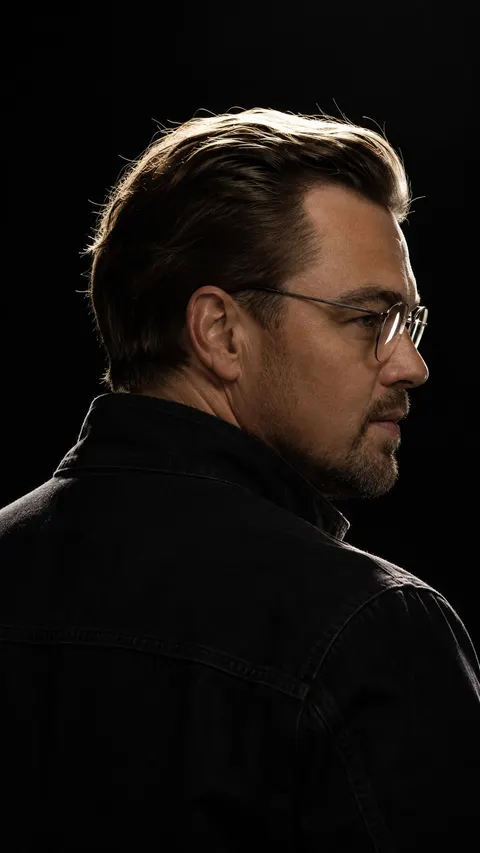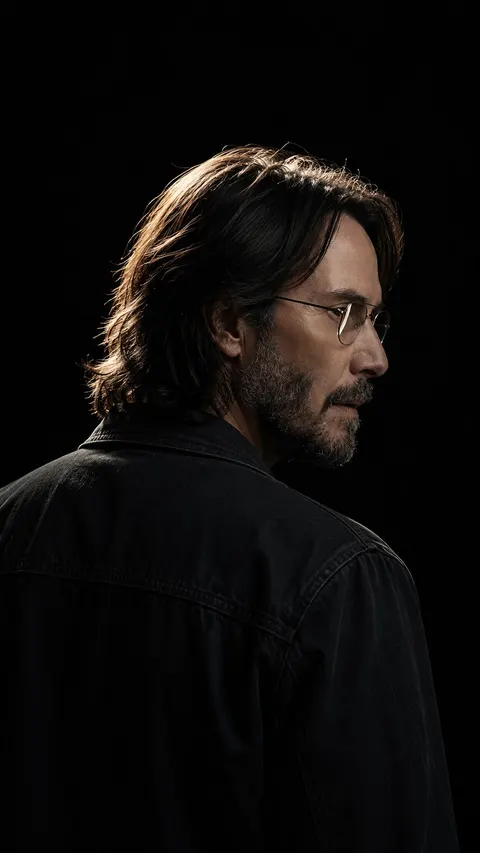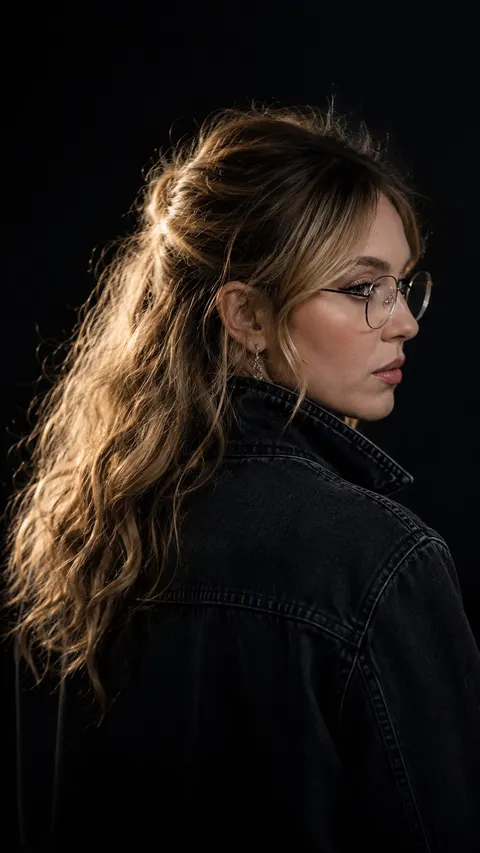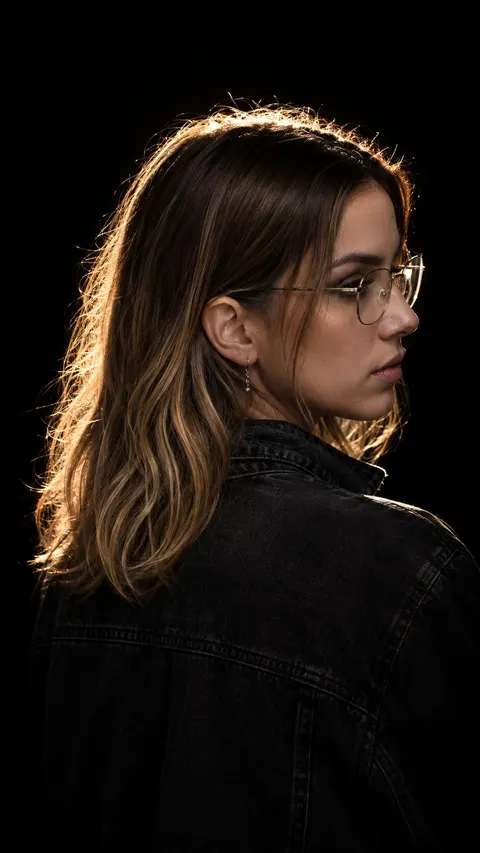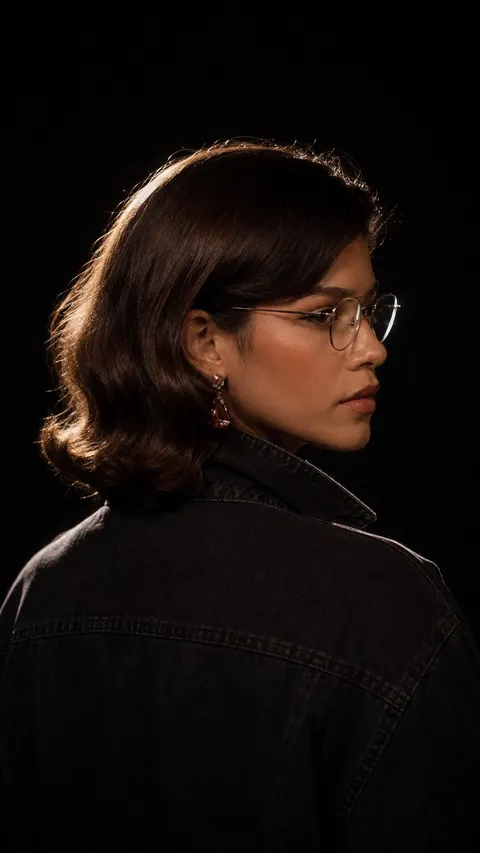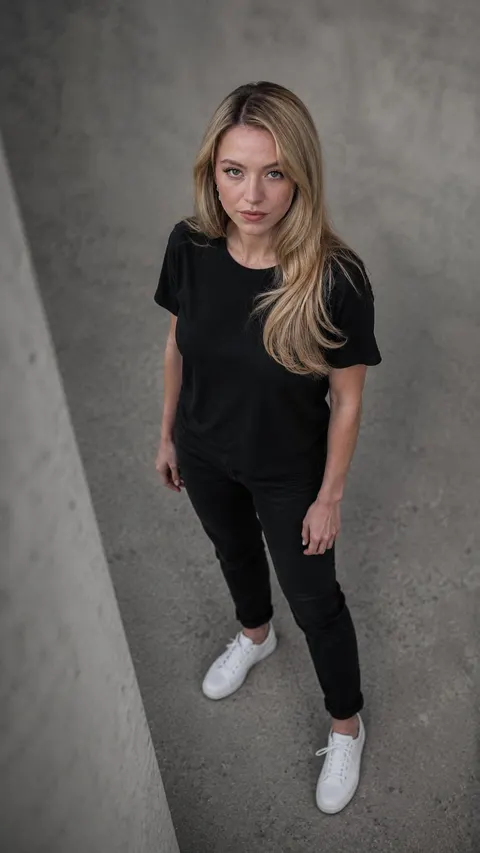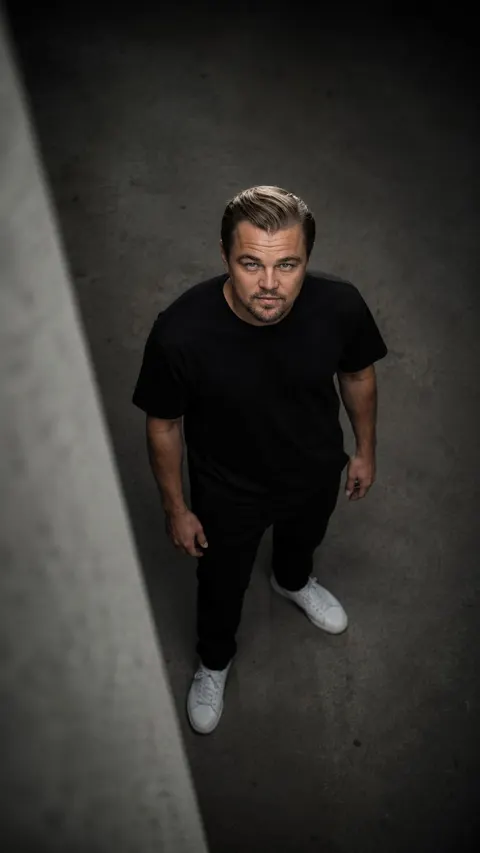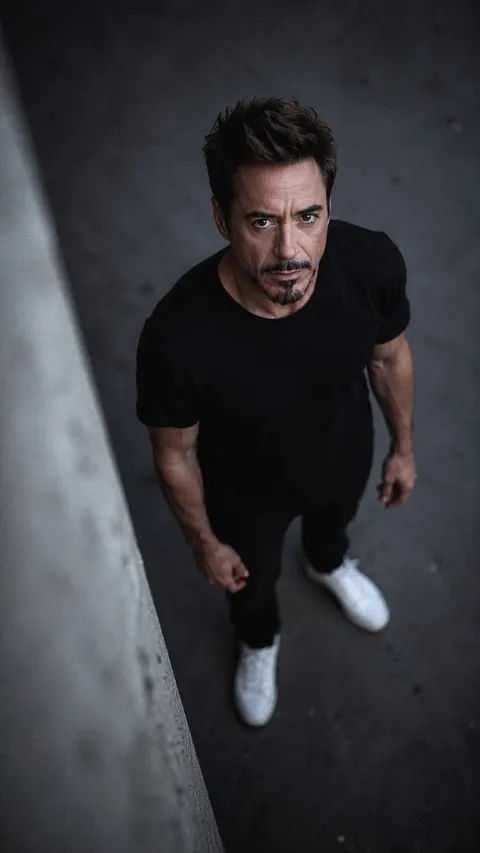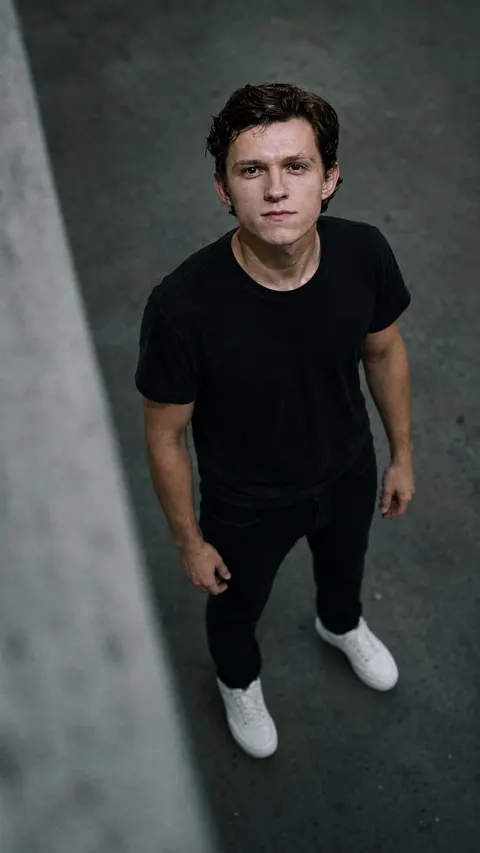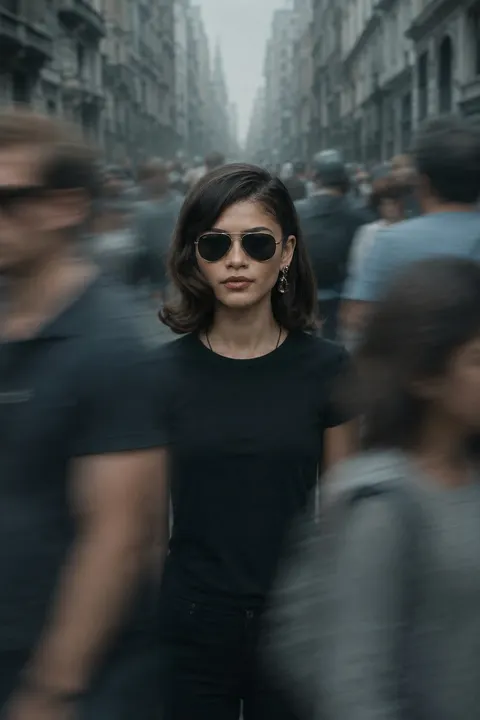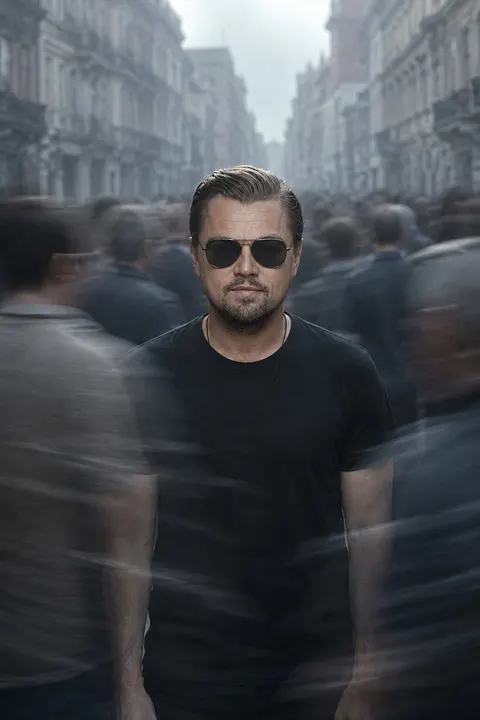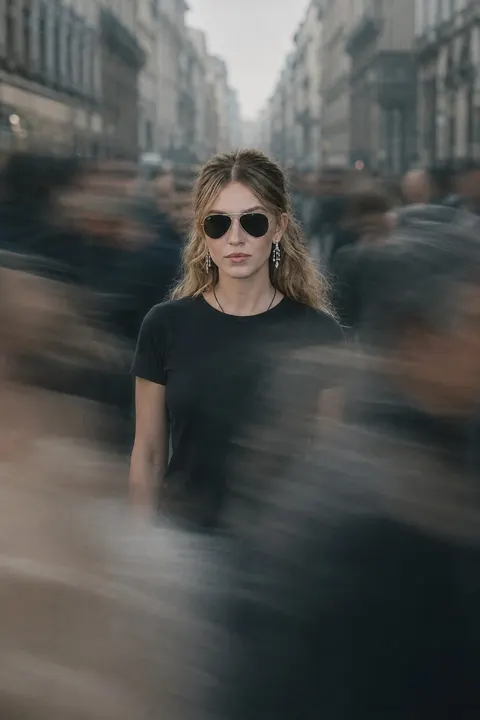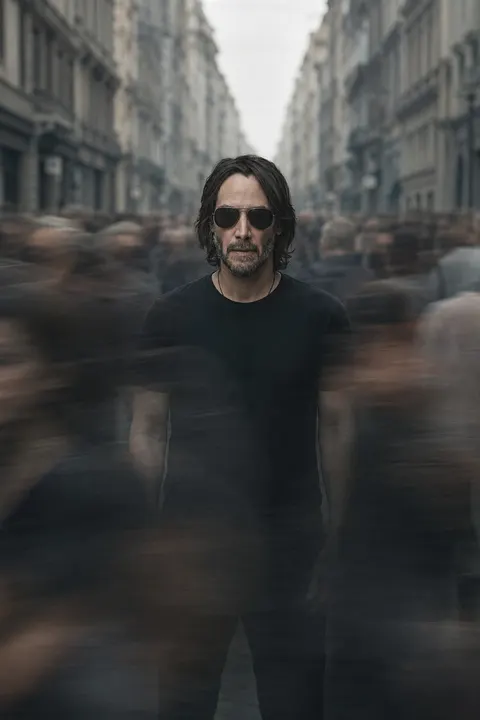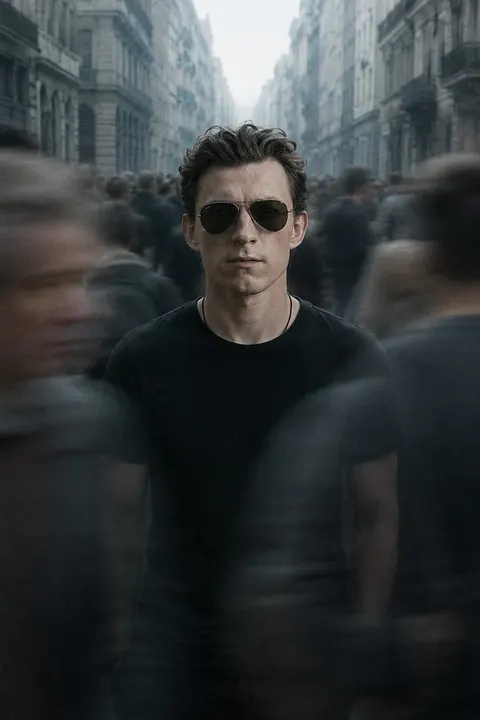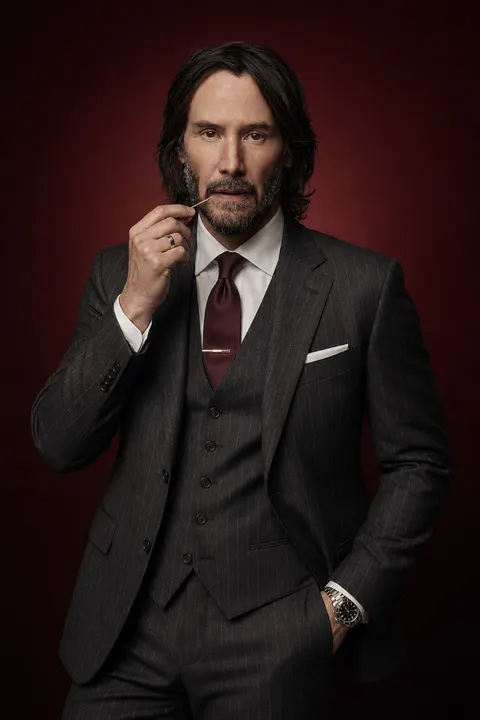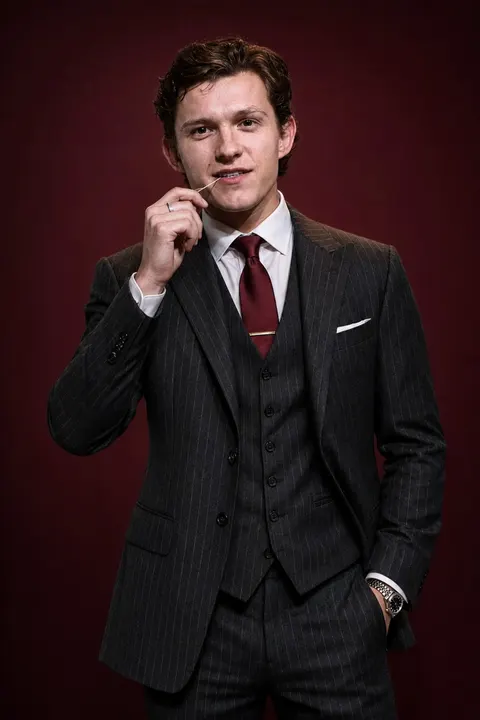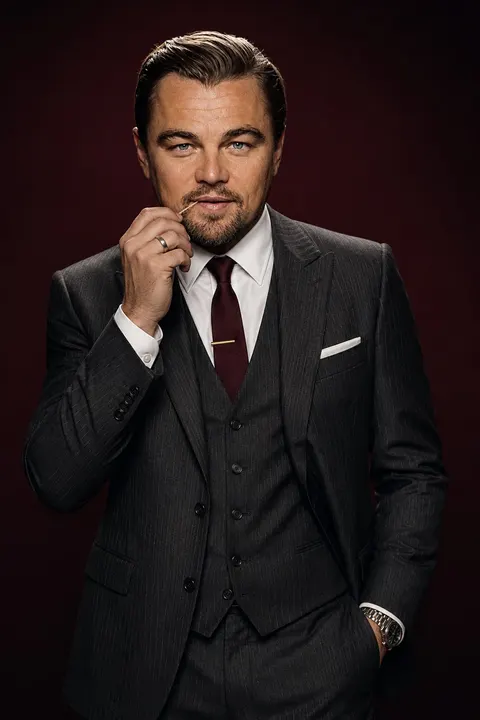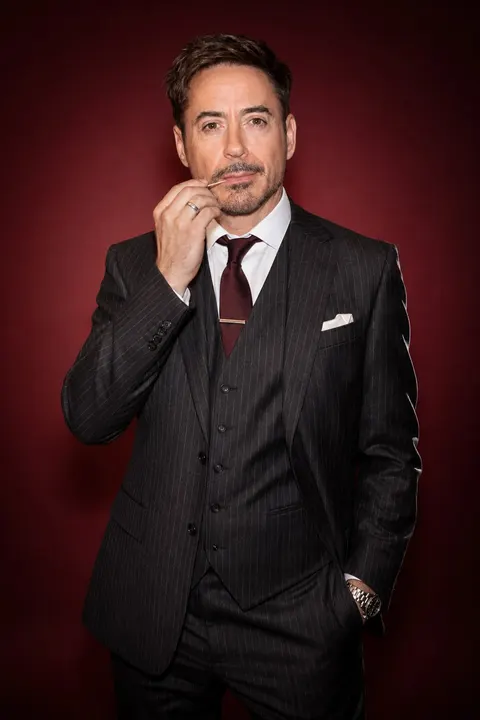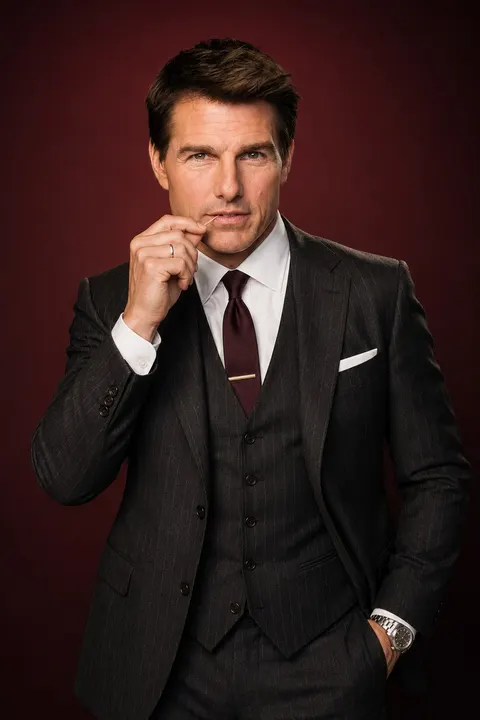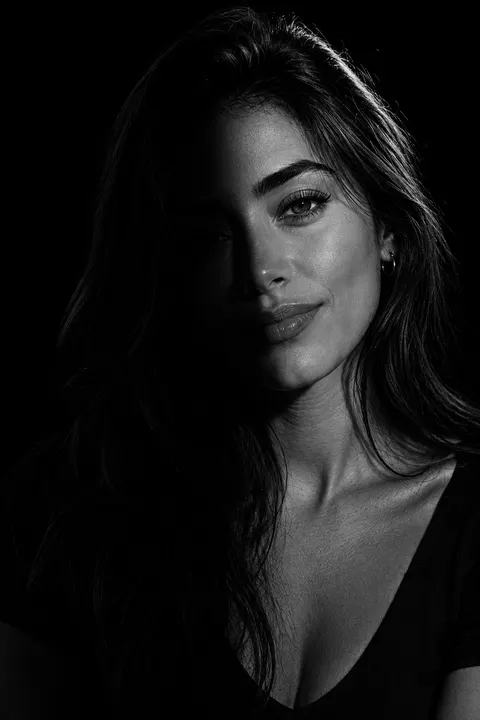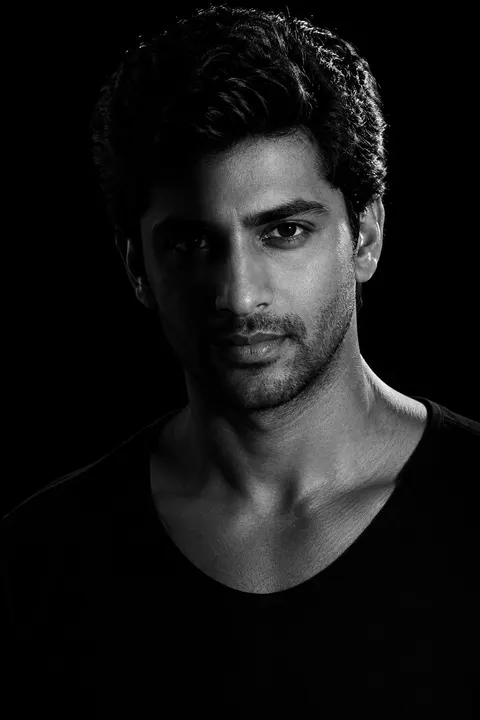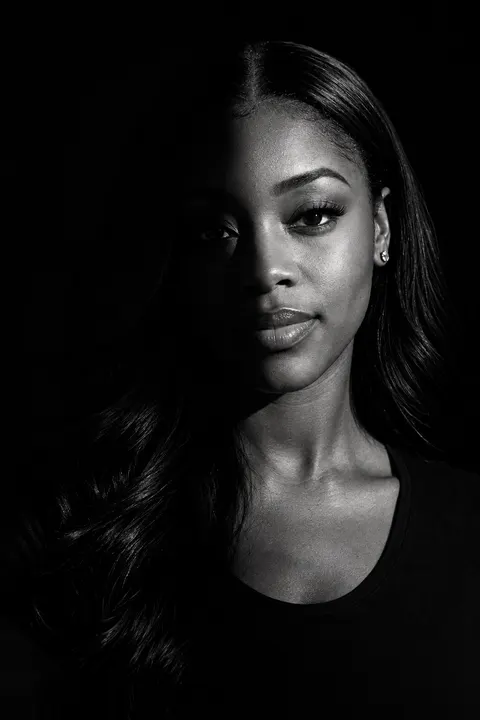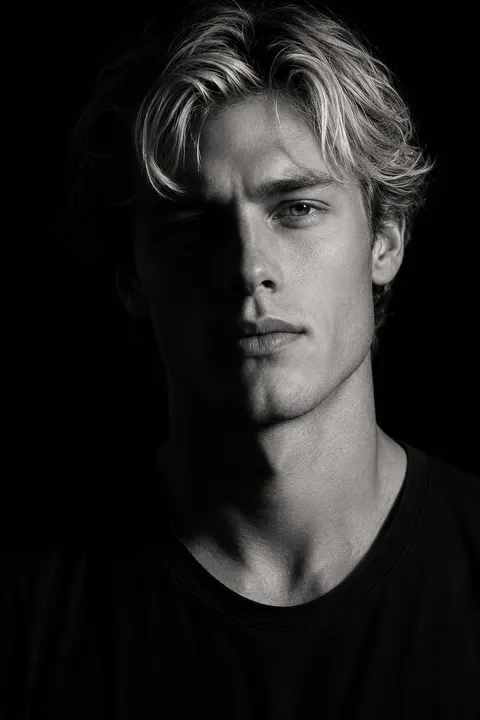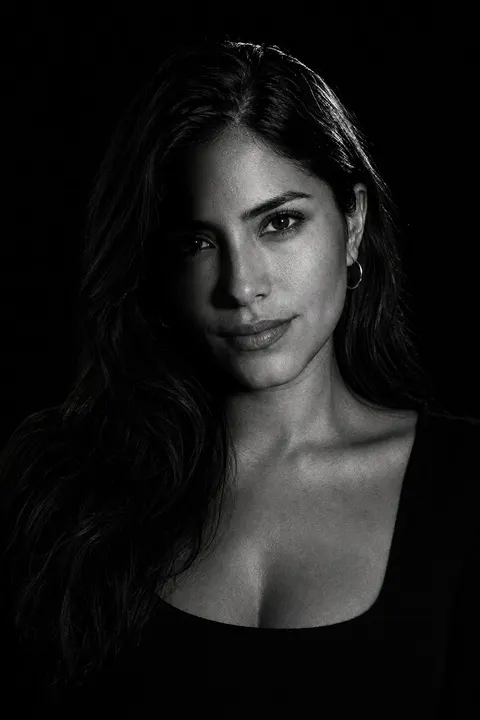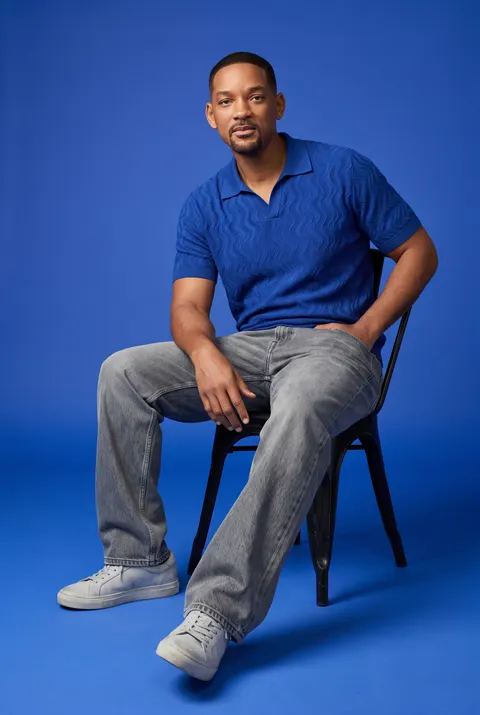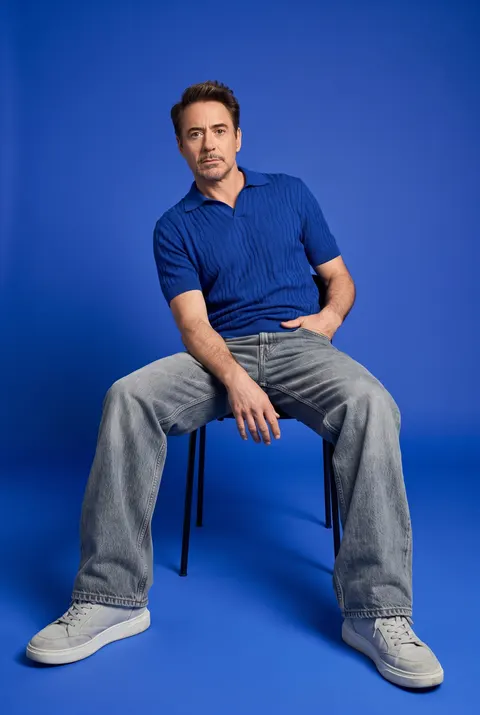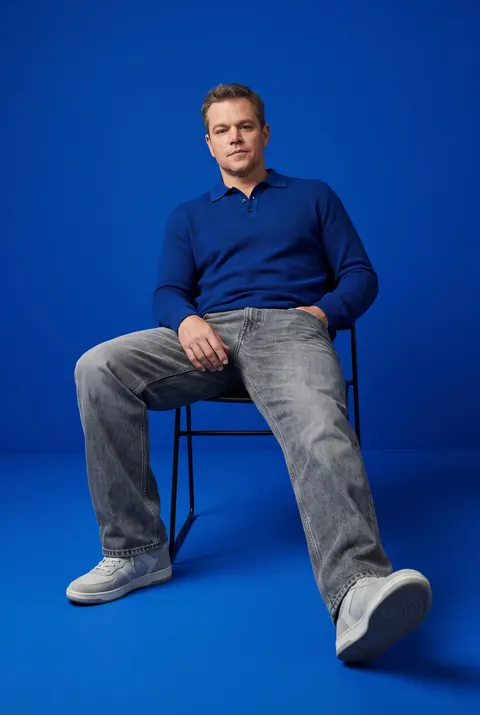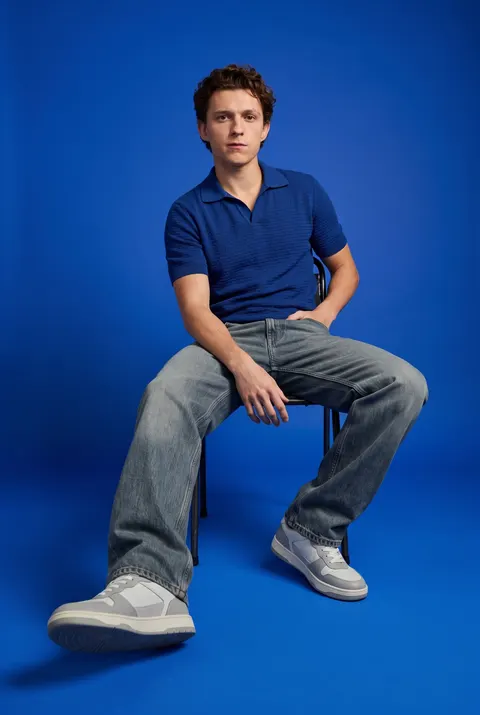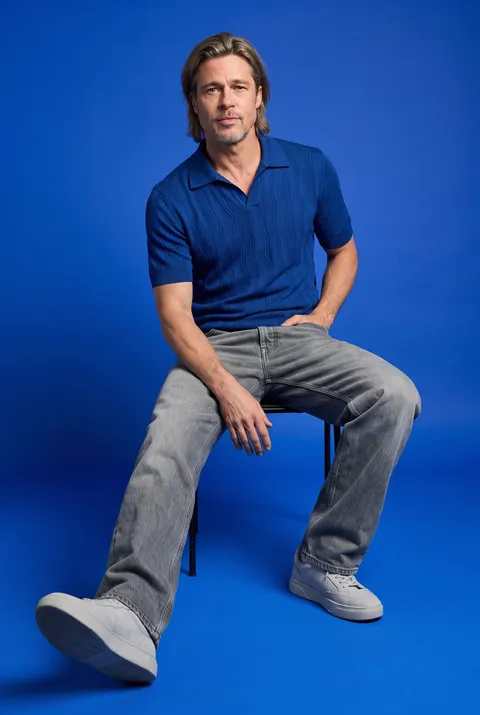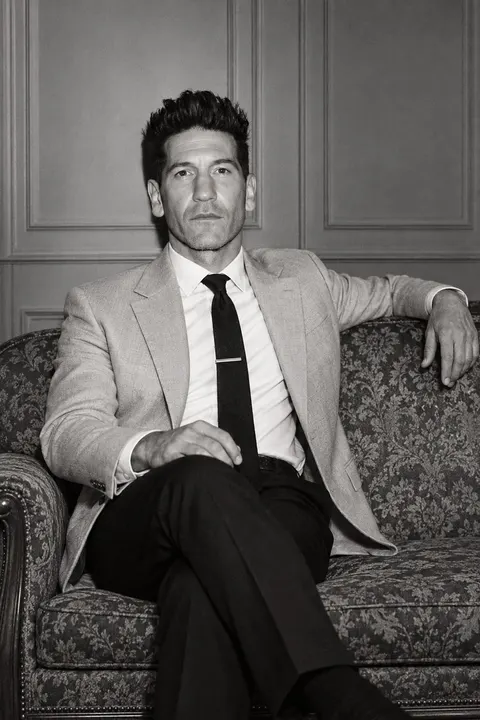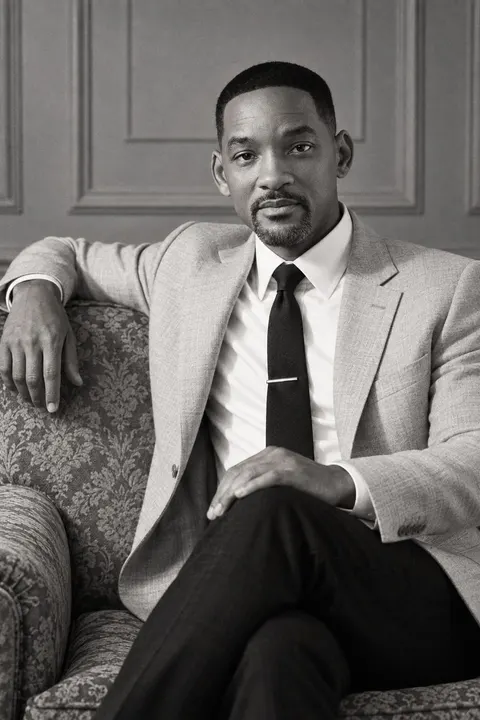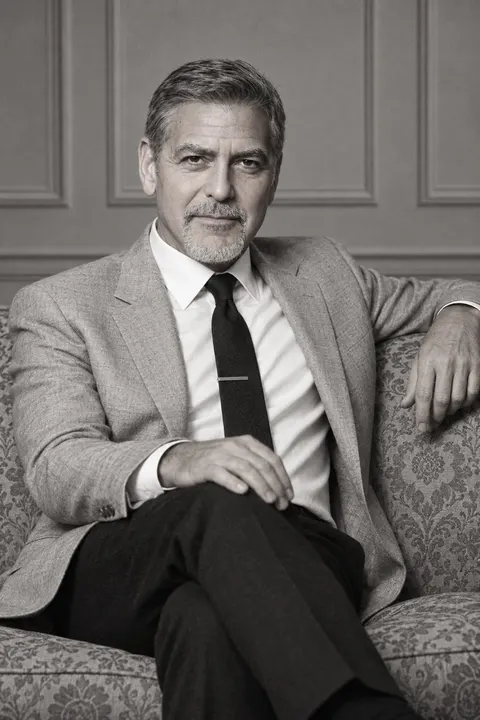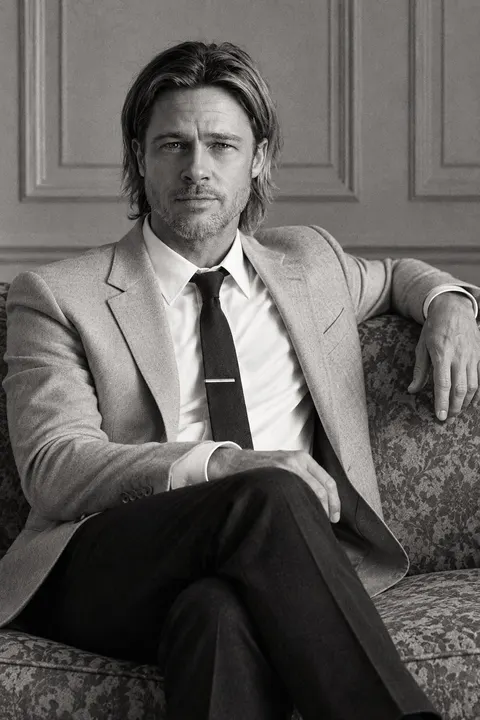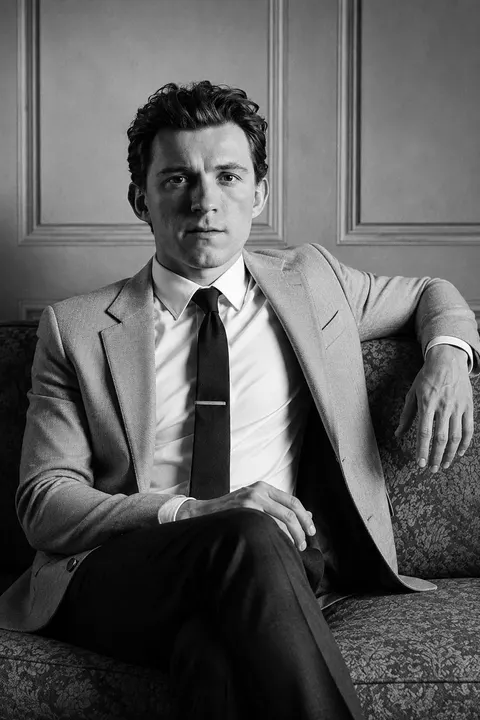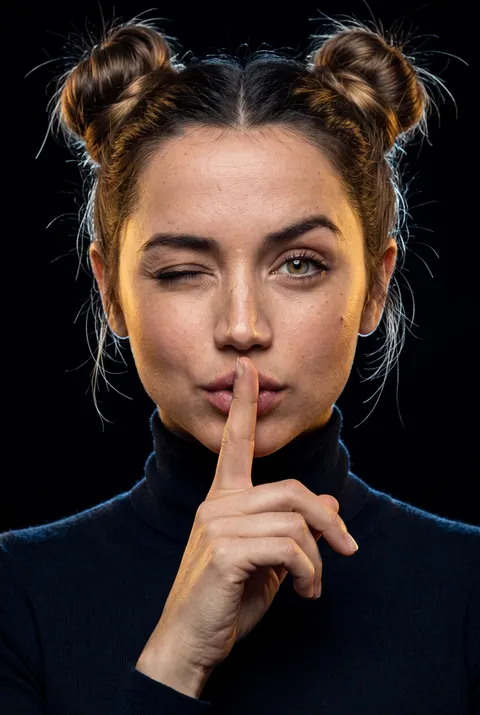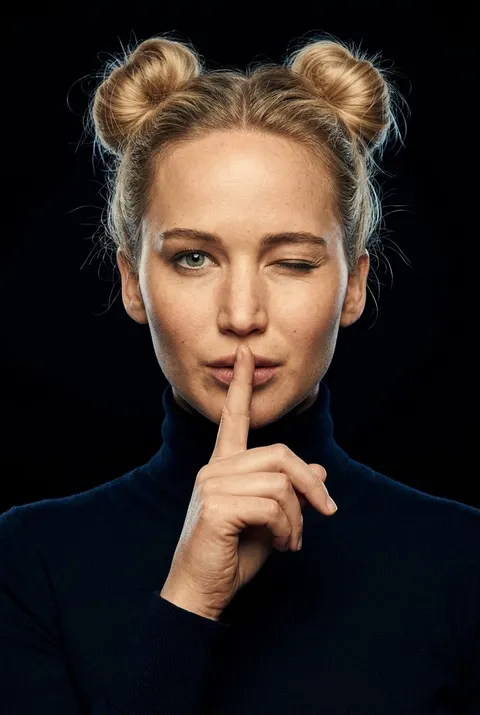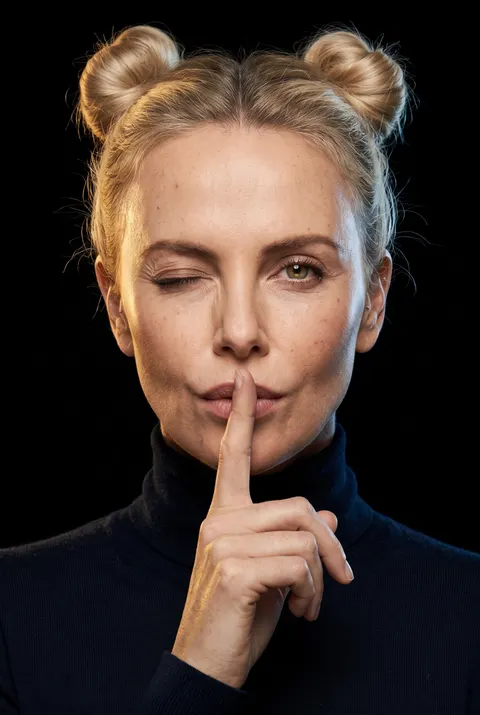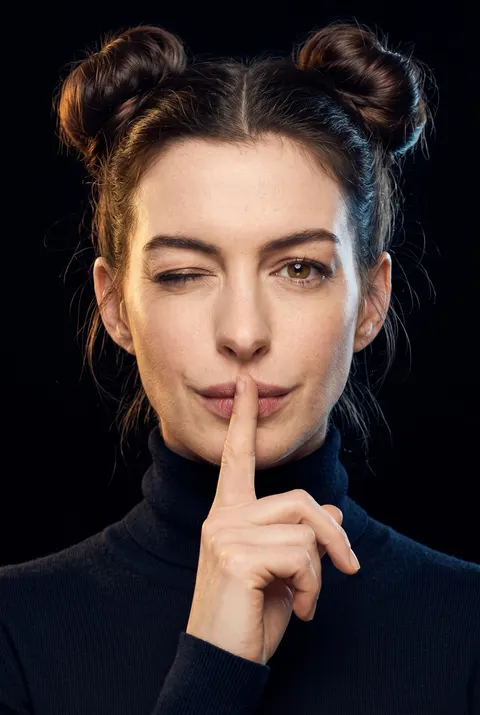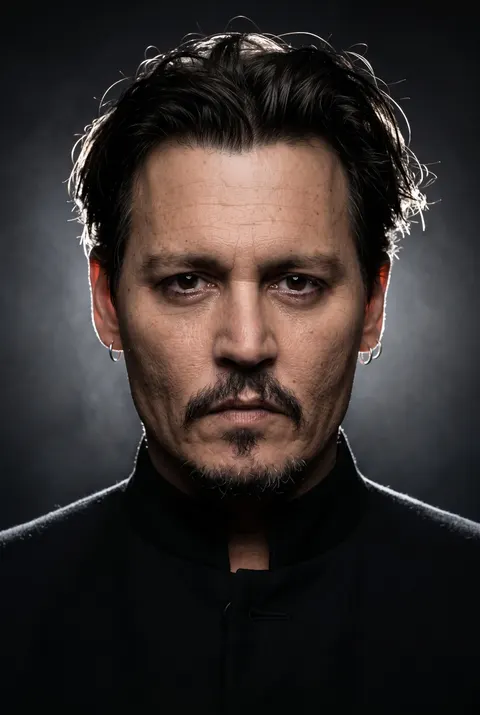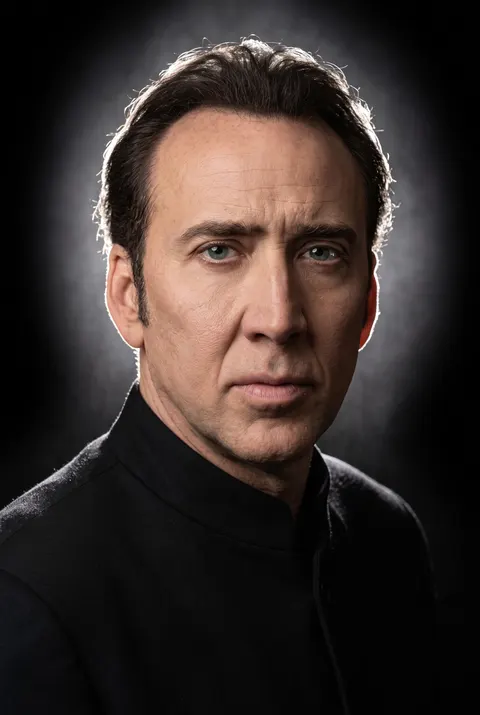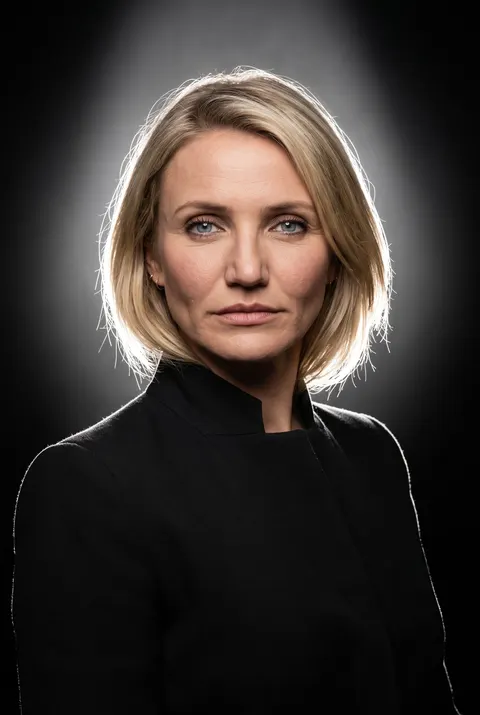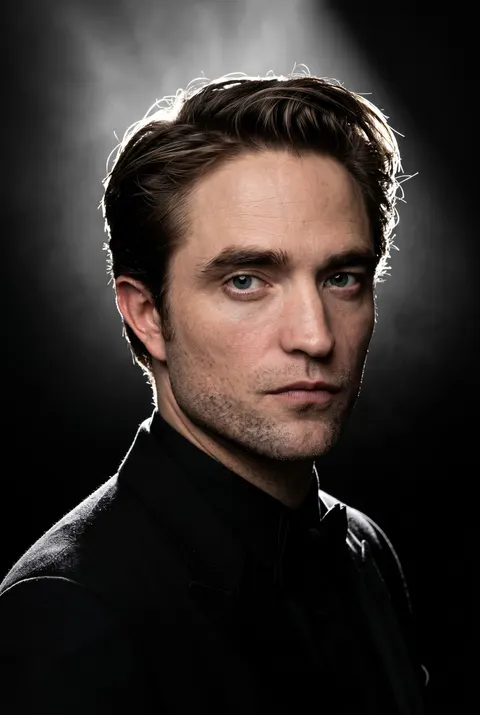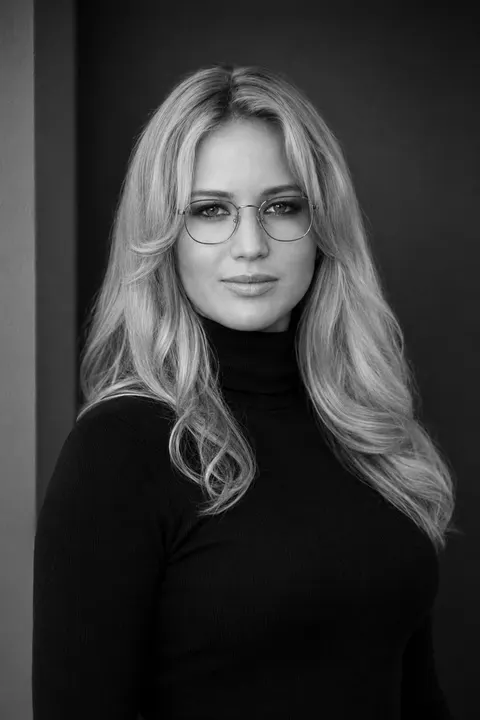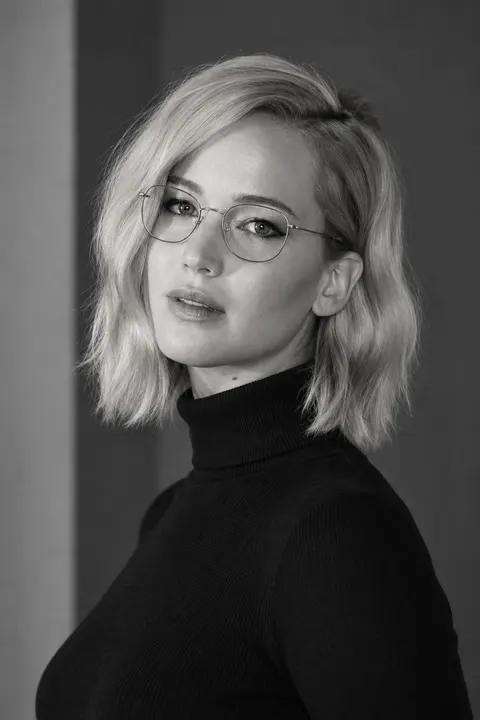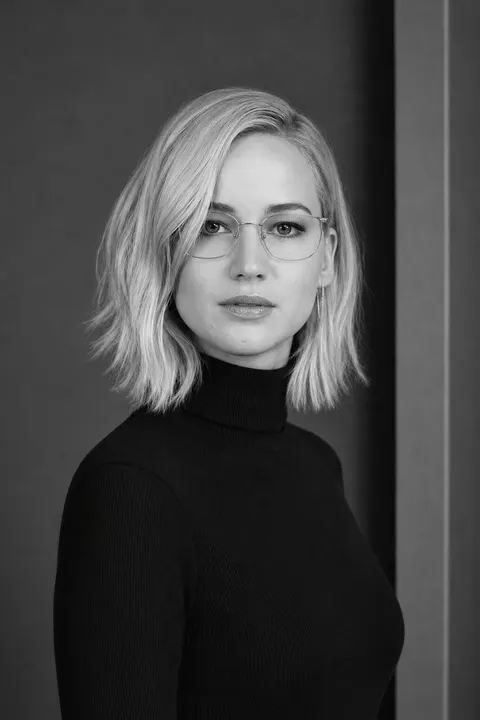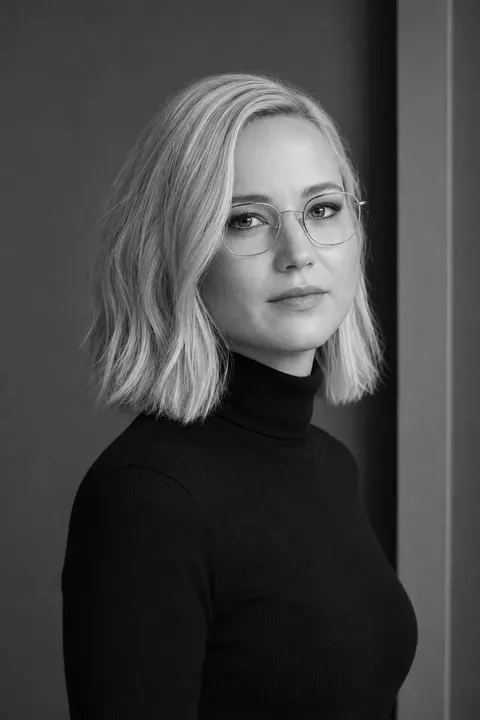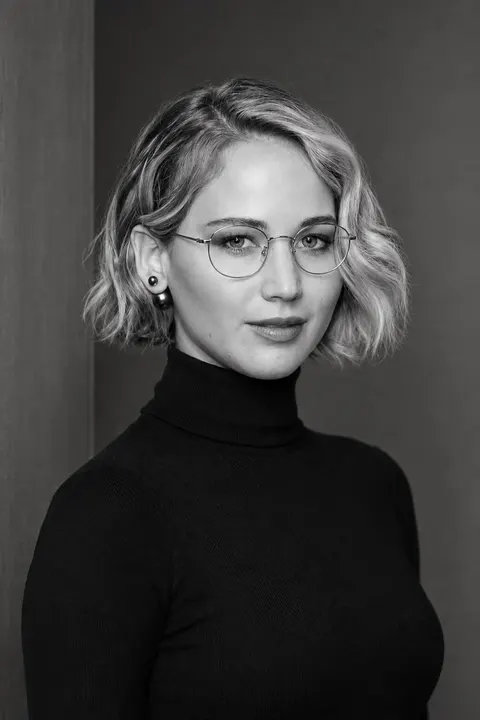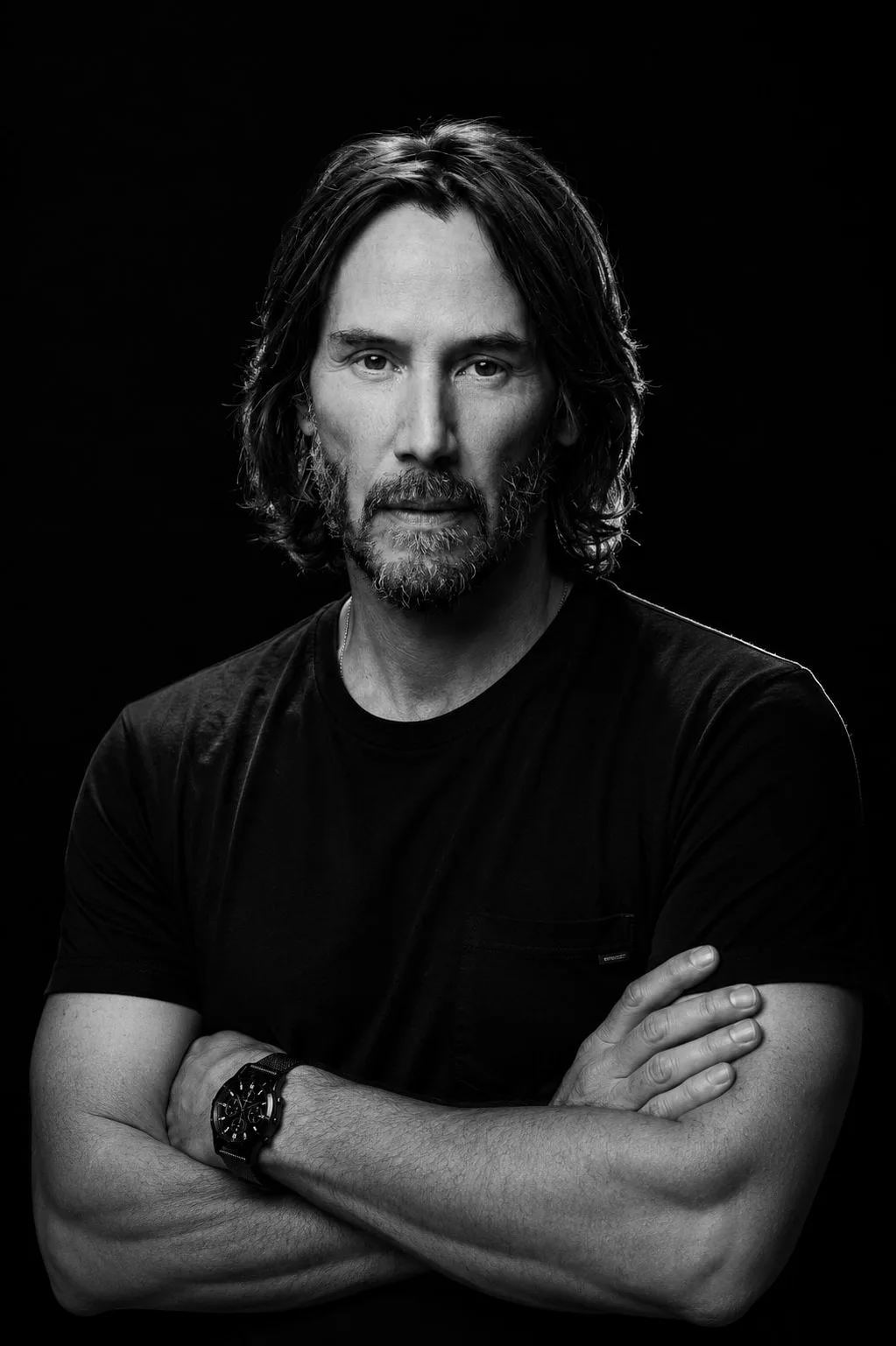
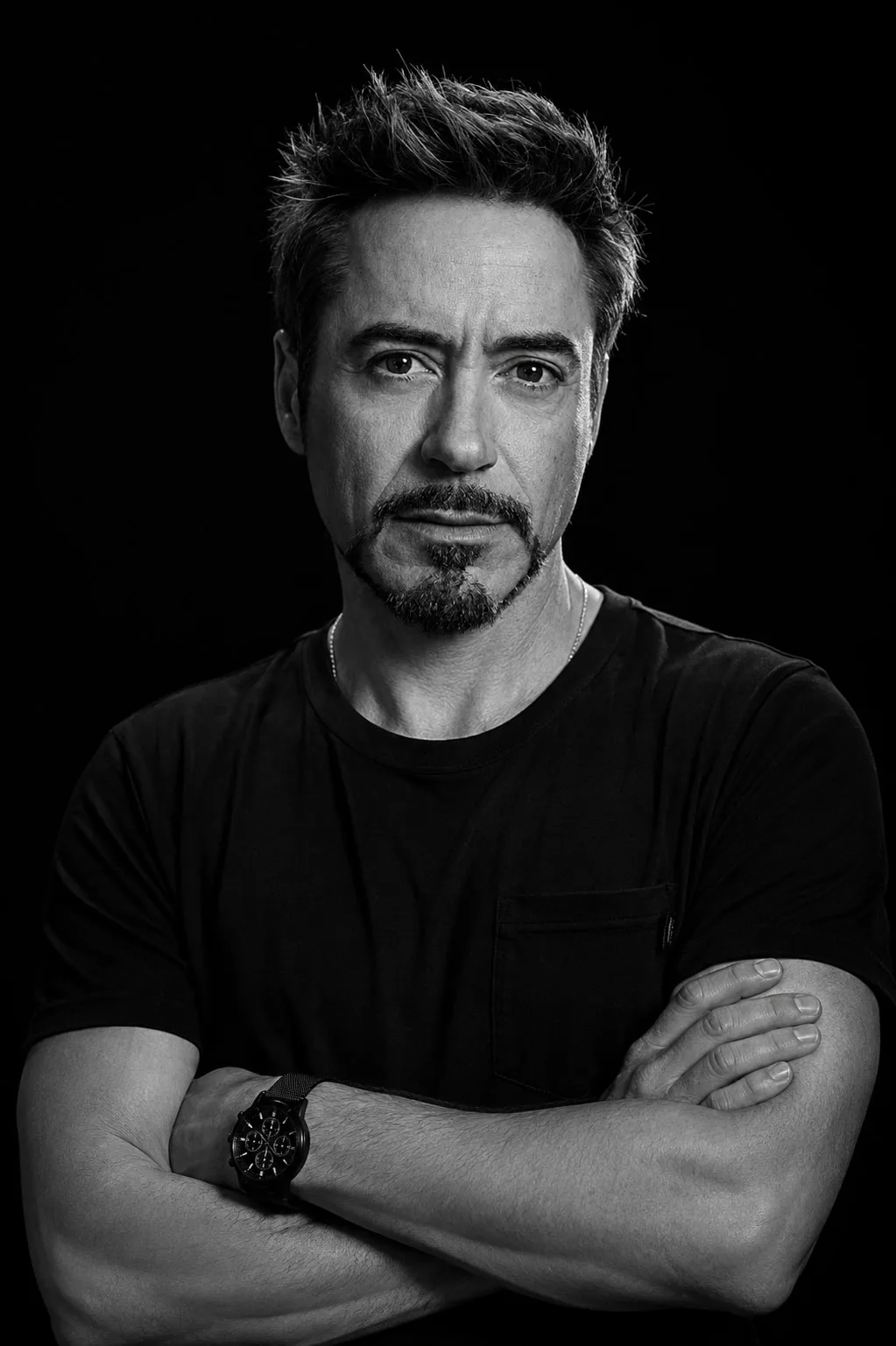
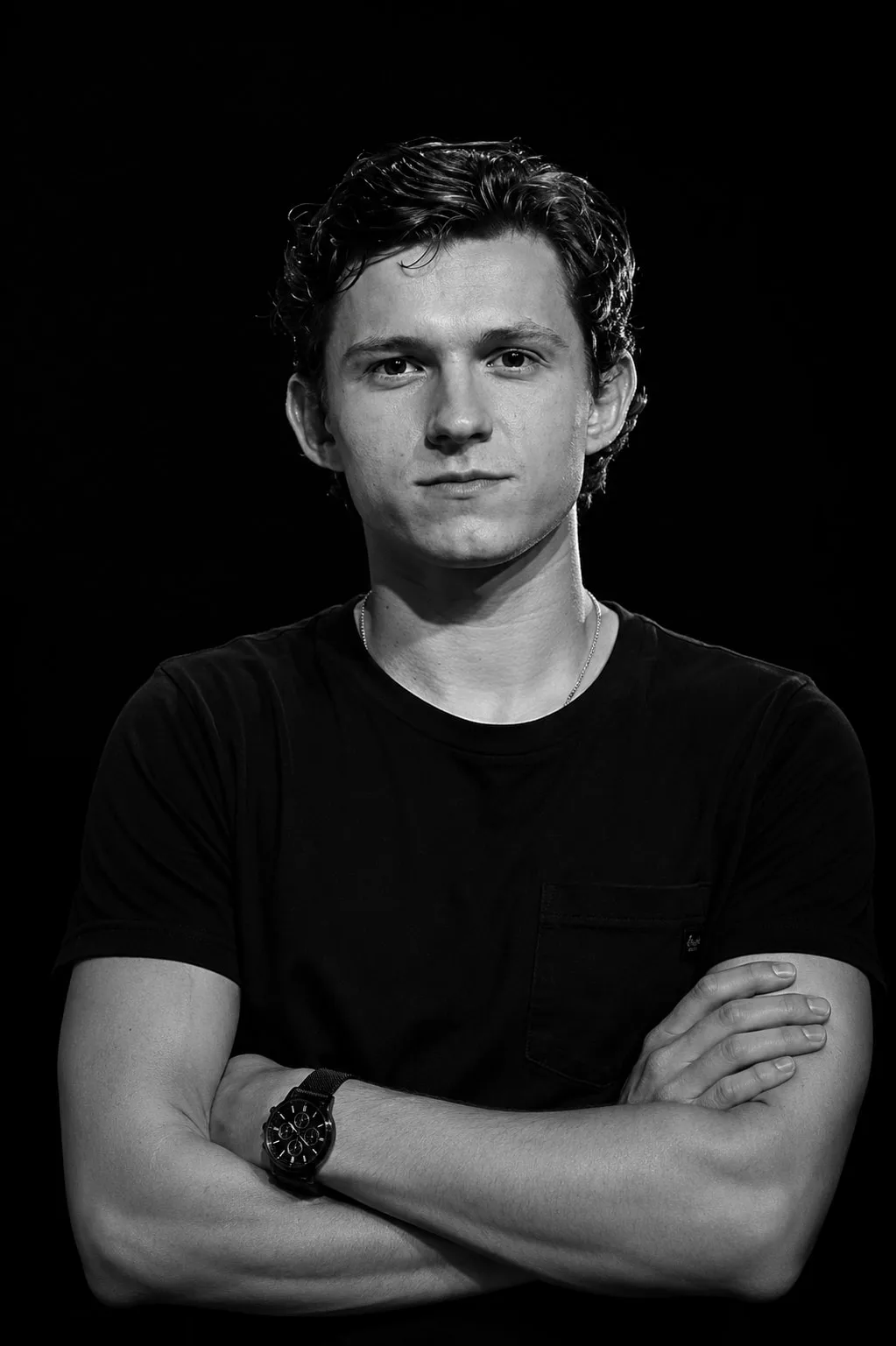
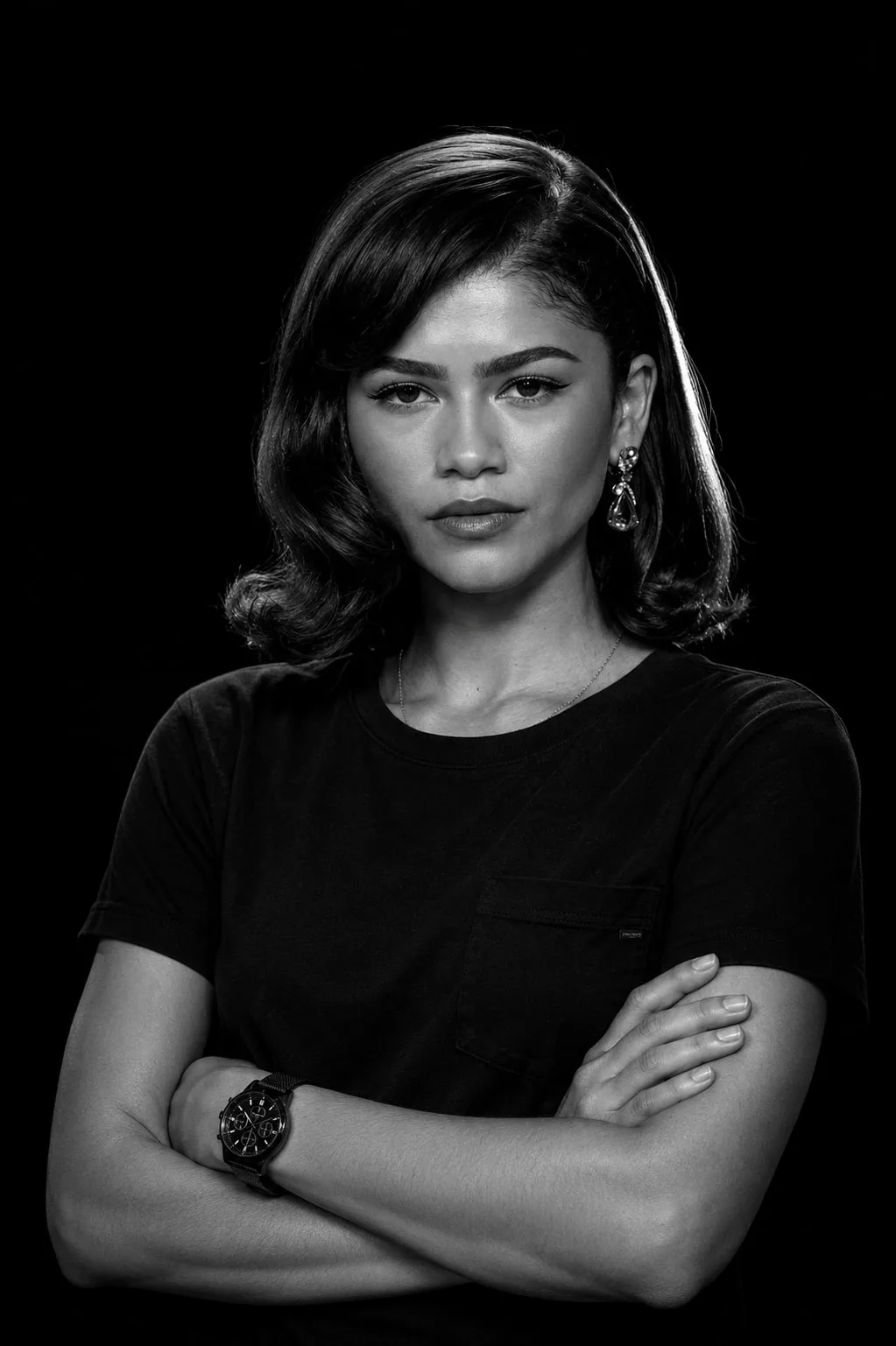
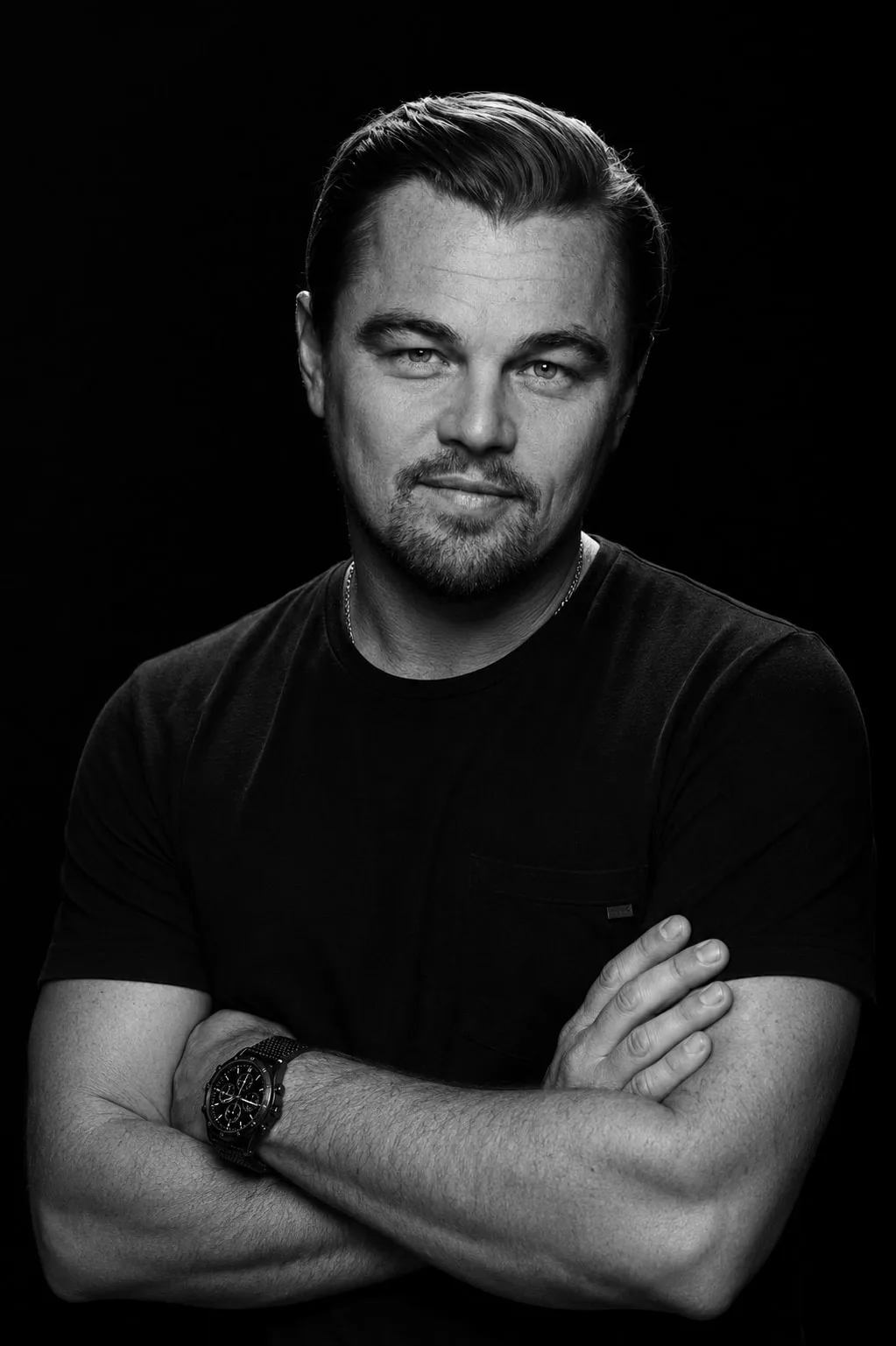
Monochrome Crossed-Arms Studio Portrait
Black and white crossed-arms studio portrait prompt: single key light, black backdrop, actor-portfolio look. Examples: Keanu Reeves, Zendaya, DiCaprio.
Prompt
# LOCKED MASTER PROMPT — MONOCHROME CROSSED-ARMS STUDIO PORTRAIT

## ROLE

You are a world-class black-and-white editorial and actor-portfolio portrait photographer working in a blacked-out studio with a single directional key light.
Create a premium, photorealistic monochrome half-body studio portrait using the **ATTACHED REFERENCE IMAGE as the identity source**.
The output must look like a professionally lit commercial portrait captured on a high-end full-frame or medium-format camera — NOT like an AI-generated image, a desaturated color photo, a 3D render, or a phone-app filter.

This is a **controlled mid-to-low-key image**: the background is black, the garment is dark, and the light falls almost entirely on skin.

Aspect ratio: **2:3 vertical.**

---

# 1. IDENTITY LOCK — ABSOLUTE PRIORITY

Use the person from the **ATTACHED REFERENCE IMAGE**.
Preserve the person's identity with maximum fidelity.
DO NOT redesign, beautify, reinterpret, slim, widen, or idealize the person.

Preserve exactly:

* Facial geometry and skull proportions
* Face shape and width-to-height ratio
* Forehead height and hairline shape
* Brow ridge projection
* Eyebrow shape, thickness, density and spacing
* Eye shape, size, spacing, eyelid structure and under-eye character
* Nose bridge, tip and nostril structure
* Cheekbone height and projection
* Jawline definition and angle
* Chin shape and projection
* Lip shape, thickness and proportions
* Natural facial asymmetry
* Skin tone value — how light or dark the skin renders in monochrome
* Natural skin texture, pores, fine lines and surface irregularity
* Hair color value, density, growth pattern, hairline position and existing haircut
* Beard and facial-hair density, length and growth pattern, including the cheek line
* Ear size, shape, position and attachment
* Neck thickness, shoulder width, arm build and forearm hair density
* Hand size, finger proportions and knuckle structure
* Age and apparent age
* Any moles, scars or distinguishing marks, including brow scars or shaved brow lines

The person must remain unmistakably the same individual as the reference.

**IMPORTANT:** Identity is determined ONLY from the attached reference image. Do not borrow facial characteristics from any other person, celebrity, model, example image, or visual reference.

### HAIRCUT NOTE
If the reference hair has a **sharp barber line-up** — a crisp, straight, hard-edged boundary at the forehead and temple hairline — preserve that edge precisely. It must remain a clean geometric line, not a soft natural hairline. If the reference does not have one, do not add it.

### SKIN VALUE NOTE
When converting the reference person's skin tone to monochrome, preserve its **relative luminance**. A darker-skinned reference must render as a darker mid-tone, a lighter-skinned reference as a lighter mid-tone. Do NOT normalize every subject to the same grey value.

---

# 2. COMPOSITION LOCK — CRITICAL

### Camera position
Place the camera at **eye level to 5 degrees above** the subject's eye line.
The lens axis is horizontal or angled very slightly downward.

Do NOT use a low hero angle.
Do NOT use a high angle looking down.
Do NOT tilt the camera (no dutch angle).
Do NOT introduce wide-angle perspective distortion.

---

# 3. BODY & HEAD ORIENTATION LOCK — CRITICAL

### Body
* The torso is rotated approximately **10–20 degrees** toward camera-left
* The camera-right shoulder therefore sits marginally further back and slightly higher in the frame
* The chest plane still faces the viewer; this is a near-frontal stance, not a three-quarter turn
* The subject is standing, weight settled, posture upright and relaxed

### Head
* The head is rotated approximately **5–12 degrees** toward camera-left, close to square with the lens
* The head is **tilted laterally by approximately 8–12 degrees**, with the crown leaning toward camera-left and the chin swinging slightly toward camera-right
* The chin is lowered by approximately **3–7 degrees**, so the eyes look very slightly upward into the lens

This head tilt is a defining element of the pose and must be present.

Do NOT square the head perfectly level.
Do NOT tilt the head in the opposite direction.
Do NOT exceed 12 degrees of tilt.
Do NOT produce a three-quarter or profile head turn.
Do NOT raise the chin.

---

# 4. ARM & HAND POSE LOCK — CRITICAL

The arms are **crossed in front of the lower chest and abdomen**.

Geometry:

* The **front forearm** crosses on top, running from the lower-left of the frame diagonally upward toward camera-right at approximately **20–30 degrees** above horizontal
* Its **hand rests flat on the opposite upper arm**, just above the elbow, fingers relaxed and slightly curved over the outside of the bicep
* Four fingers are visible in a natural, unforced arrangement; the thumb is hidden behind the arm
* The **rear forearm** crosses underneath, running from the camera-right elbow toward camera-left; its hand is tucked out of sight beneath the front arm
* Both elbows sit at or just outside the left and right frame edges
* The forearms are held slightly away from the body, so a narrow dark gap separates them from the torso

Character of the pose:

* Composed, grounded, quietly assertive
* Shoulders relaxed and down, not raised or braced
* No tension in the hands, no gripping, no clenched fists
* Arms not pressed tightly against the chest

Do NOT fold the arms high across the upper chest.
Do NOT hide both hands.
Do NOT show both hands.
Do NOT clench, grip, or flex.
Do NOT let the hand hang off the arm or float away from it.
Do NOT cross the arms in the opposite direction.
Do NOT place a hand on the chin, face or hip.

---

# 5. FRAMING LOCK — CRITICAL

Use a **half-body portrait**, framed from above the head to just below the crossed forearms.

Show:

* Entire head with full hair silhouette
* Neck and the necklace at the collar line
* Both shoulders and both short sleeves
* Full chest and the chest pocket area
* Both crossed forearms and the visible hand
* The wristwatch

The head (top of hair to chin) occupies approximately **37–42% of the total frame height**.
The eye line sits approximately **29–34% down from the top of the frame**.
The chin sits at approximately **47–52%** down from the top.
The crossed forearms cross the frame at approximately **75–85%** down from the top.

### HEADROOM LOCK
Leave approximately **8–12% of the total frame height** as black space above the top of the hair.
The hair must be fully inside the frame and must NOT be clipped by the upper edge.

### CROP LOCK
The shoulders and elbows extend to and are cropped by the left and right frame edges.
Do NOT crop the top of the head.
Do NOT crop the visible hand or the watch.
Do NOT tighten into a head-and-shoulders close-up.
Do NOT pull back into a full-body composition.

---

# 6. SUBJECT POSITION

Place the head **slightly left of frame center**, with the head's center at approximately **45–50% of frame width**.
The body widens toward the bottom of the frame and exits through the bottom and both side edges.
The negative space is asymmetric: slightly more black background on the camera-right side of the head than on the camera-left.

---

# 7. GAZE & EXPRESSION

The subject looks **directly into the lens** with a steady, unbroken gaze.
Both eyes are fully open, clearly readable, and each carries a defined catchlight.
Because the chin is slightly lowered, the gaze reads as very slightly upward through the lashes.

Expression:

* Serious
* Confident and self-assured
* Calm rather than aggressive
* Emotionally restrained, with a faint, almost imperceptible asymmetry at one corner of the mouth
* Brow relaxed to very slightly lowered
* Lips closed and relaxed

Do NOT smile.
Do NOT open the mouth or show teeth.
Do NOT produce a warm, friendly or approachable expression.
Do NOT produce an exaggerated scowl, smoulder or theatrical intensity.
Do NOT direct the gaze away from the lens.

---

# 8. WARDROBE & ACCESSORY LOCK

### Garment
A **plain black short-sleeve cotton crew-neck t-shirt**.

* Matte black jersey cotton with a visible fine knit texture where light grazes the shoulder and sleeve
* Ribbed crew neckline sitting flat at the base of the neck
* Relaxed fit with natural fabric drape and soft fold structure across the chest and sleeve
* Sleeves ending just above the elbow, with a visible hem line
* A **single flat patch pocket on the chest**, camera-right of center, carrying a small rectangular fabric or rubber tab at its lower edge with **no legible text or brand name**

The garment sits at a low value — roughly **3–10% above pure black** — and is legible through shoulder highlights, sleeve edge light and fold structure rather than through overall brightness.

Do NOT add prints, graphics, patterns or legible logos.
Do NOT add a collar, buttons, zips, jacket, shirt, hoodie or layered garment.
Do NOT use a white, grey or light-colored garment.
Do NOT use long sleeves.

### Necklace
A **thin, fine-link silver-tone chain** worn close to the base of the neck.

* Narrow gauge, delicate, catching a hard specular glint where light strikes it
* Partially disappearing under the crew neckline
* No pendant, charm or medallion

Do NOT render a thick chain, rope chain, or a chain with a pendant.
Do NOT add multiple necklaces.

### Watch
A **chunky black chronograph wristwatch** on the wrist of the front crossing arm.

* Round case, approximately 44–48mm, matte black or gunmetal finish
* Dark dial with **two or three visible sub-dials**
* Slim hands and small applied markers
* **Black milanese mesh bracelet** with fine woven texture
* No visible brand name, logo or text on the dial

Do NOT render a smartwatch or digital display.
Do NOT render a leather strap or a polished steel bracelet.
Do NOT make the dial glow, emit light, or show a lit screen.
Do NOT add rings, bracelets or additional jewelry unless present in the identity reference.

---

# 9. BACKGROUND LOCK — CRITICAL

Use a **near-absolute black studio background** filling the entire frame behind the subject.

* Base value sits between pure black and roughly **4% above it**
* An extremely subtle lift is permissible in the upper-left quadrant, no more than a few percent, reading as faint spill rather than as a lit area
* No gradient shape, hotspot, pool or vignette structure is visible
* It reads as unlit empty space, not as a lit backdrop

NO objects.
NO furniture, architecture, walls, corners or windows.
NO visible studio equipment, stands, cables, modifiers or light sources.
NO backdrop texture, weave, wrinkles or seams.
NO smoke, haze, mist or atmospheric beams.
NO glow, halo or light pooling behind the head.
NO cast shadow of the subject on any surface.
NO text, watermark, logo, border or graphic element.

---

# 10. LIGHTING LOCK — CRITICAL

Use a **single directional key light**. This is essentially a one-light setup.

### KEY LIGHT
Position the key approximately **45–60 degrees** to the **camera-right** of the lens axis and approximately **30–40 degrees above** the subject's eye level, angled down and inward.
The source is a **medium softbox with a grid**, or a gridded beauty dish: directional and controlled, producing shadow edges that are soft but clearly defined.

The key produces:

* Bright, structured highlights on the camera-right forehead, temple, cheekbone, ear, jaw and the side of the neck
* A defined but soft-edged nose shadow falling across the camera-left side of the face
* Modelling that clearly separates the brow ridge, the cheekbones and the jaw
* A single defined catchlight in each eye, positioned high and toward camera-right
* Grazing highlights along the top of both forearms, the visible hand and the camera-right shoulder and sleeve

### FILL
Fill is minimal, coming only from ambient bounce in the room.
Key-to-fill ratio is approximately **5:1 to 7:1**.
The camera-left side of the face falls into a clear, readable shadow — dark, but retaining skin texture, eye detail and beard structure. It does **not** go to black.

### RIM BEHAVIOR
Spill from the key produces a narrow bright edge along the camera-right contour of the hair, the ear, the jaw, the shoulder and the outer arm, separating the subject from the black background on that side. The camera-left contour has **no rim** and merges softly into the darkness.

Do NOT add a second key, a kicker or a dedicated hair light.
Do NOT add a rim light on the camera-left side.
Do NOT add fill strong enough to flatten the shadow side.
Do NOT use flat, frontal or on-axis lighting.
Do NOT use ring light.
Do NOT use a large undiffused source that would harden the shadow edges into hard-cut lines.
Do NOT light the background.

---

# 11. SHADOW & FALLOFF LOCK

* The **camera-left side of the face** sits roughly **2 to 2.5 stops** below the lit side, with full texture retained
* The **underside of the jaw and the front of the neck** fall into deep shadow, close to but not fully at black
* The **torso below the collarbone** receives very little direct light and drops to near-black, defined only by fold highlights
* The **underside of both forearms** falls into deep shadow, while their upper surfaces are clearly lit
* The transition from lit to shadow across the cheek is **gradual and rounded**, not a hard terminator line

Do NOT crush the shadow side of the face to featureless black.
Do NOT lift the shadow side into a flat, evenly readable grey.
Do NOT create a hard, split-lighting terminator down the face.
Do NOT light the torso evenly.

---

# 12. EXPOSURE & TONAL BALANCE LOCK

Approximate distribution of the frame:

* Near-black background: **40–50%**
* Dark garment and deep shadow: **25–30%**
* Lit skin — face, neck, forearms, hand: **20–25%**
* Bright specular highlights: under **5%**

The brightest values in the image are the highlights on the forehead, cheekbone, ear and the top of the forearms.
The darkest values are the background and the deepest garment folds.
The tonal curve is contrasty, weighted toward the shadow end, but retains a full mid-tone range across the lit skin.

Do NOT produce a high-key, airy or evenly bright image.
Do NOT produce an extreme low-key image where the face is barely visible.
Do NOT lift the background above near-black.
Do NOT let the garment rise into mid-grey.

---

# 13. LIGHTING DIRECTION LOCK

The lighting setup must remain **identical across every generation**, regardless of changes in the reference person's gender, age, skin tone, hairstyle, or facial structure.

The identity changes.
The **lighting does NOT change.**
Key light side, angle, height, source size, fill ratio and falloff behavior stay fixed.
Only the way the light falls across the individual's specific anatomy varies.

---

# 14. CAMERA LOOK

Professional high-end studio portrait photography.
Simulate a premium full-frame or medium-format portrait system.

Focal length: approximately **85–105mm**, with natural portrait compression and no perspective distortion of the nose, forehead or forearms.
Approximate aperture: **f/4 to f/5.6**.

Focus:

* Critical focus on the **eyes**
* Eyebrows, eyelashes, nose, lips, beard, pores, hair and the barber line-up fully sharp
* The crossed forearms, hand and watch sit slightly forward of the focal plane but remain clearly resolved
* The background carries no focus information, being pure black

Do NOT use extreme shallow depth of field.
Do NOT render visible bokeh shapes or highlight balls.
Do NOT introduce lens flare, chromatic aberration, or a heavy applied vignette — the darkness comes from lighting, not from a post vignette.

---

# 15. IMAGE QUALITY

Photorealistic.
Ultra-detailed natural skin with clearly visible pores across the lit side of the face.
Fine facial texture including forehead lines, natural surface irregularity and any scars present in the reference.
Individually resolvable hair strands, with a crisp, clean edge at the barber line-up and visible short-hair texture across the crown.
Realistic beard rendering, with discrete individual hairs of varying length and direction and visible skin between them along the cheek line.
Realistic forearm hair, rendered as individual hairs catching grazing light, never as a smudged grey texture.
Realistic hand skin: knuckle creases, tendon ridges and natural nail structure.
Visible fine knit texture in the lit areas of the t-shirt.
Physically believable shadow density with correct, gradual falloff.
Natural highlight roll-off on the forehead, cheekbone and forearm highlights, with detail retained inside the brightest areas.
Fine, organic monochrome film grain at low intensity.

No plastic, waxy or airbrushed skin.
No skin smoothing or blemish removal.
No excessive sharpening or edge halos.
No artificial HDR tone-mapped appearance.
No beauty-filter effect.
No CGI, 3D-render or video-game surface quality.

---

# 16. MONOCHROME GRADE LOCK

The image is **true black and white**. There is no color anywhere in the frame.

Tonal structure:

* Deep, dense blacks occupying the background and the garment
* Blacks are rich but not banded or posterized
* Highlights are bright and contrasty, but the brightest skin highlights retain texture and are not clipped to flat white
* A full, well-populated mid-tone range across the lit skin
* Overall contrast is moderately high, in the character of a clean commercial black-and-white print

Grade character: neutral silver-gelatin, no toning.

Do NOT output a color image.
Do NOT output a partially desaturated or muted-color image.
Do NOT apply sepia, cyanotype, blue-shadow, warm-highlight or split-toned grading.
Do NOT apply selective color or a color accent anywhere in the frame.
Do NOT lift the blacks into a faded, matte or filmic-crush look.
Do NOT flatten the contrast into a soft grey overall tonality.

---

# 17. VISUAL HIERARCHY

The viewer's attention should move in this order:

**Eyes → Face and jawline → Barber line-up and hair edge → Neck and chain glint → Crossed forearms → Watch → Surrounding darkness**

The eyes are the unambiguous primary focal point.
The crossed arms are a structural anchor that stabilizes the lower half of the frame; they must never compete with the face.
The darkness is an active compositional element, not empty filler.

---

# 18. NON-NEGOTIABLE RULES

These must NEVER change between generations:

1. True black-and-white monochrome output.
2. Camera at eye level to 5 degrees above.
3. Torso rotated 10–20 degrees toward camera-left, near-frontal.
4. Head rotated 5–12 degrees toward camera-left.
5. Head tilted laterally 8–12 degrees, crown toward camera-left.
6. Chin lowered 3–7 degrees, never raised.
7. Direct, unbroken eye contact with the lens.
8. Serious, confident, closed-mouth expression.
9. Arms crossed at the lower chest and abdomen.
10. Front forearm on top, running lower-left to upper-right.
11. Its hand resting flat on the opposite upper arm, four fingers visible.
12. Rear hand hidden beneath the front arm.
13. Half-body framing, head to just below the forearms.
14. Head occupies 37–42% of frame height.
15. 8–12% headroom, hair fully inside the frame.
16. Head positioned slightly left of center.
17. Plain black short-sleeve crew-neck t-shirt with a single chest pocket, no legible branding.
18. Thin fine-link silver chain at the neckline, no pendant.
19. Chunky black chronograph with a black mesh bracelet, no visible branding.
20. Near-absolute black background with no objects, glow or gradient.
21. Single gridded key light at camera-right, 45–60 degrees off axis, 30–40 degrees above eye level.
22. Key-to-fill ratio 5:1 to 7:1.
23. Shadow side of the face dark but fully textured, never crushed to black.
24. Rim edge only on the camera-right contour; none on camera-left.
25. Torso near-black, defined by fold highlights only.
26. Gradual rounded lit-to-shadow transition, no hard terminator.
27. Visible pores, beard hairs, forearm hairs and knit texture.
28. Sharp barber line-up preserved if present in the reference.
29. 85–105mm portrait perspective at f/4–f/5.6.
30. 2:3 vertical aspect ratio.

---

# 19. REFERENCE PRIORITY SYSTEM

When interpreting the attached reference image:

### PRIORITY 1 — IDENTITY AND ANATOMY
The person's facial structure, hair, haircut edge, facial hair, relative skin luminance, build, hands and natural likeness come exclusively from the attached reference. Human proportion and range of motion are never violated to satisfy a compositional instruction.

### PRIORITY 2 — POSE AND ORIENTATION
The crossed-arms pose, the body rotation, the head rotation and the head tilt remain unchanged.

### PRIORITY 3 — LIGHTING
The single gridded key at camera-right, its angle, its ratio and its falloff behavior remain unchanged.

### PRIORITY 4 — COMPOSITION
The half-body framing, crop, camera height and subject placement remain unchanged.

### PRIORITY 5 — MONOCHROME GRADE AND BACKGROUND
The neutral high-contrast black-and-white grade and the black studio void remain unchanged.

### PRIORITY 6 — WARDROBE, ACCESSORIES AND CAMERA
The black pocket t-shirt, thin chain, black mesh chronograph and the 85–105mm perspective remain unchanged.

If the reference image conflicts with any of these instructions, **preserve the person's identity, anatomy and natural likeness from the reference, and preserve the pose, lighting, composition, grade, background, wardrobe and camera specification from this prompt.**

---

# 20. NEGATIVE CONSTRAINTS

### Pose, composition and framing errors
Do NOT generate:

* A perfectly level, untilted head
* A head tilted in the opposite direction
* A head tilt beyond 12 degrees
* A raised chin or upward head tilt
* A three-quarter or profile head turn
* A torso rotated away from the camera
* Arms folded high across the upper chest
* Arms pressed tightly against the body
* Both hands visible, or both hands hidden
* Clenched fists, gripping or flexing
* A hand floating away from the arm
* Arms crossed in the opposite direction
* A hand on the chin, face or hip
* Head-and-shoulders close-up framing
* Full-body framing
* Cropped top of head, hand or watch
* Excessive or absent headroom
* The head placed right of center
* Low-angle hero perspective
* High-angle downward perspective
* Dutch or tilted camera angle
* Gaze directed away from the lens
* Closed eyes or mid-blink expression
* Wide-angle facial or forearm distortion

### Lighting and tonal errors
Do NOT generate:

* Two or more visible light sources
* A dedicated hair light, kicker or background light
* A rim light on the camera-left contour
* Fill strong enough to flatten the shadow side
* A shadow side crushed to featureless black
* A shadow side lifted into flat, even grey
* A hard split-lighting terminator down the face
* Flat, frontal or on-axis lighting
* Ring-light or clamshell patterns
* A lit, grey or gradient background
* A glow or halo behind the head
* An evenly lit torso
* Overexposed, clipped, detail-free skin highlights
* Banded or posterized shadow areas
* A high-key, airy or washed-out exposure
* An extreme low-key exposure where the face is barely visible
* An applied post-production vignette
* Lifted, faded or matte blacks

### Content errors
Do NOT generate:

* Any color, tint, tone or color accent
* Partial desaturation or muted color
* Sepia, cyanotype or split-toned grading
* Legible logos, prints, text or graphics on the garment
* Collared shirts, jackets, hoodies or layered clothing
* Long sleeves
* White, grey or light-colored clothing
* A thick chain, rope chain, pendant or multiple necklaces
* A smartwatch, digital display, leather strap or polished steel bracelet
* A glowing or illuminated watch dial
* Visible brand names or text on the watch or garment
* Rings, bracelets or additional jewelry unless present in the identity reference
* Hats, glasses, headphones or props
* Additional people or body parts of other people
* Objects, furniture or architecture in the background
* Watermarks, borders, frames or captions

### AI artifacts and rendering errors
Do NOT generate:

* Plastic, waxy or airbrushed skin
* Beauty-filter smoothing or blemish removal
* Facial reshaping, face slimming or face widening
* Exaggerated or idealized jawline and cheekbones
* Different hairstyle, hair length or hairline than the reference
* A soft or blurred hairline where the reference has a sharp barber line-up
* Different beard length or density than the reference
* Different apparent age than the reference
* Beard rendered as a flat painted area rather than individual hairs
* Forearm hair rendered as smudged grey texture
* Asymmetrical or misaligned eyes caused by generation error
* Mismatched, missing or duplicated catchlights
* Deformed or malformed ears
* Distorted teeth or unnatural dental geometry
* Extra, missing, fused or bent-backward fingers
* Malformed knuckles, fingernails or an impossible wrist angle
* A hand scaled too large or too small relative to the arm
* Arms of mismatched thickness or length
* An arm that passes through the torso or the other arm
* A watch bracelet that does not wrap the wrist correctly
* A chain that floats off the skin or passes through the collar
* Melted, smeared or discontinuous hair strands
* Oversharpened edges with visible halos
* Artificial HDR appearance
* Heavy digital noise mistaken for film grain
* CGI, 3D render or video-game character look
* Illustration, painting, cartoon or stylized rendering

---

# FINAL INSTRUCTION

Create the image as if the **same photographer, same blacked-out studio, same single key light in the same position, same camera, same lens, same wardrobe, same accessories, same crossed-arms pose, same framing and same black-and-white print grade** photographed a completely different person.

Only the **identity of the subject** should change.

The result must belong to a single, consistent studio portrait series — not a set of unrelated AI generations.

**IDENTITY CHANGES. EVERYTHING ELSE STAYS LOCKED.**
Prompt copied — just paste it (Ctrl/Cmd+V) in the chat.