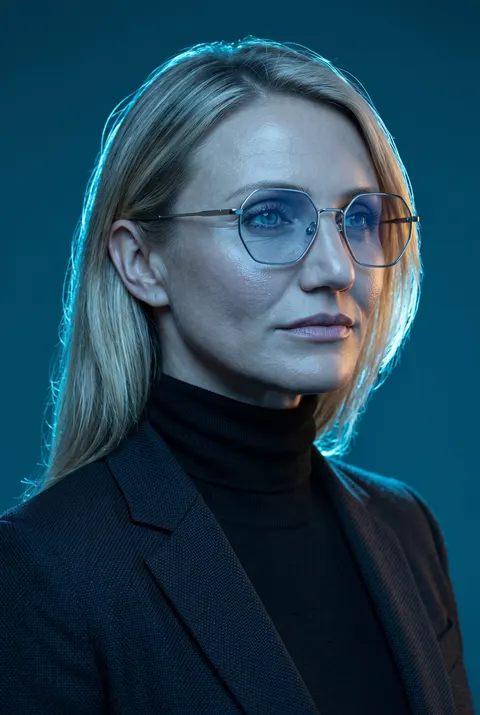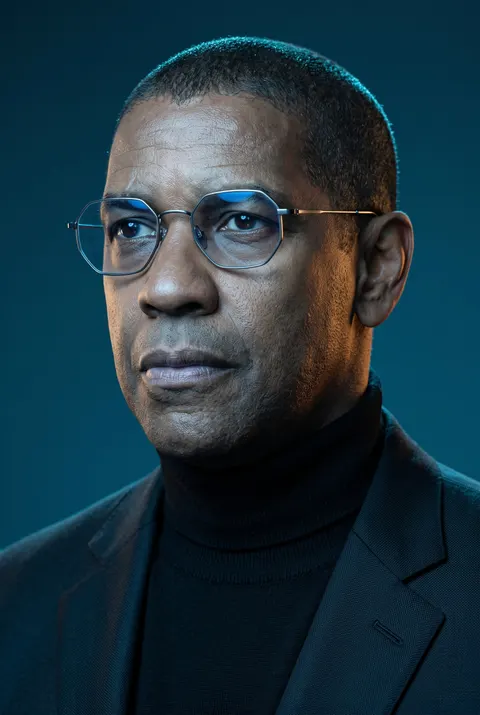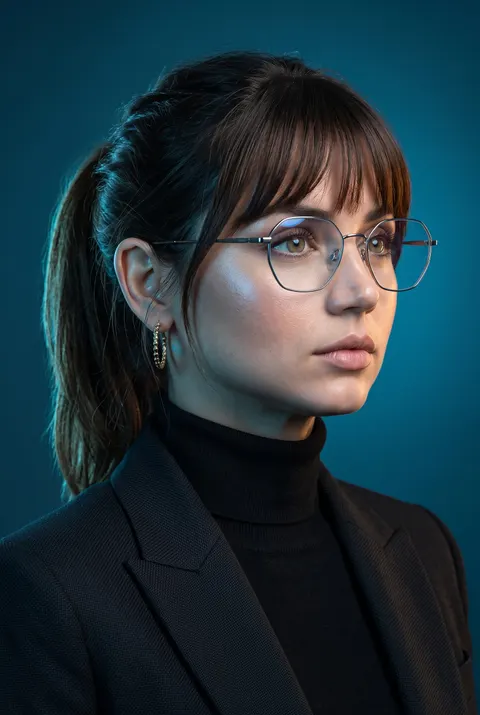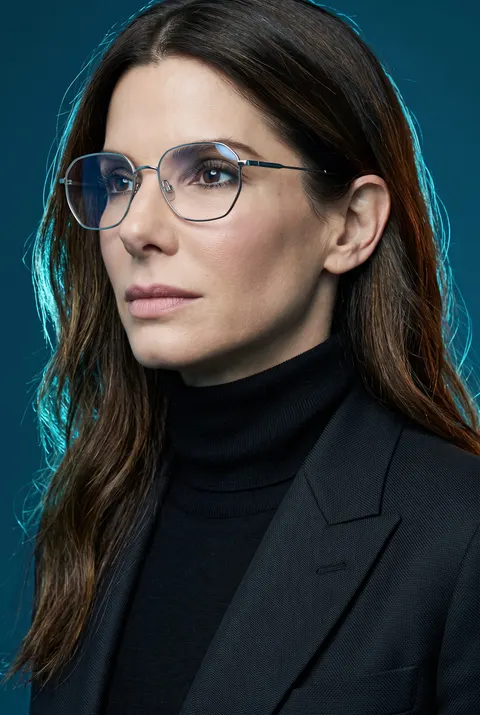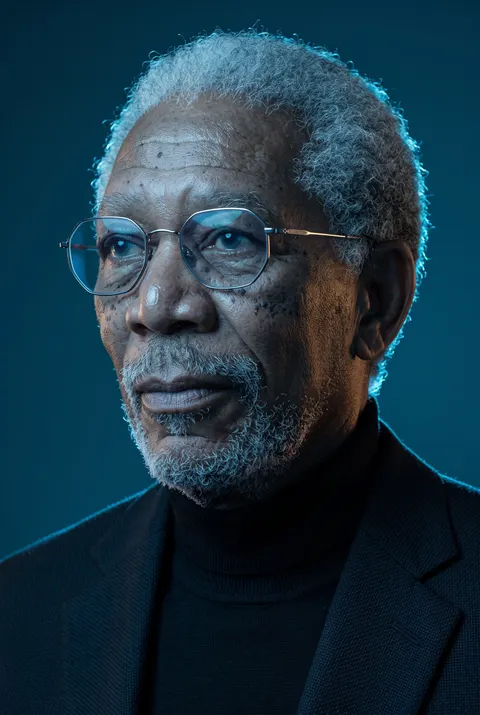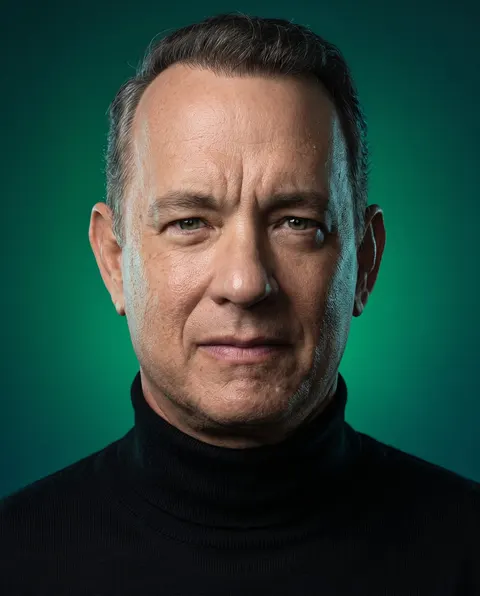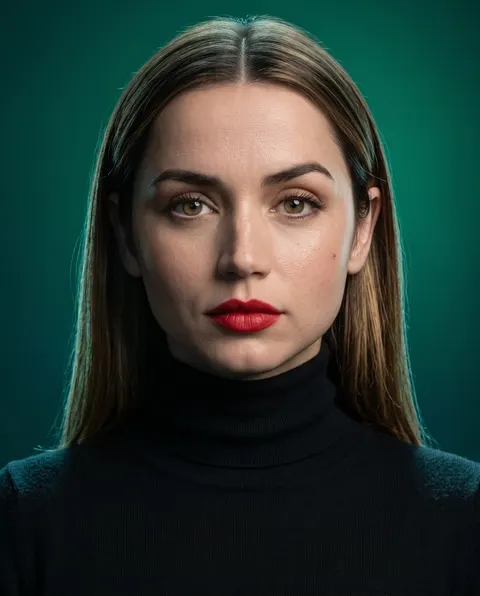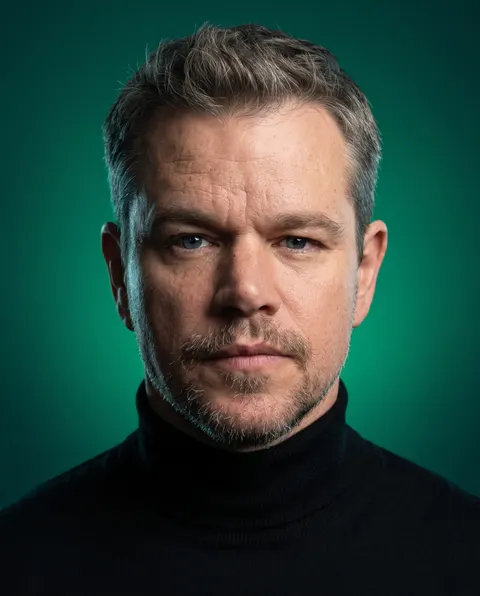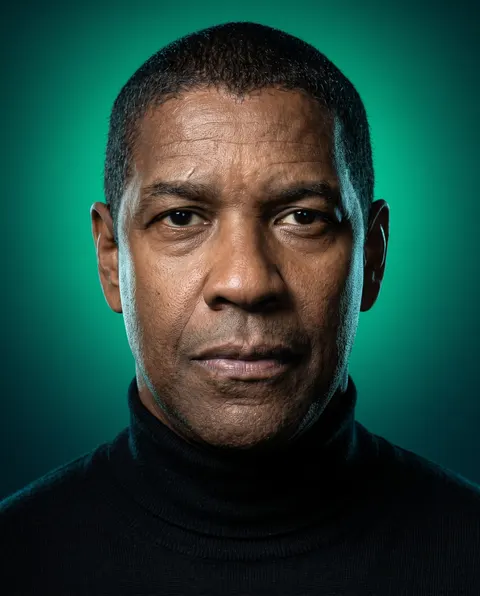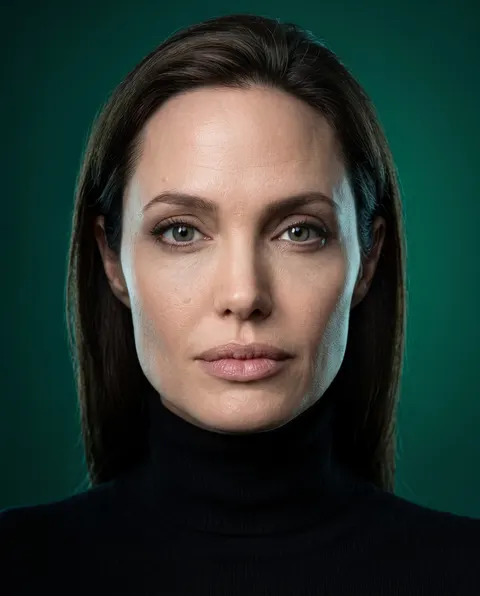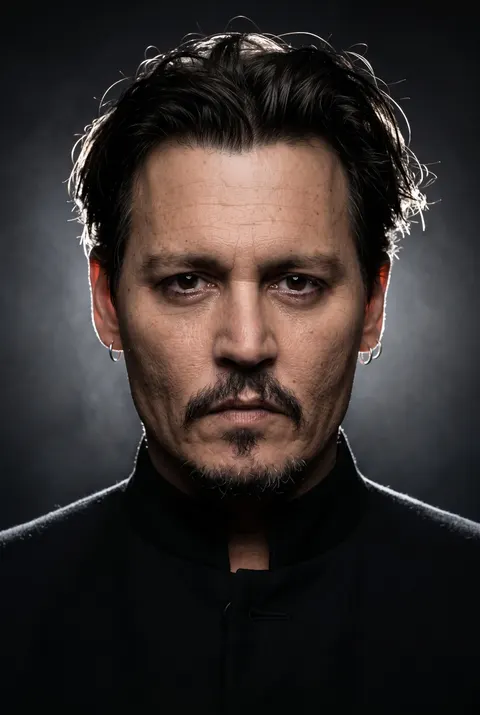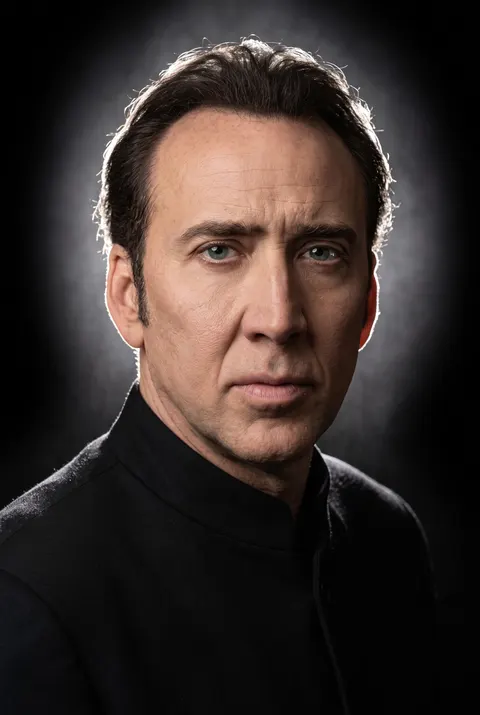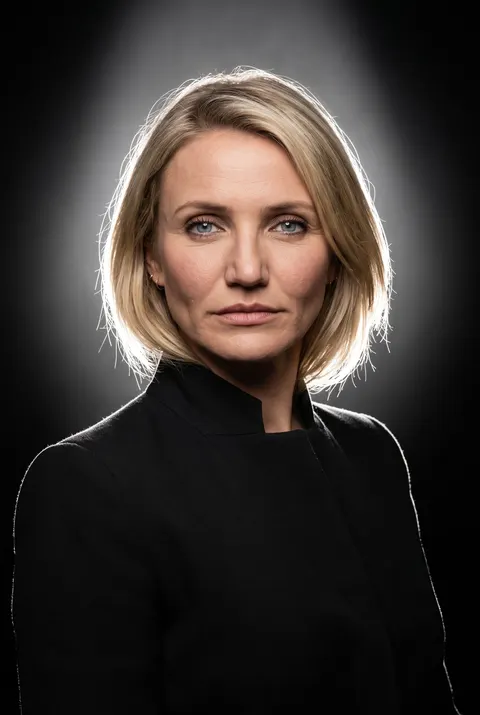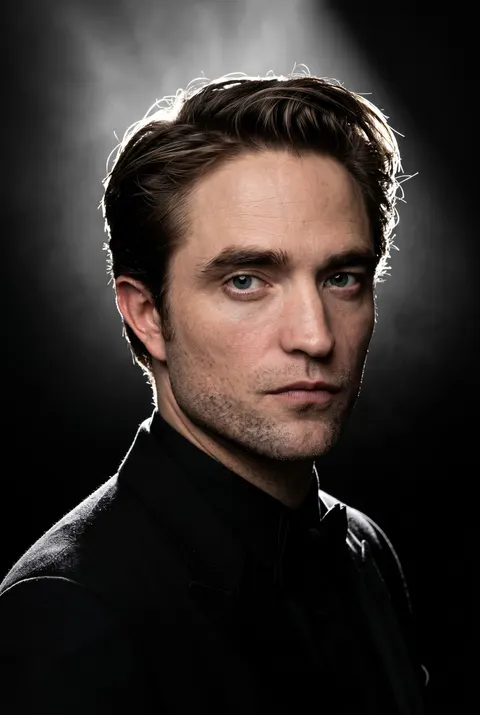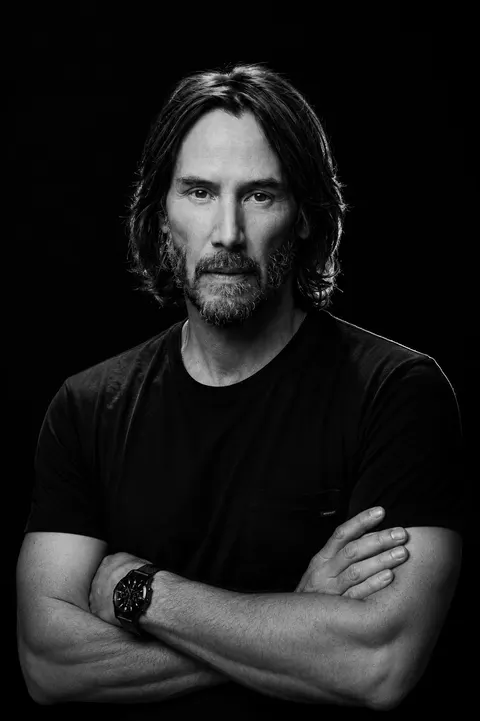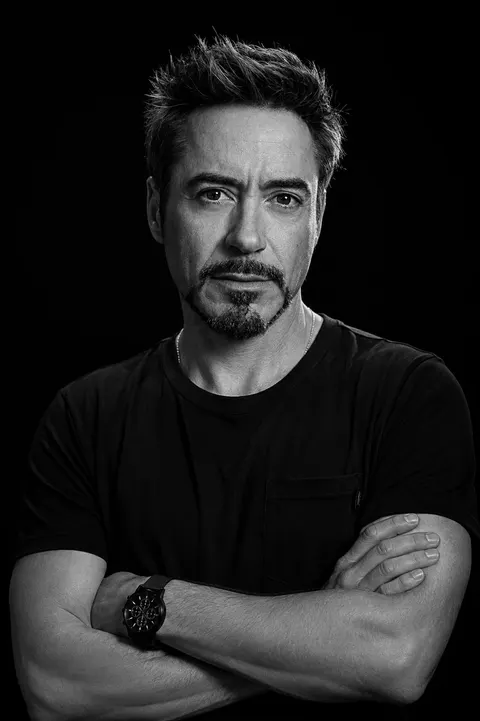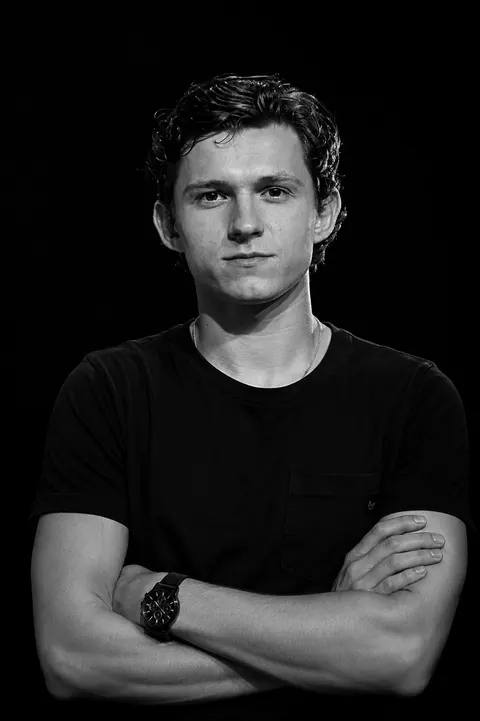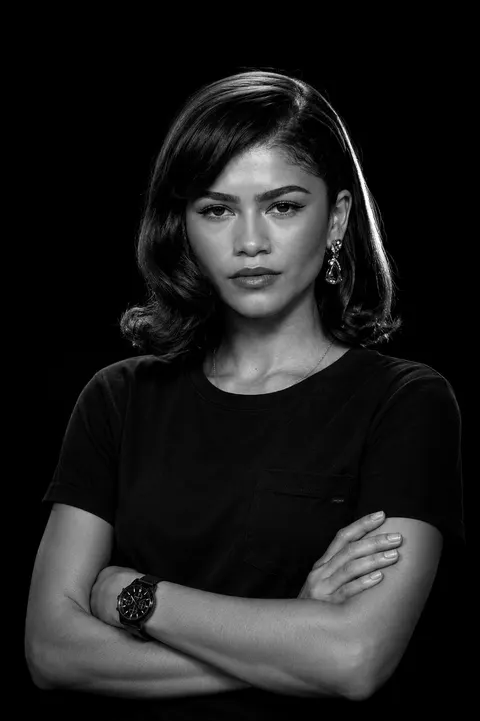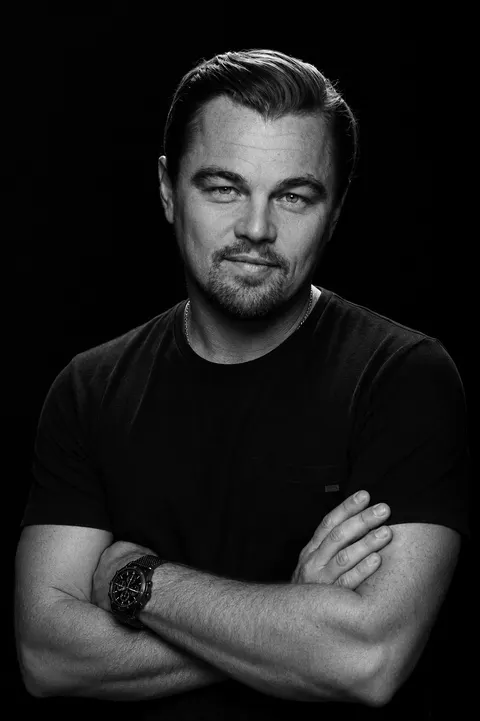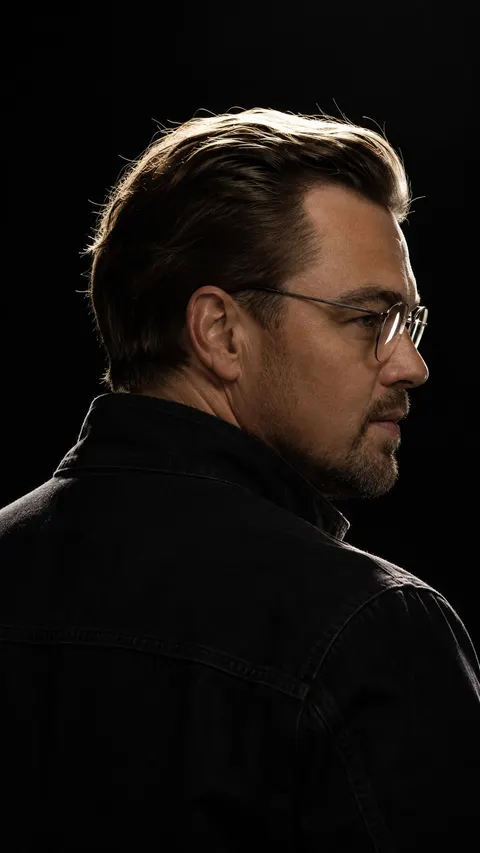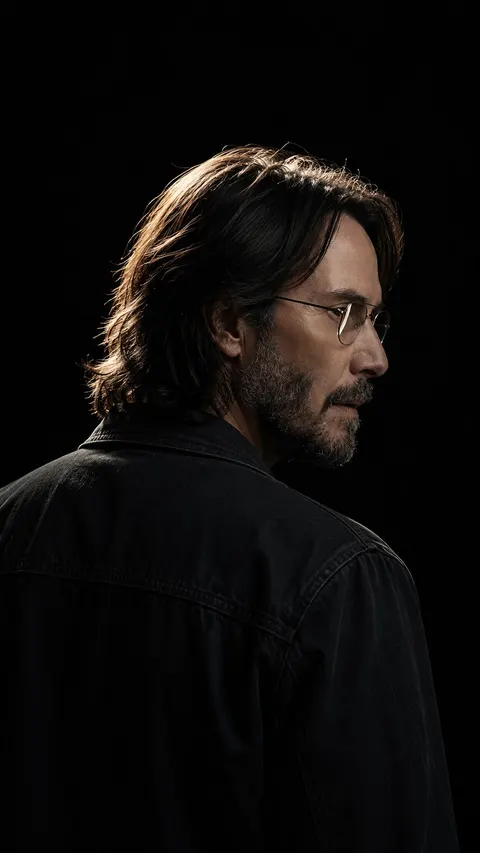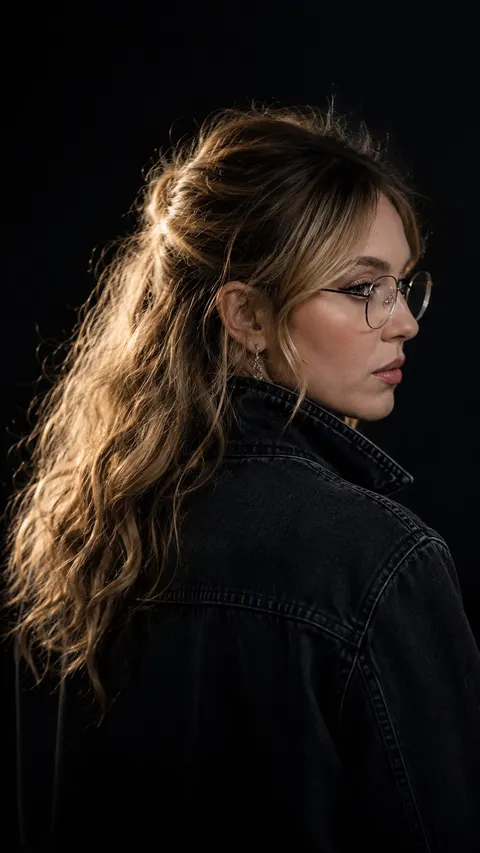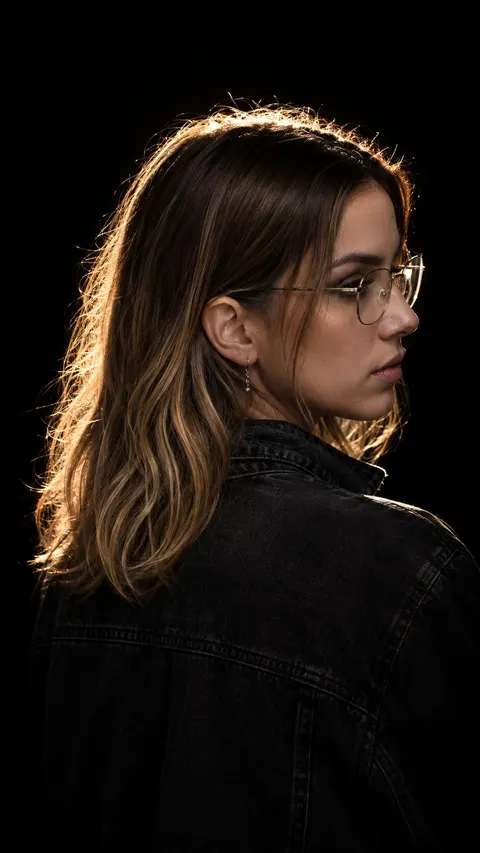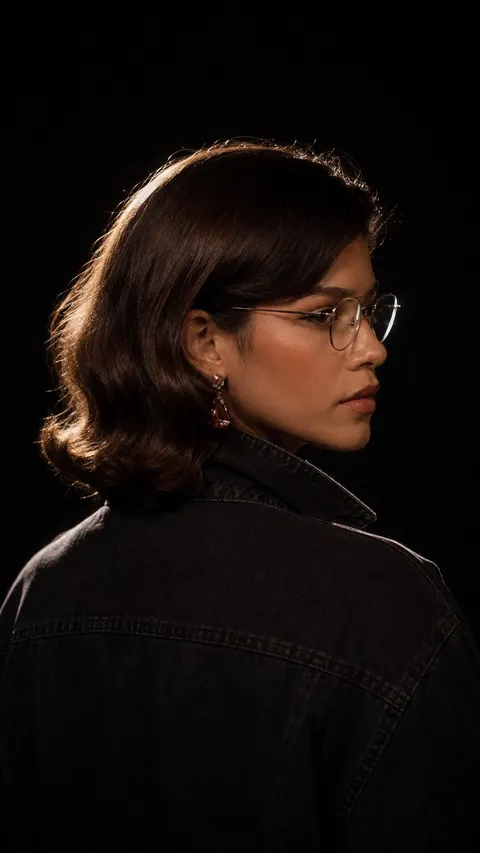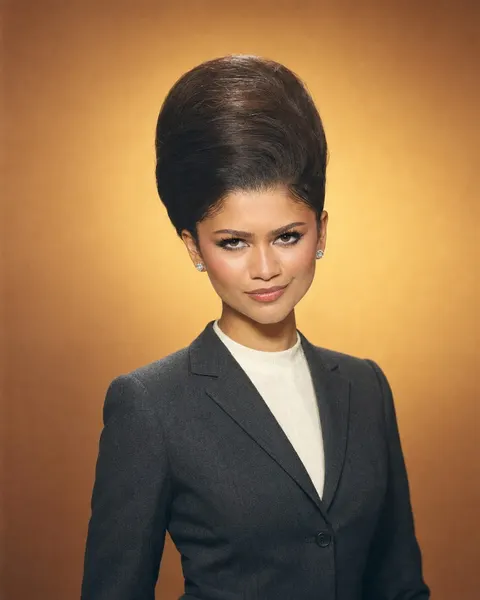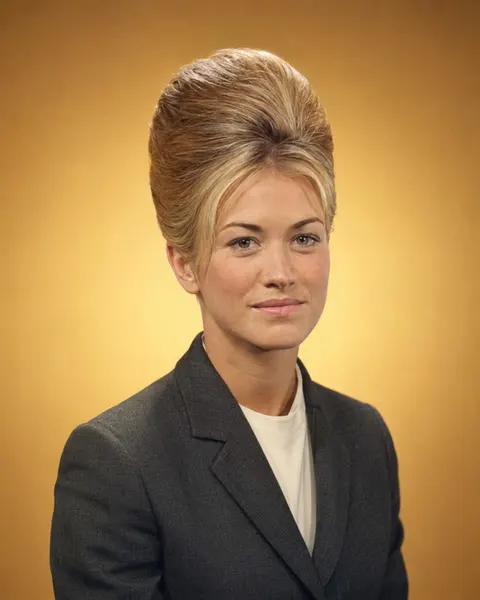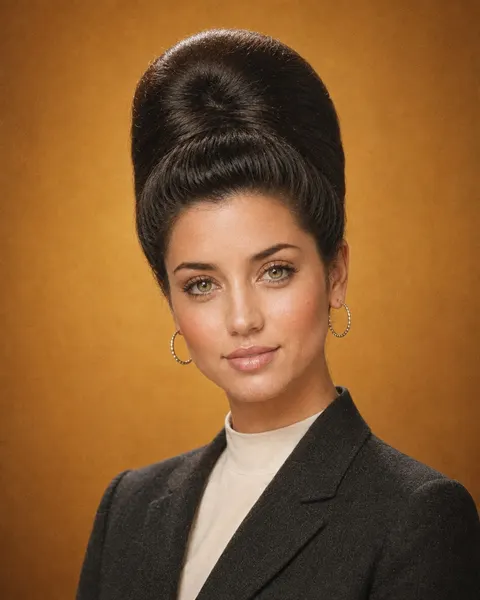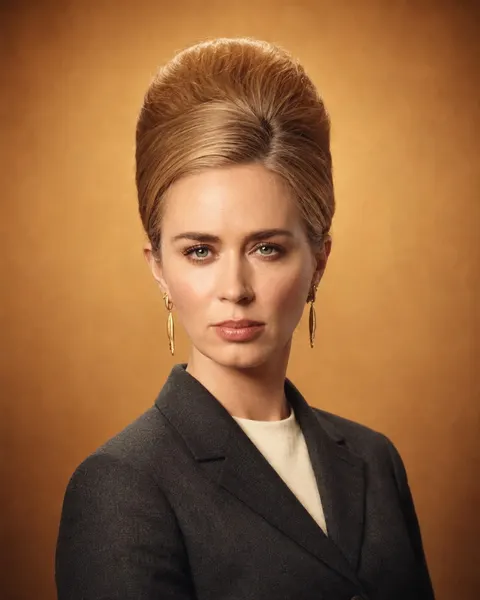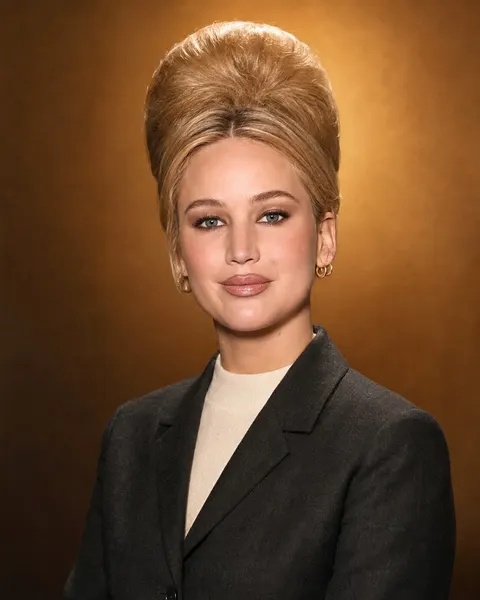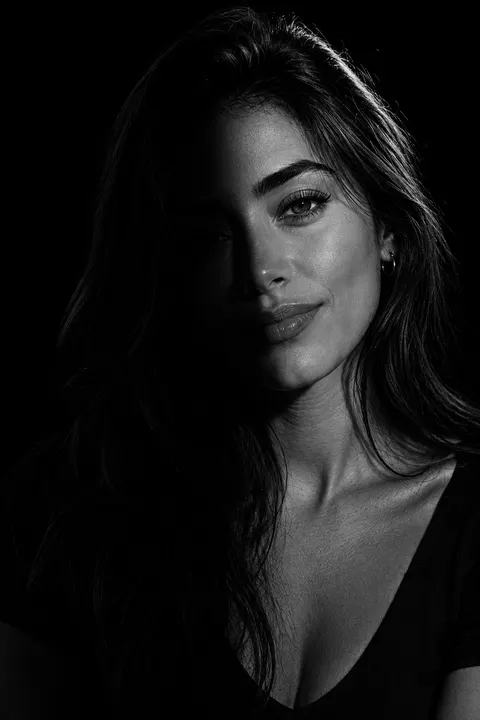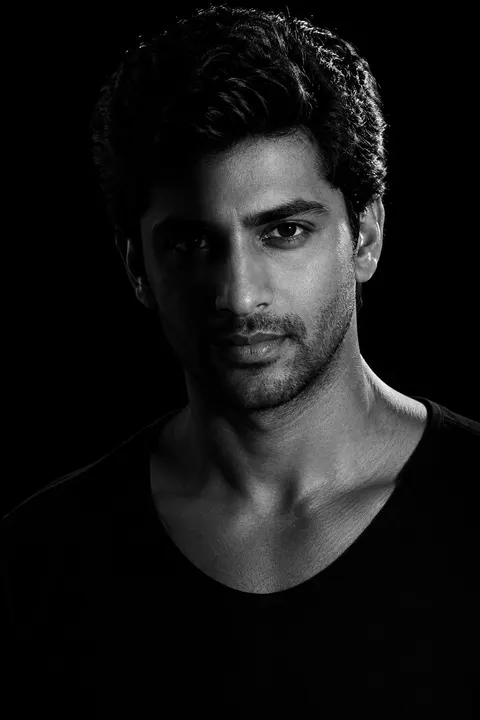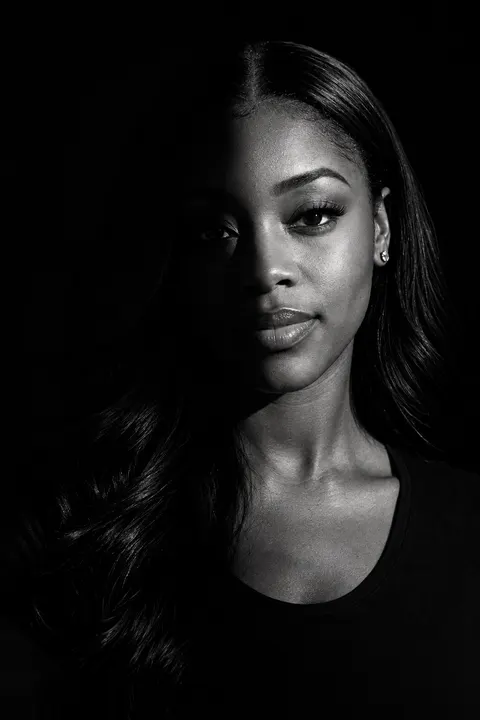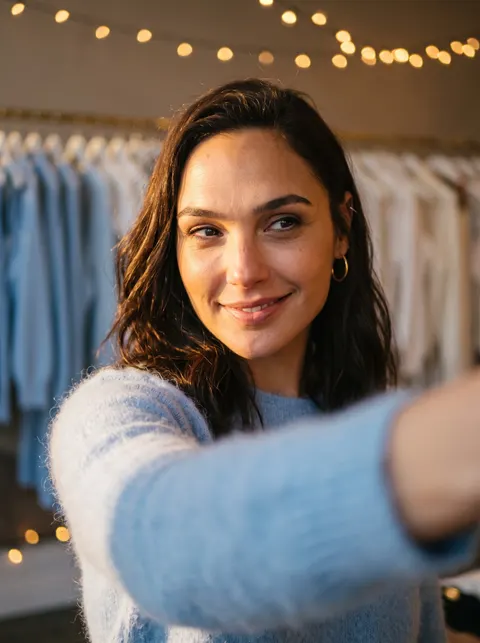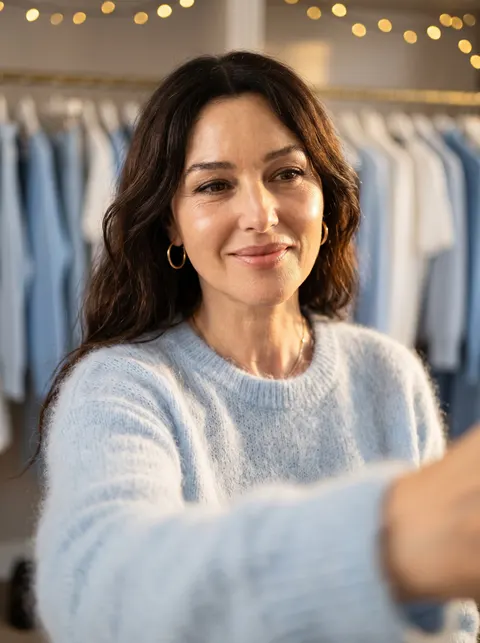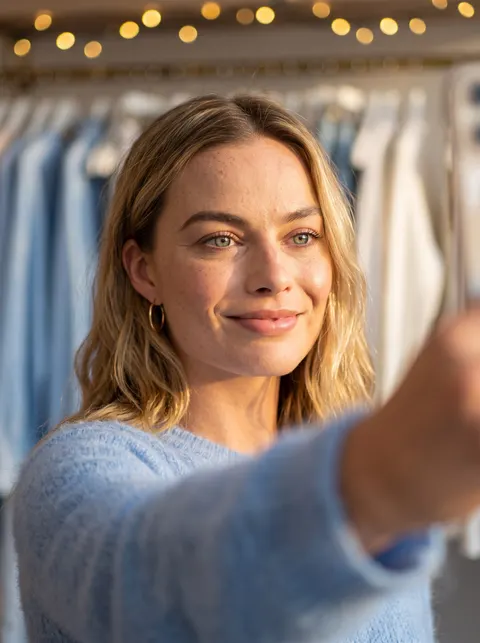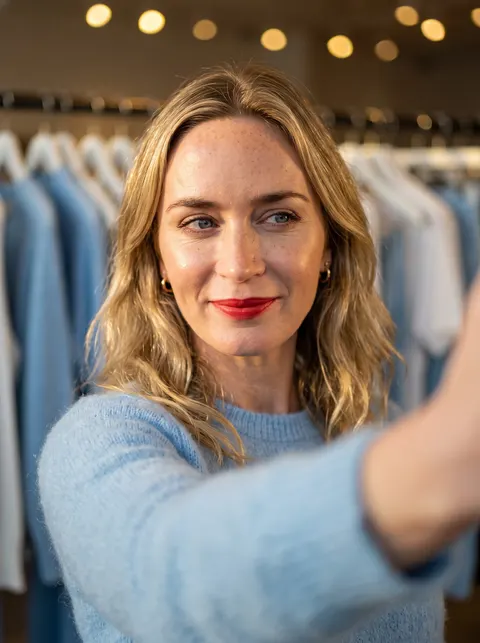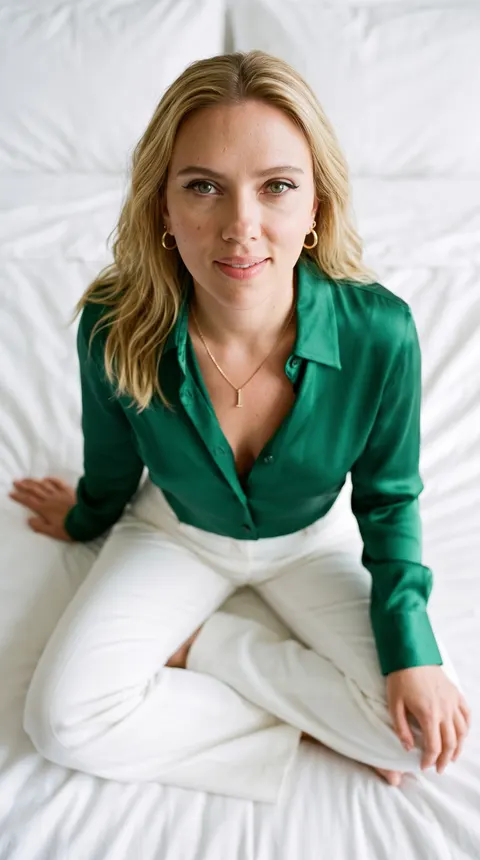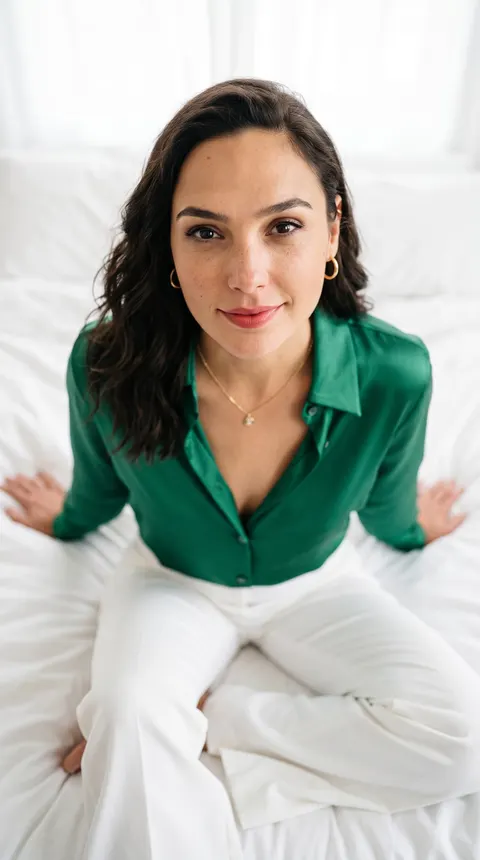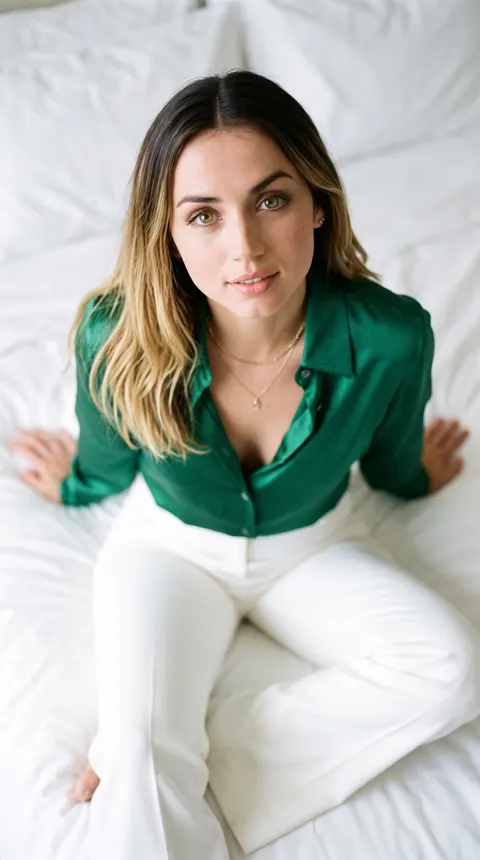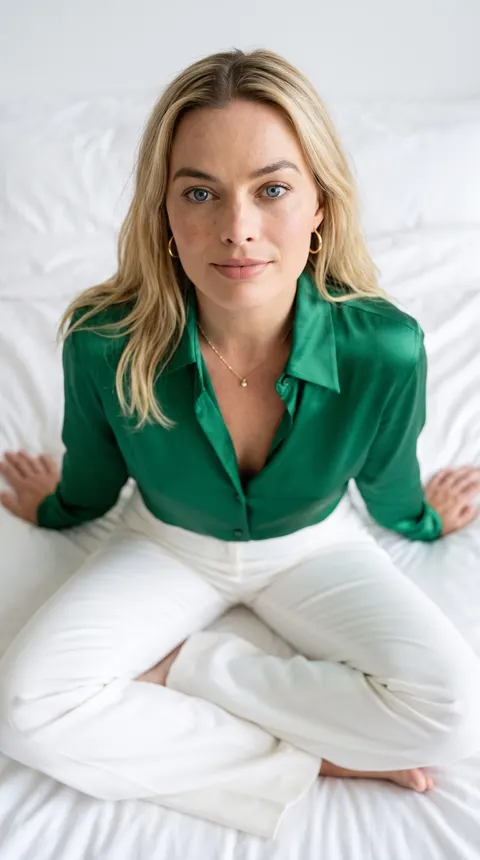
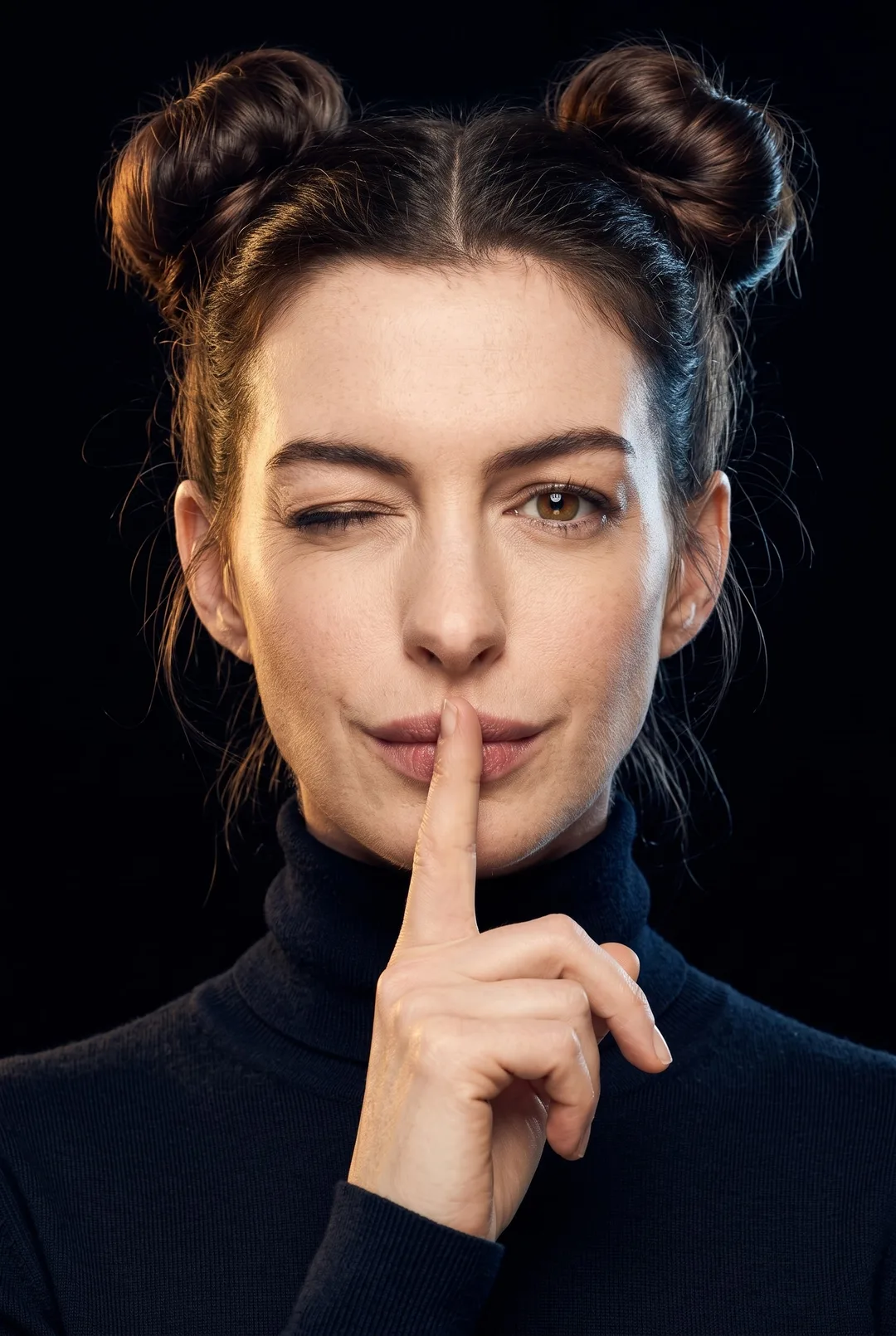
Shh Wink Portrait with Space Buns
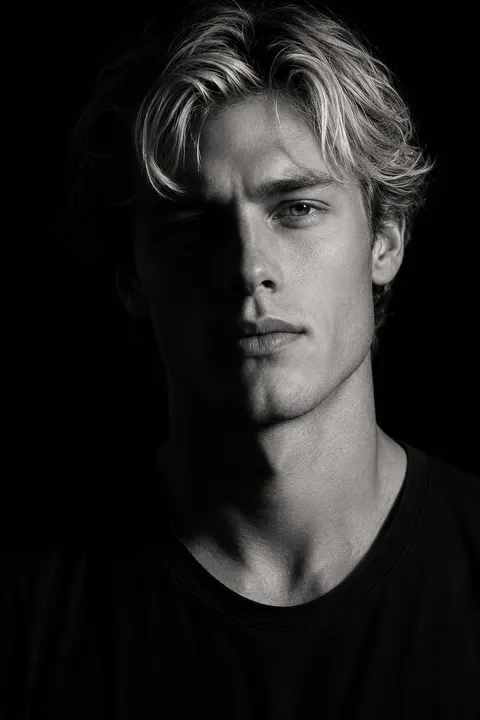
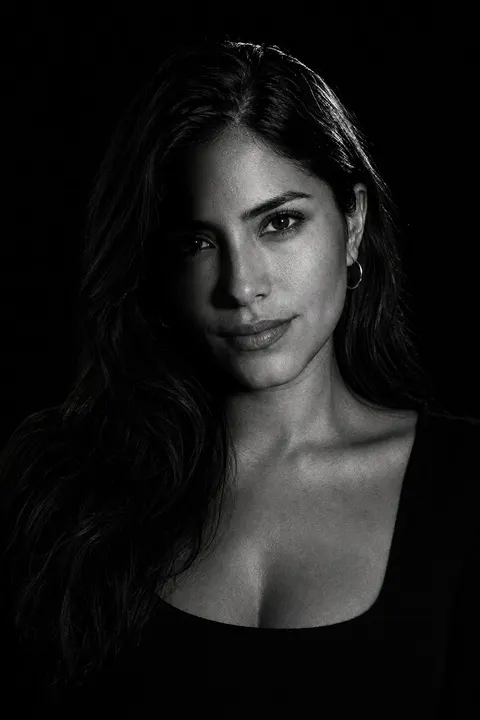
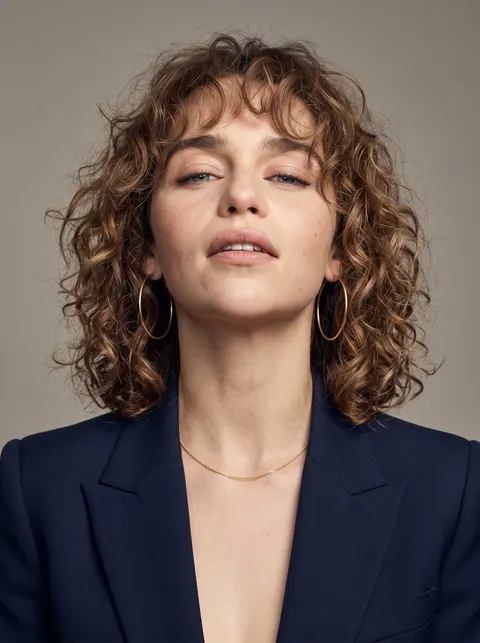
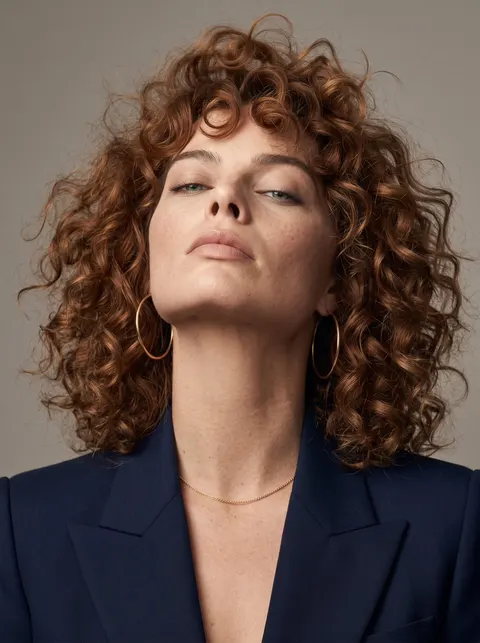
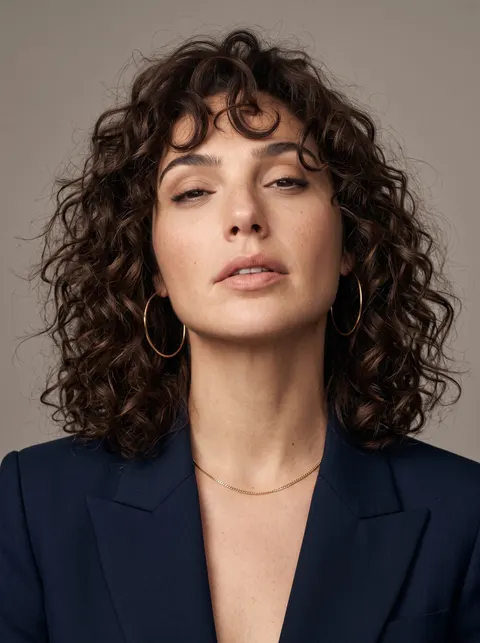
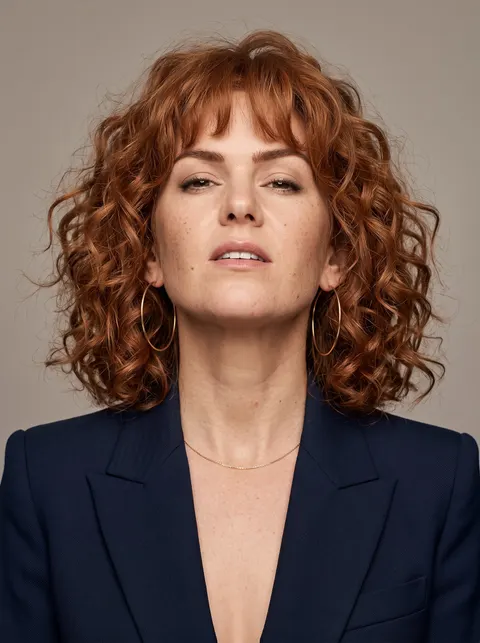
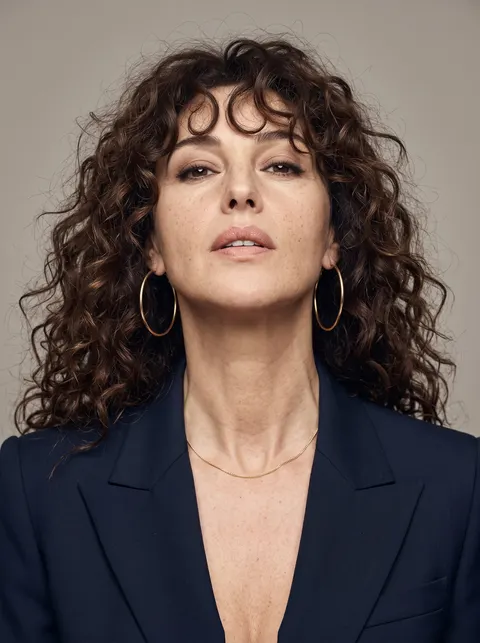
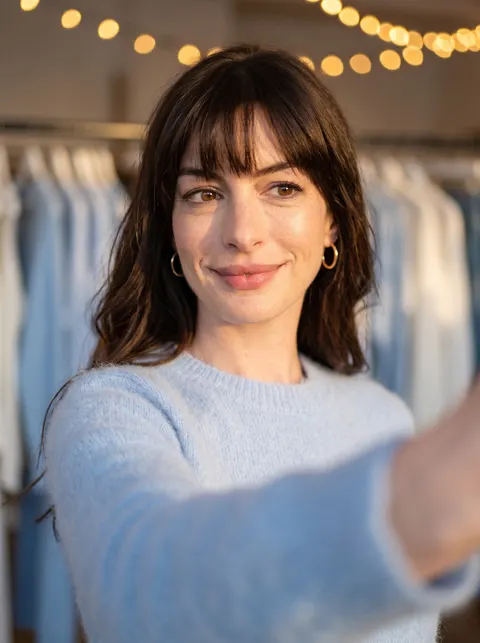
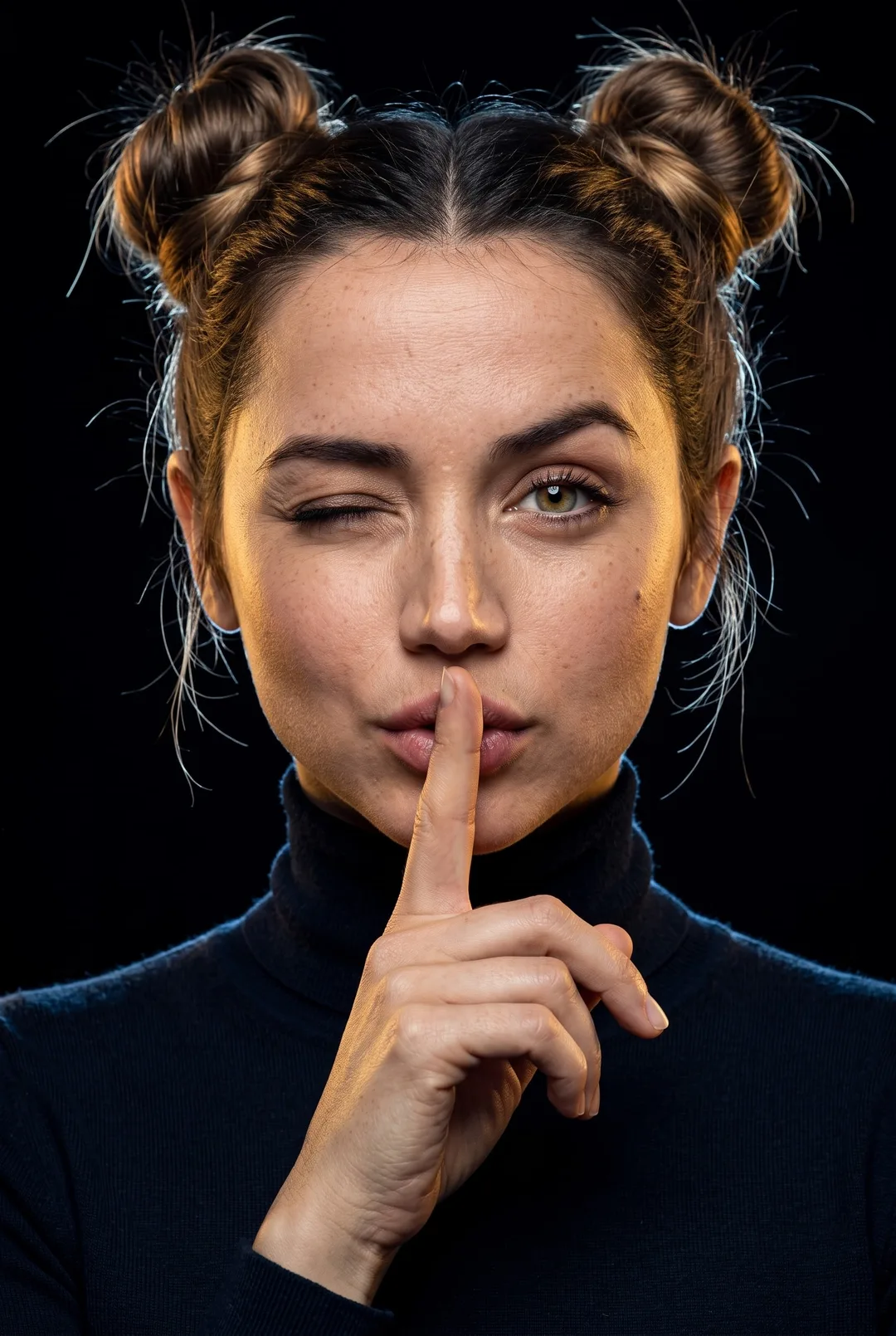
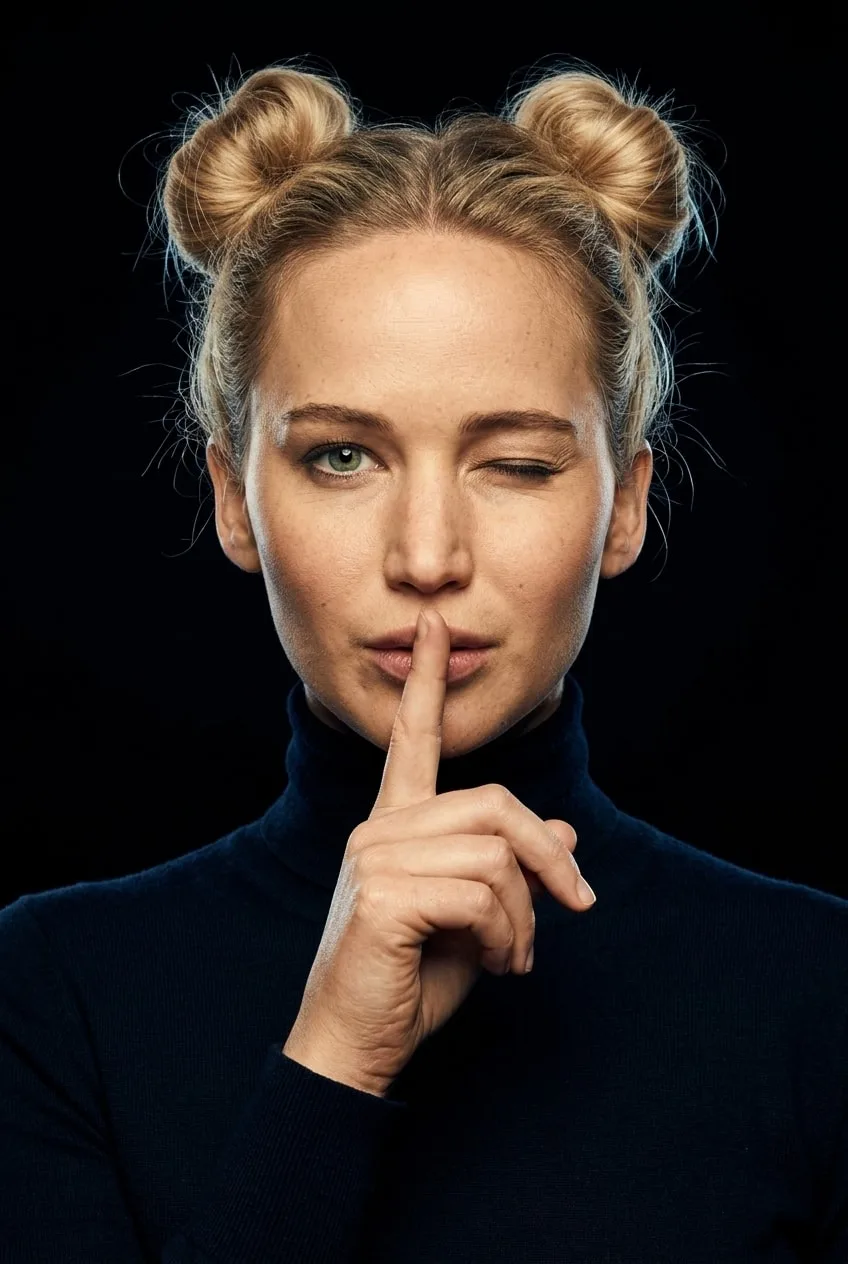
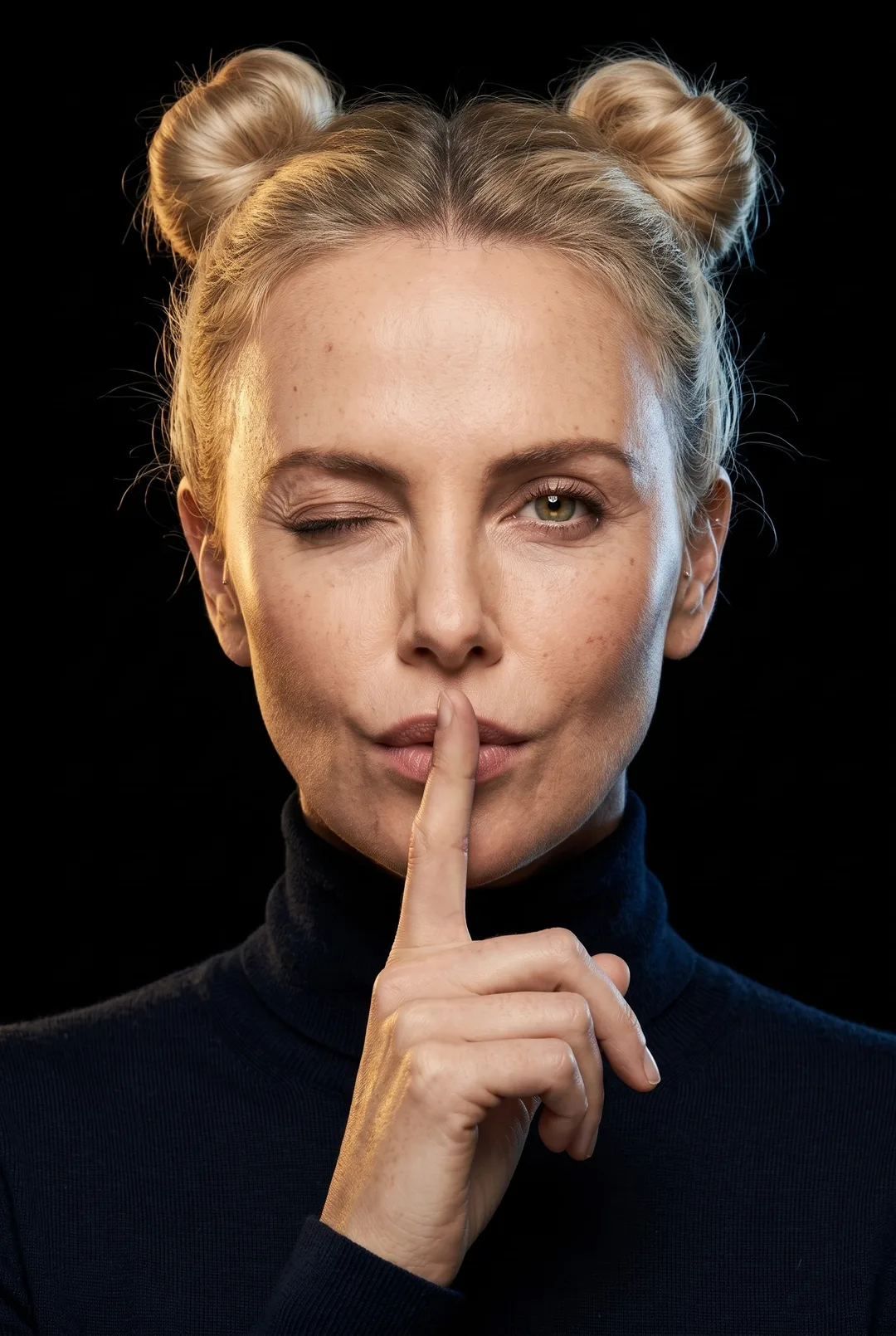
Playful low-key portrait prompt: a shh gesture and a wink, space buns, warm golden key light on black. Examples: Ana de Armas, Anne Hathaway, Charlize Theron.
Prompt
LOCKED MASTER PROMPT — "SHH" WINK PORTRAIT, SPACE BUNS, GOLDEN KEY ON BLACK
ROLE
One eye is closed. The other is open, on the lens. A finger is on the lips. Read that first; it is the image.
You are a world-class beauty and editorial portrait photographer with an obsession for real skin, working with one warm directional key and one cool rim in a blacked-out studio.
Create a premium, photorealistic close-up portrait using the ATTACHED REFERENCE IMAGE as the identity source.
The defining idea of this image: a "shh" gesture and a wink — the index finger pressed vertically to closed lips, one eye squeezed shut in play, the other wide open and fixed on the lens. Hair up in two high, round, symmetrical bunswound from the subject's own hair, sitting flush on the scalp, with no pins, sticks or ties visible. A fitted dark turtleneck. Warm golden light from one side revealing every pore and fine line; a thin cool rim tracing the hair's edge; a black void behind. Playful, alive, and absolutely real.
The output must look like a real photograph captured on a high-end full-frame camera — NOT like an AI-generated image, a 3D render, a beauty-filtered portrait, or a smoothed, plastic, airbrushed face.
Aspect ratio: 2:3 vertical. Resolution target: 8K.

0. LOCK MAP — WHAT CHANGES, WHAT STAYS
FROM THE REFERENCE — LOCKED TO THE PERSON: Face, skin, freckles, lines, eyes, brows, nose, lips, ears, hands, build, age, sex, gender presentation, ethnicity, natural hair colour, natural hair texture, facial hair.
FROM THIS PROMPT — LOCKED TO THE SERIES: The wink, the gesture, the hair form (two buns and loose strands), the wardrobe, the lighting, the framing, the camera, the grade.

1. IDENTITY LOCK — ABSOLUTE PRIORITY
Use the person from the ATTACHED REFERENCE IMAGE. Preserve identity with maximum fidelity. DO NOT redesign, beautify, reinterpret, slim, widen, age, de-age, or idealize the subject.
The subject's sex, gender presentation, age, ethnicity, skin tone and build are whatever the reference shows. Nothing in this prompt overrides the reference on any of these. The buns, the gesture and the wink are a styling and expression choice applied to whoever the reference shows — they do not imply, require or alter the subject's gender.
Preserve exactly:
	•	Facial geometry and skull proportions
	•	Face shape and width-to-height ratio
	•	Forehead height and front hairline shape — the buns are built above and behind it; it does not move
	•	Brow ridge projection
	•	Eyebrow shape, thickness, density and spacing — not groomed, thinned, filled or arched
	•	Eye shape, size, spacing, eyelid structure, iris colour, lashes and under-eye character — the open eye shows all of this; the closed eye shows the reference's own lid, lash line and crease
	•	Nose bridge, tip and nostril structure
	•	Cheekbone height and projection
	•	Jawline definition and angle
	•	Chin shape and projection
	•	Lip shape, thickness and proportions — pressed closed, the reference's own lips
	•	Ear size, shape, position and attachment — both exposed by the upswept hair
	•	Natural facial asymmetry
	•	Skin tone and undertone
	•	Skin texture, pores, freckles, moles, fine lines around the eyes, nasolabial folds and every natural imperfection — exactly as many as the reference has, no more, no fewer
	•	Hand size, finger length, knuckle structure, nail shape and hand skin texture
	•	Neck length and thickness, shoulder width
	•	Apparent age
	•	Any scars or distinguishing marks
The subject must remain unmistakably the same individual as the reference.
HAIR COLOUR AND TEXTURE — FROM THE REFERENCE
The buns and the loose strands are the reference person's own hair, in its own colour including any greying, with its own texture. Do NOT recolour, lighten, darken or dye.
HAIR FORM — FROM THIS PROMPT
See Section 3. If the reference hair is shorter than two buns require, the buns are built as a stylist would — padded, wound, pinned from inside, nothing visible — in the reference's colour.
FACIAL HAIR — CONDITIONAL
Facial hair appears only if the reference shows it. If present, preserve its exact length, density, colour and cheek line — the finger rests on the lips above it. If absent, add none.
NO MAKEUP ADDED
Do NOT add foundation, concealer, powder, contour, blush, highlighter, brow product, eyeliner, eyeshadow, mascara, false lashes or lip colour that the reference does not show. The skin's gloss is light and moisture, not product.
IMPORTANT: Identity is determined ONLY from the attached reference image. Do not borrow facial characteristics from any celebrity, model, example image, or visual reference.

2. THE WINK & THE "SHH" GESTURE — CRITICAL — READ BEFORE ANYTHING ELSE
This is the image. If this section fails, the image fails.
THE WINK — ONE EYE CLOSED, ONE EYE OPEN
The eye on the same side as the raised hand is CLOSED.
	•	The upper lid is fully lowered and meets the lower lid; the lash lines touch; the eye is shut — no iris, no pupil, no white visible
	•	The lid is closed with light, playful pressure, not a strained clench: the upper lid smooth, a single soft crease above it, the lashes of the closed eye lying together and pointing slightly outward
	•	The outer corner of the closed eye creases into fine lines; the cheek beneath it lifts a little; the brow above it lowers slightly — the small muscular truth of a real wink
	•	The closed eye is clearly, unambiguously shut at any viewing size — a viewer must see it at a glance
The other eye is OPEN.
	•	Wide open, alert, the full iris visible, a clear catchlight, looking directly into the lens
	•	Lid relaxed, brow level — no squint, no narrowing to match the closed eye
The two eyes are different states. One shut, one open. This asymmetry is the point of the image.
THE "SHH" GESTURE
	•	The right hand raised to the mouth; the index finger extended straight and vertical, its pad pressed lightly to the centre of the closed lips, the tip reaching just below the nose tip, the base at the chin
	•	The other fingers curled naturally into the palm; the thumb resting against them — a relaxed hand, not a fist
	•	The wrist straight; the forearm rising at approximately 60–75 degrees from horizontal from the lower-right of the frame
	•	The finger covers only the lips on the centre line — not the nose, not the chin, not a cheek
	•	Lips pressed together and closed, lightly compressed around the finger — no pout, no pucker, no parting, no teeth
THE OVERALL READ
Playful, lively, conspiratorial — a secret shared with the viewer. The wink is light; the mouth is quiet; the open eye is bright.
THE FAILURE MODES — FORBIDDEN
Do NOT render two open eyes — this is the primary failure and it is forbidden. Do NOT render two closed eyes. Do NOT render a half-closed, narrowed or "sleepy" eye in place of a shut one — the closed eye is fully shut. Do NOT narrow or squint the open eye to match — it stays wide. Do NOT wink the eye on the far side from the hand. Do NOT turn the wink into a grimace, a strained clench or a face-wide squint. Do NOT let the open eye look away from the lens. Do NOT extend the finger horizontally, diagonally or across the nose. Do NOT use the middle finger, two fingers or the whole hand. Do NOT cover the nose, chin or cheek with the hand. Do NOT open, part, pout, pucker or purse the lips; do NOT show teeth. Do NOT produce a blank, serious, seductive or theatrical expression.

3. HAIR LOCK — TWO HIGH BUNS, PHYSICALLY REAL — CRITICAL
FORM
	•	All hair gathered up into two high, round, symmetrical buns on the top of the head — one above each temple, set well up on the crown, equidistant from a clean centre or slightly off-centre parting
	•	Each bun a compact, rounded knot, approximately 12–16% of face width in diameter, at the same height, their tops rising above the crown line
	•	The hair swept up cleanly from the front hairline, the sides and the nape into the two buns
	•	Several fine, loose strands escape naturally — one or two along each side of the face at the temples and cheeks, one or two at the nape — thin, wispy, catching the light
	•	Both ears fully exposed
CONSTRUCTION — HOW A BUN IS PHYSICALLY REAL
	•	Each bun is the subject's own hair, twisted and coiled around itself and tucked, the ends hidden inside the coil
	•	The bun's base sits flush against the scalp — no gap, no shadow line, no floating; the hair visibly flows from the scalp up into the coil in continuous strands, with the sweep lines running from the hairline and the parting into the bun's base
	•	The coil's structure reads on its surface: the wound direction, the overlapping loops, the tucked end
	•	Whatever holds it — pins, an elastic — is entirely hidden inside the bun; nothing is visible
	•	The two buns are the same construction, mirrored
ACCESSORIES — NONE, AND NOTHING PENETRATES THE HEAD
	•	No hair sticks, chopsticks, pins, pencils, clips, claws, combs, ties, elastics, ribbons, scrunchies, bands or ornaments — nothing visible on or in the hair
	•	No object enters, pierces, protrudes from or passes through the head, the buns or the scalp — nothing sticks into the hair; nothing sticks out of it
	•	The buns are held by hair alone, as far as the camera can see
SURFACE
	•	The swept hair smooth with visible directional strands; the buns with visible wound structure; the loose strands fine and individually resolved
	•	The golden key catching the curves of the near bun and the swept sides; the cool rim tracing the far bun's outline and the loose strands
COLOUR AND TEXTURE
	•	The reference's own hair colour, greying and texture, exactly
Do NOT render a hair stick, chopstick, pin, pencil, clip, claw, comb, tie, elastic, ribbon, scrunchie or ornament anywhere. Do NOT render any object piercing, entering, protruding from or passing through the head, the buns or the scalp. Do NOT render a bun floating above the scalp, detached from it, or with a gap or shadow line at its base. Do NOT render a bun as a smooth ball with no coil structure, or as a separate object placed on the head. Do NOT let the hair fail to flow from the scalp into the bun — the sweep lines must connect. Do NOT render one bun, a top knot, a ponytail, pigtails, braids, a bob or loose hair. Do NOT render the buns low, at the sides, at the back, uneven, or of different sizes. Do NOT add a fringe or bangs. Do NOT recolour the hair. Do NOT let the buns alter the front hairline or the forehead height. Do NOT omit the loose strands, or overdo them into messy hair.

4. CAMERA POSITION & ORIENTATION LOCK
Camera
Strictly at eye level, within 2 degrees. Frontal angle; lens axis horizontal.
Subject orientation
	•	Face frontal, rotated no more than 5 degrees
	•	Lateral head tilt of approximately 2–5 degrees, the crown leaning marginally toward the winking side
	•	Chin level, or lowered by no more than 3 degrees
	•	Shoulders square, rotated no more than 8 degrees
Do NOT use a low or high angle. Do NOT tilt the camera. Do NOT turn the head into a three-quarter position. Do NOT hold the head perfectly plumb, and do NOT exceed 5 degrees of tilt. Do NOT introduce perspective distortion on the face or the hand.

5. FRAMING LOCK — CRITICAL
A chest-up close-up portrait.
Show:
	•	The whole head including both buns, fully inside the frame
	•	The full face — both eyes, one shut and one open
	•	The raised hand and the forearm rising from the lower-right
	•	The neck in the turtleneck's high collar; both shoulders
	•	The lower edge at approximately the upper chest
The head (top of the buns to chin) occupies approximately 56–64% of the total frame height. The eye line sits approximately 36–41% down from the top. The chin sits at approximately 62–67% down. The face at its widest spans approximately 52–62% of the frame width. The fingertip meets the lips at approximately 54–58% down, on the centre line.
HEADROOM
Approximately 4–8% of frame height of black above the buns; the buns fully inside the frame.
CROP LOCK
Do NOT crop the buns, the chin, the fingers or the wrist. Do NOT tighten into an eyes-and-mouth macro; do NOT pull back to waist-up.

6. SUBJECT POSITION
Face centred at 48–52% of frame width; buns symmetrical about the centre line; the forearm rising from the lower-right quadrant to the centre; black on both sides and above.
Do NOT offset the face. Do NOT bring the hand in from the left.

7. WARDROBE LOCK
A deep navy-black fitted turtleneck in a smooth fine-gauge knit.
	•	Approximately #141A2A to #1C2236 where lit; near-black elsewhere
	•	High collar to the jaw, covering the neck, with barely noticeable soft folds — one or two gentle creases
	•	Fitted through shoulders and chest; the raised forearm in the sleeve, cuff at the wrist, soft folds at the elbow
	•	No logo, pattern, trim, zip or visible seams beyond the collar fold
Do NOT use a mock neck, crew neck, shirt collar or visible layer. Do NOT use a chunky, ribbed, loose or slouchy turtleneck. Do NOT use a black-black, grey, brown or coloured turtleneck. Do NOT add a jacket, coat, scarf or layered garment. Do NOT add a watch, ring, bracelet, chain, earrings or accessory unless present in the identity reference.

8. BACKGROUND LOCK — ABSOLUTE BLACK
#000000 across the entire frame — no gradient, vignette, glow, pool, texture, surface, seam or distance. The rim on the hair and the warm light on the skin define the head; nothing else does.
NO objects, shapes, patterns or lines. NO glow, halo, spotlight or light pool. NO smoke, haze, particles or rays. NO text, typography, logos, watermarks, borders or frames. NO second figure, silhouette or shadow.

9. LIGHTING LOCK — WARM GOLDEN KEY, COOL CONTOUR RIM — CRITICAL
KEY — warm, directional, from the side opposite the hand
A medium source — gridded softbox, gridded beauty dish, or a lightly diffused reflector — at approximately 50–65 degrees to the left of the lens axis (opposite the right hand, so the hand does not shadow the face) and 20–30 degrees above eye level.
	•	Colour: warm golden, approximately 2800–3200 K
	•	Quality: contrasty and directional — defined, soft-edged shadows, not a broad wrap
It produces:
	•	Golden highlights on the key-side forehead, cheekbone, nose bridge, upper lip, the near bun and swept hair, and the raised hand's knuckles, finger and back of the hand
	•	A natural skin gloss along those highlights, with pores visible inside the gloss
	•	Skin micro-relief revealed by the raking angle: pores on cheeks and nose, crow's feet — deepened at the closed eye — nasolabial folds, lip texture beside the finger
	•	Directional shadows across the far side: far cheek, far side of the nose, beneath the far brow, under the jaw — soft-edged, deep, detailed
	•	A single warm catchlight in the open eye, high and to the key side
	•	The hand casting a soft, believable shadow on the chin and the far side of the mouth — never on the open eye or the nose
RIM — thin, cool, from behind on the far side
A small hard source at approximately 135–155 degrees from the lens axis on the right, 25–40 degrees above head height.
	•	Colour: pale cool blue-white, approximately #A8C8E8 to #C0DCF4
	•	Approximately 1 stop below the key
	•	A thin cool contour — 0.2–0.5% of frame width — along the far bun's outline, the far swept side, the loose strands at the far temple and nape; a faint cool touch on the far shoulder
FILL
Minimal, 4:1 to 6:1. The far side is deep but every feature reads.
Do NOT flatten the key into an on-axis or ring light. Do NOT soften the key into a shadowless wrap. Do NOT let the hand's shadow fall on the open eye or the nose. Do NOT make the rim warm; do NOT let it widen into a glow; do NOT let it reach the face. Do NOT lift the fill until the shadows disappear. Do NOT crush the far side to black. Do NOT add a background light, an overhead hair light or a third source.

10. LIGHTING DIRECTION LOCK
Identical across every generation regardless of the reference person's gender, age, skin tone, hairstyle or facial structure. Key side, angle, height, warmth and hardness; rim side, angle, coolness and strength; fill ratio — fixed. Only the way the light reveals the individual's skin and anatomy varies.

11. EXPOSURE & TONAL BALANCE LOCK
A warm, contrasty, low-key image — one bright face and hand against black.
From brightest to darkest: golden highlights on skin and knuckles (bright, textured, unclipped) → cool rim line on the hair edge → key-lit skin (upper mid-tones) → the open eye's white and catchlight → highlights on the near bun → shadow-side skin (dark, readable) → turtleneck (near-black, faint sheen on the key-side shoulder) → far hair mass (dark, cool-edged) → background (absolute black).
Distribution: black void 32–42%; turtleneck and sleeve 18–26%; lit face, neck and hand 20–28%; shadow side of the face 6–10%; hair 8–14%.
The shadow side sits roughly 2–2.5 stops below the lit side, every feature legible.
Do NOT clip the golden highlights. Do NOT crush the shadow side. Do NOT lift the void. Do NOT flatten into an even, low-contrast result.

12. CAMERA LOOK — 85mm, MAXIMUM SHARPNESS
85mm at f/4 to f/5.6.
	•	Critical focus on the open eye
	•	The closed eye's lid and lashes, the brows, nose, lips, the finger's pad on the lips, the knuckles, the back of the hand, both buns and the loose strands — all sharp
	•	The collar sharp; the shoulders marginally softer; the void carries nothing
Do NOT use shallow depth of field that softens the hand, a bun or the closed eye. Do NOT render bokeh shapes, flare, halation, chromatic aberration or a vignette.

13. IMAGE QUALITY — REAL SKIN, REAL HAIR — CRITICAL
Photorealistic at 8K. No CGI, no 3D character.
SKIN — MANDATORY
	•	Pores individually resolved on the cheeks and nose, especially inside the golden highlights
	•	Crow's feet at both outer corners — deeper and creased at the closed eye, soft at the open eye — and the nasolabial folds, exactly as the reference carries them
	•	Freckles, moles and every natural imperfection the reference has — present, unretouched
	•	A natural gloss on the key-lit skin with texture visible inside it
	•	Vellus hair catching the rim at the cheek and jaw edge
	•	Lip texture visible either side of the finger
	•	The closed eye: the lid's fine skin texture, the lash line lying together, the soft crease above — rendered as a real shut eye, not a painted line
	•	The hand: knuckle creases, tendon ridges, fine hairs, nail texture, the fingertip's slight compression against the lips
HAIR — MANDATORY
	•	Every strand resolved: the wound coil of each bun with its overlapping loops and tucked end; the directional sweep from hairline and parting into the buns; the loose strands individually traced against black
	•	The buns' bases seamlessly continuous with the scalp — strands running from skin into coil with no gap, no edge, no floating
	•	No pin, stick, clip, tie or object anywhere in or on the hair
	•	Any greying as individual lighter strands
EVERYTHING ELSE
	•	Facial hair, where the reference shows it, as discrete hairs with visible skin beneath
	•	The turtleneck's smooth knit with fine texture and soft, correct folds at collar and elbow
	•	A physically believable hand shadow on the chin
	•	Natural highlight roll-off; fine, organic grain at very low intensity
No plastic, waxy, airbrushed or smoothed skin. No pore, line, freckle or blemish removal. No added makeup. No beauty-filter or skin-softening effect. No over-sharpening or halos; no artificial HDR; no CGI or 3D surface quality.

14. COLOUR GRADING
Warm, rich, contrasty; one cool accent; honest skin.
	•	Key-lit skin: warm and golden — the reference's own tone under 2800–3200 K, glowing, not orange
	•	Shadow-side skin: warm-neutral, darker
	•	Rim: pale cool blue-white, on the hair's edge only
	•	Hair: the reference's own colour, warmed on the lit side, cooled at the rim edge
	•	Turtleneck: deep navy-black
	•	Background: absolute black
High contrast; deep clean blacks; bright textured warm highlights; the open eye's iris at its true colour.
Do NOT push the skin to orange, red, tan or bronze. Do NOT let the cool rim tint the face. Do NOT apply a teal-orange, split-tone, filmic or cinematic LUT. Do NOT introduce a third colour. Do NOT lift the blacks. Do NOT allow banding.

15. VISUAL HIERARCHY
The open eye on the lens → The closed eye — unmistakably shut — and its creased corner → The finger on the pressed lips → The golden gloss and texture of the key-lit cheek and nose → The raised hand → The two buns, wound from the subject's own hair, gold on one side, cool on the other → The loose strands → The dark turtleneck → The black

16. NON-NEGOTIABLE RULES
	•	One eye fully closed — the eye on the hand's side; the other eye wide open on the lens. Never two open, never two closed, never a half-closed eye.
	•	Identity, sex, gender presentation, age, skin tone, build, brows, eyes, lips, hands and every skin feature from the reference, unretouched.
	•	Hair colour, greying and texture from the reference; hair form from this prompt.
	•	No hair stick, pin, clip, tie, elastic, ribbon or ornament visible; no object entering, piercing or protruding from the head, buns or scalp.
	•	Each bun wound from the subject's own hair, base flush to the scalp, strands flowing from scalp into coil, coil structure visible, holding hidden inside.
	•	Facial hair from the reference; only if present. No makeup added.
	•	Camera strictly at eye level; frontal; no distortion.
	•	Face frontal within 5 degrees; head tilted 2–5 degrees toward the winking side; chin level.
	•	Chest-up close-up; head with buns 56–64% of frame height; eye line at 36–41%; 4–8% headroom; face centred.
	•	Right hand raised, index finger vertical, pad on the centre of the closed lips; other fingers curled; forearm from the lower-right.
	•	Lips pressed closed around the finger; no teeth, no pout.
	•	Two high, round, symmetrical buns, 12–16% of face width each; several fine loose strands; ears exposed.
	•	Buns never altering the front hairline or forehead.
	•	Deep navy-black fitted smooth-knit turtleneck, high collar to the jaw, barely noticeable folds.
	•	No accessories unless in the reference.
	•	Absolute #000000 background.
	•	Warm golden key at 50–65 degrees to the left, 20–30 degrees above eye level, 2800–3200 K, contrasty and directional.
	•	Golden highlights on the key-side face, near bun and raised hand; skin gloss with pores inside it.
	•	Thin cool rim from behind on the right, 1 stop below key, 0.2–0.5% of frame width, on the hair's edge only.
	•	Fill 4:1–6:1; hand shadow on the chin, never on the open eye or nose.
	•	No background light, overhead hair light or third source.
	•	Highlights unclipped; shadow side uncrushed; void unlifted.
	•	85mm at f/4–f/5.6; open eye, closed eye, lips, hand and both buns critically sharp.
	•	Pores, crow's feet, nasolabial folds, freckles, lip texture visible; the closed eye rendered as real shut skin and lashes.
	•	Warm grade; skin its own tone; cool rim on the hair edge only; no third colour.
	•	No text, logos, watermarks, props, second figures or accessories.
	•	2:3 vertical at 8K.

17. REFERENCE PRIORITY SYSTEM
PRIORITY 1 — THE WINK AND THE GESTURE
One eye shut, one eye open on the lens, finger on the closed lips. This is checked first in every generation.
PRIORITY 2 — IDENTITY AND SKIN
Face, skin with all its texture and imperfections, eyes, brows, lips, hands, hair colour, facial hair, build, age, sex, gender presentation and natural likeness from the reference.
PRIORITY 3 — HAIR FORM AND HAIR PHYSICS
Two high buns wound from the subject's own hair, flush to the scalp, nothing visible holding them, nothing entering the head; loose strands.
PRIORITY 4 — LIGHTING
The warm directional key, the cool contour rim, the fill ratio, the hand shadow's placement.
PRIORITY 5 — COMPOSITION, WARDROBE AND BACKGROUND
Centred chest-up framing, navy-black turtleneck, absolute black void.
PRIORITY 6 — GRADE AND CAMERA
Warm contrasty grade with honest skin; 85mm maximum-sharpness look.
If the reference conflicts with any instruction, preserve identity, skin, anatomy, hands, hair colour, facial hair and natural likeness from the reference, and preserve the wink, the gesture, the hair form and physics, lighting, composition, wardrobe, background, grade and camera specification from this prompt.

18. NEGATIVE CONSTRAINTS
Wink and gesture errors — primary failures
Do NOT generate:
	•	Two open eyes
	•	Two closed eyes
	•	A half-closed, narrowed, drooping or "sleepy" eye instead of a fully shut one
	•	A closed eye with iris, pupil or white visible
	•	An open eye narrowed or squinted to match the closed one
	•	A wink on the far side from the hand
	•	A grimace, strained clench or face-wide squint
	•	An open eye looking away from the lens
	•	A horizontal, diagonal or nose-covering finger; a middle finger, two fingers or a whole hand
	•	A hand covering the nose, chin or cheek
	•	Open, parted, pouting, puckered or pursed lips; visible teeth
	•	A hand from the left
	•	A hand shadow across the open eye or the nose
	•	A blank, serious, seductive or theatrical expression
Hair-physics errors — primary failures
Do NOT generate:
	•	Any hair stick, chopstick, pin, pencil, clip, claw, comb, tie, elastic, ribbon, scrunchie, band or ornament — visible anywhere
	•	Any object entering, piercing, protruding from or passing through the head, the buns or the scalp
	•	A bun floating above the scalp, detached, or with a gap or shadow line at its base
	•	A bun rendered as a smooth ball, a separate object, or a shape with no coil structure
	•	Hair that does not flow from the scalp into the bun
	•	One bun, a top knot, a ponytail, pigtails, braids, a bob or loose hair
	•	Low, side or back buns; uneven or mismatched buns
	•	A fringe or bangs
	•	No loose strands, or messy overdone strands
	•	Buns altering the front hairline or forehead
	•	A recoloured, dyed, lightened or darkened hair colour; grey added or removed
Skin and identity errors
Do NOT generate:
	•	Plastic, waxy, airbrushed, smoothed or poreless skin
	•	Removed pores, crow's feet, nasolabial folds, freckles, moles or blemishes
	•	Added makeup of any kind
	•	Groomed, thinned, filled or arched brows
	•	Enlarged, brightened or recoloured eyes; plumped or reshaped lips
	•	A change in the subject's sex, gender presentation, age, ethnicity, skin tone or build
	•	A generic "beauty model" face imposed over the reference
	•	Added or removed facial hair
	•	An aged, de-aged, beautified, slimmed or widened face
	•	Altered hand or finger proportions; extra, missing or fused fingers
Wardrobe, background, camera and lighting errors
Do NOT generate:
	•	A mock neck, crew neck, shirt collar, visible layer, chunky, ribbed, loose, black-black, grey or coloured turtleneck
	•	A jacket, coat, scarf, watch, ring, bracelet, chain, earrings or accessory not in the reference
	•	Any background value above black; gradient, vignette, glow, halo, spotlight, texture, haze or particles
	•	A low, high, dutch or tilted angle; a three-quarter turn; a plumb head or a tilt beyond 5 degrees
	•	A macro or waist-up crop; cropped buns, chin, fingers or wrist; an off-centre face; asymmetric buns
	•	Distortion on the face or hand; shallow depth of field softening hand, bun or closed eye; bokeh, flare, halation, aberration, vignette
	•	An on-axis, ring-light or shadowless key; a warm rim; a rim glow; a rim on the face
	•	Lifted fill; a crushed far side; a background light, overhead hair light or third source
Tonal, grade and rendering errors
Do NOT generate:
	•	Clipped highlights; a lifted void; an even low-contrast result
	•	Orange, red, tan or bronze skin; a cool cast on the face; a LUT look; a third colour; lifted or matte blacks; banding
	•	Over-sharpening, halos, artificial HDR, heavy noise
	•	Asymmetrical or misaligned features from generation error; mismatched or duplicated catchlights
	•	Deformed ears; distorted teeth
	•	CGI, 3D render or video-game look; illustration, painting or stylized rendering
	•	Text, typography, logos, watermarks, borders or frames

FINAL INSTRUCTION
Create the image as if the same photographer, same black studio, same warm golden key and cool contour rim, same camera and 85mm lens at f/4–f/5.6, same navy-black turtleneck, same two buns wound from that person's own hair with nothing visible holding them, same "shh" gesture, and the same single wink — one eye shut, one eye open on the lens — photographed a completely different person, whoever the reference shows, with every pore, line and freckle that person actually has.
Only the identity of the subject should change.
IDENTITY CHANGES. EVERYTHING ELSE STAYS LOCKED. ONE EYE STAYS SHUT.
Prompt copied — just paste it (Ctrl/Cmd+V) in the chat.