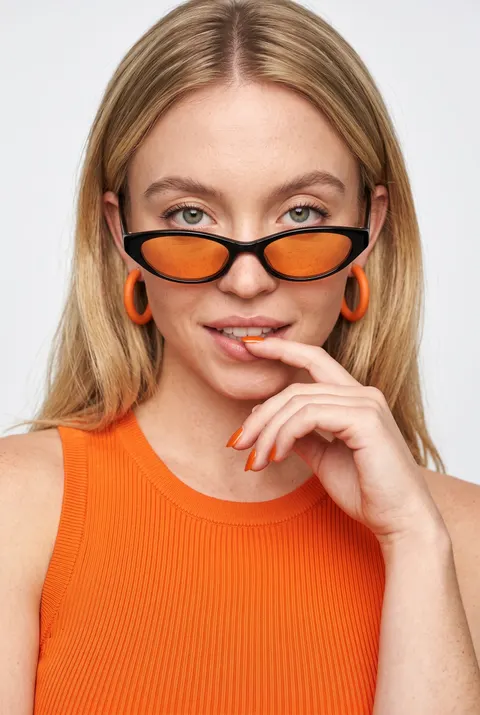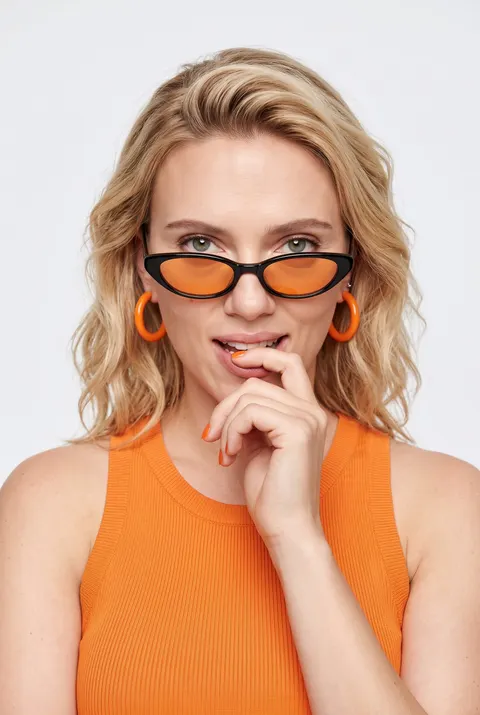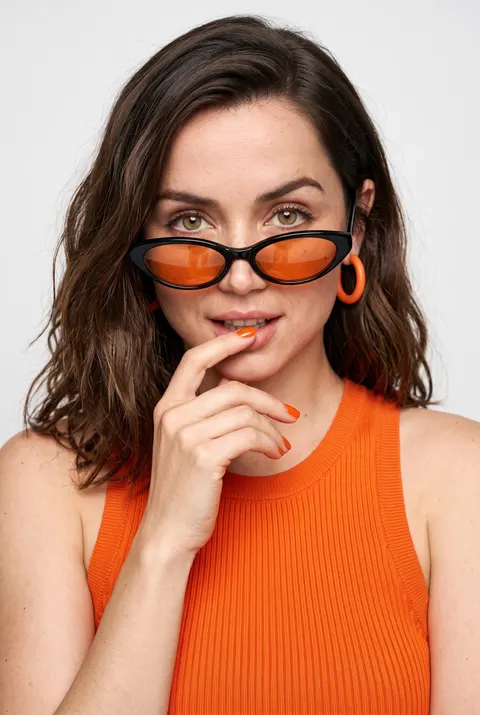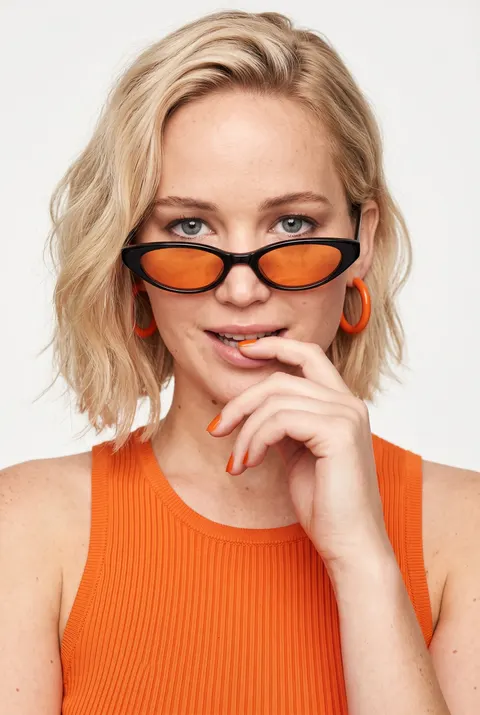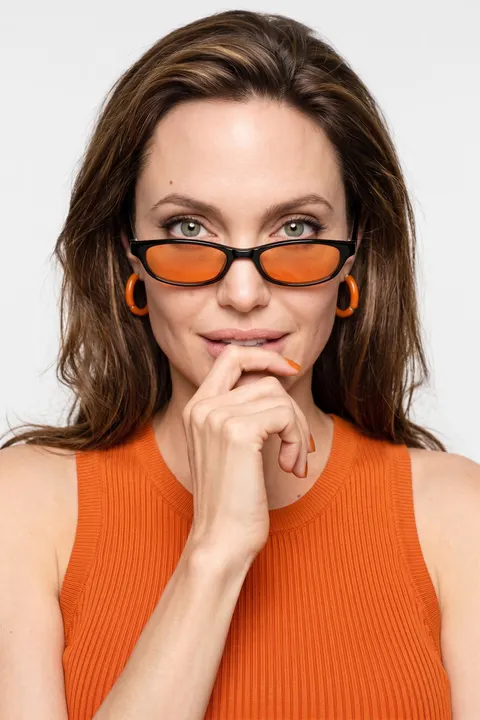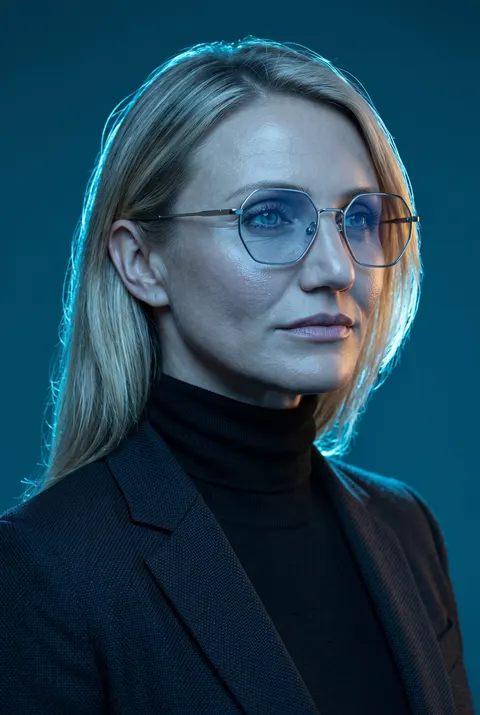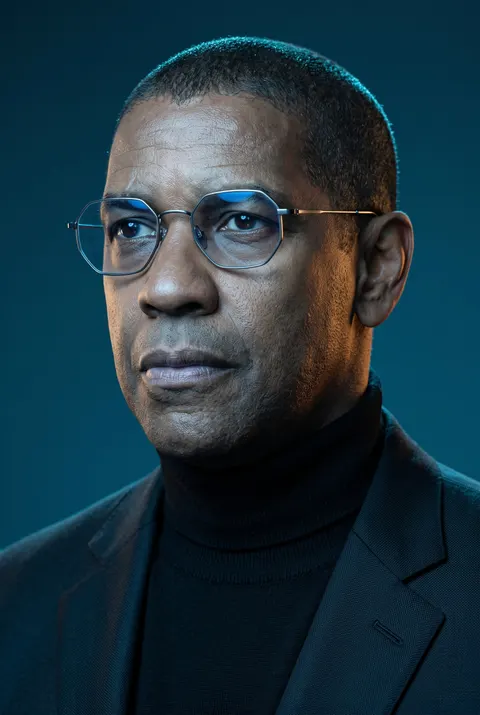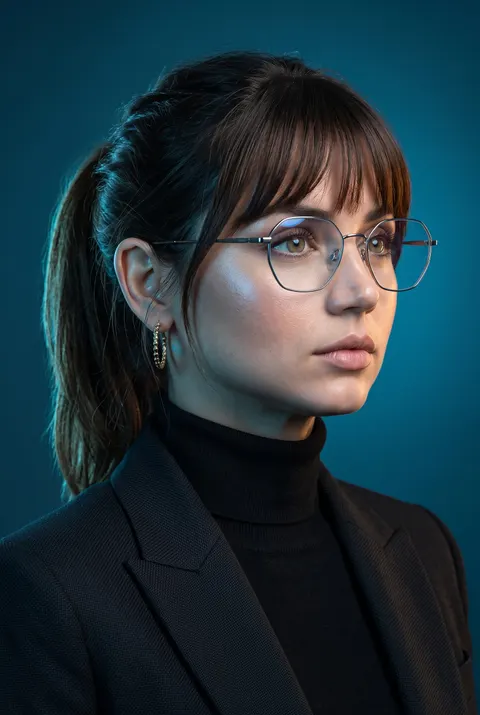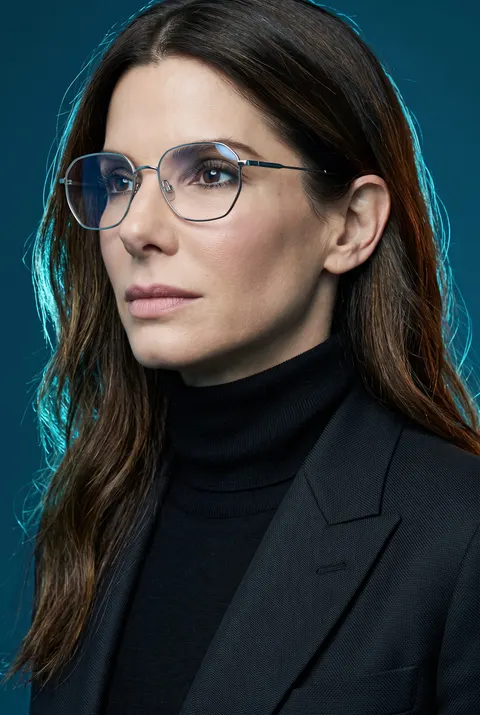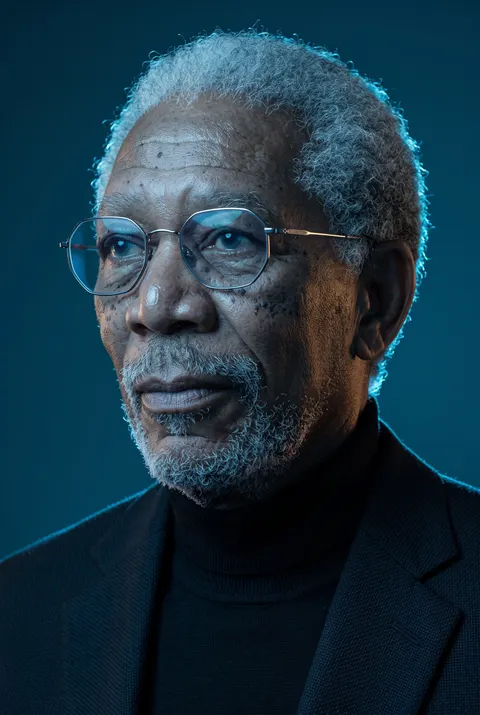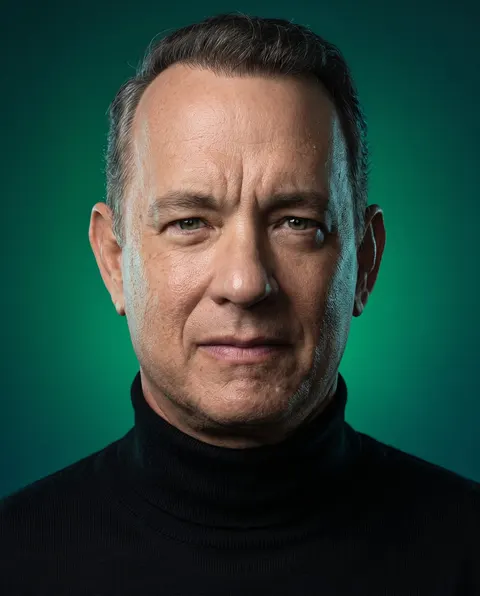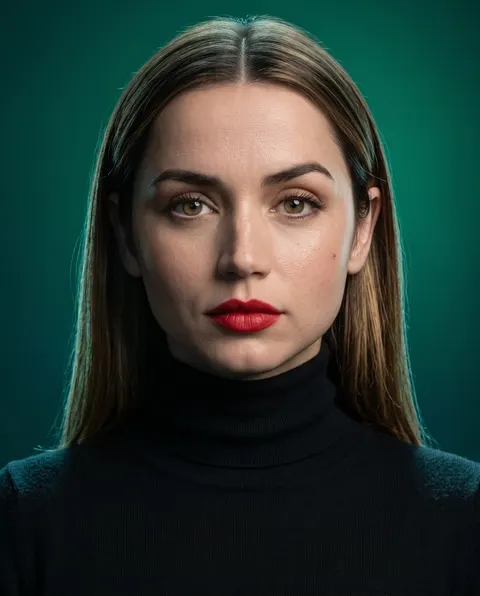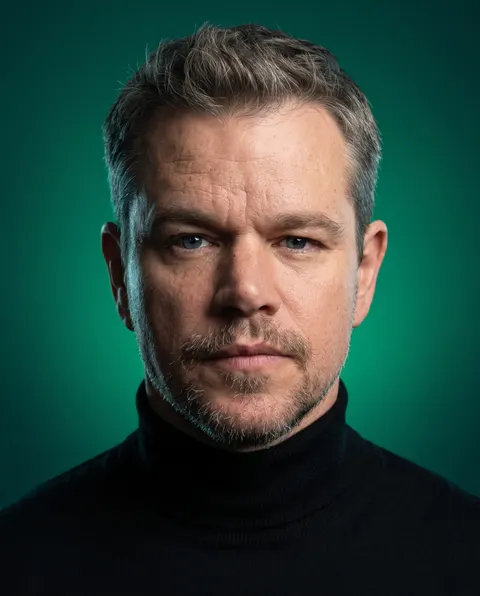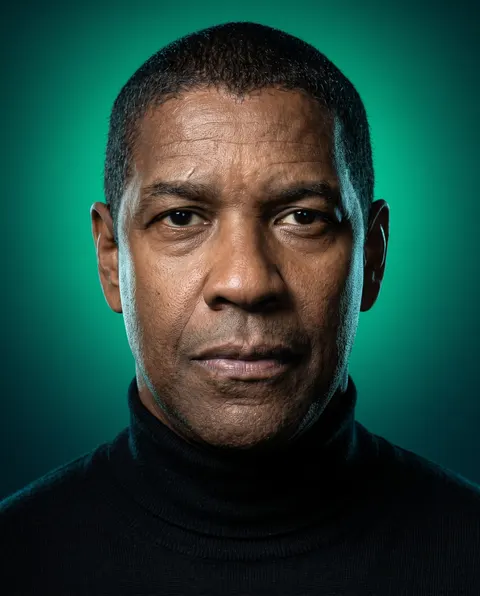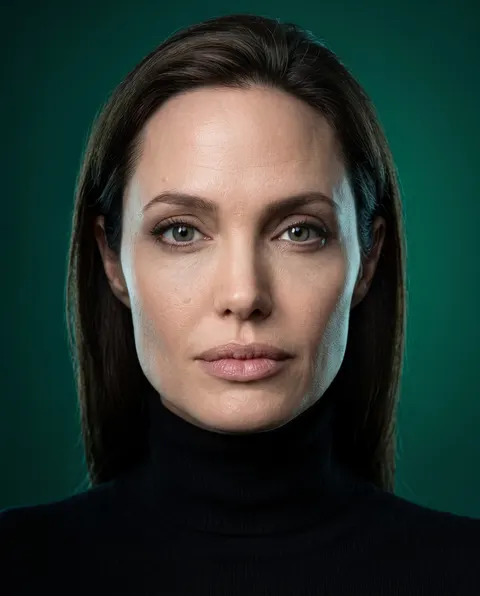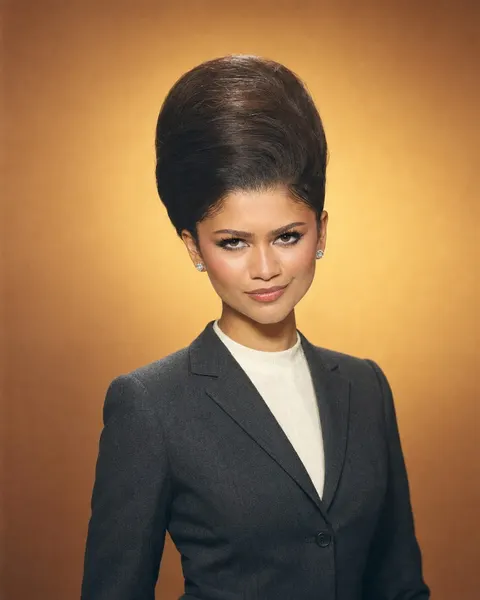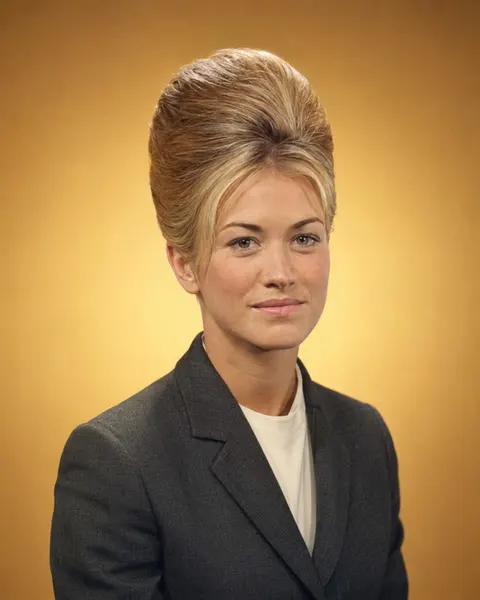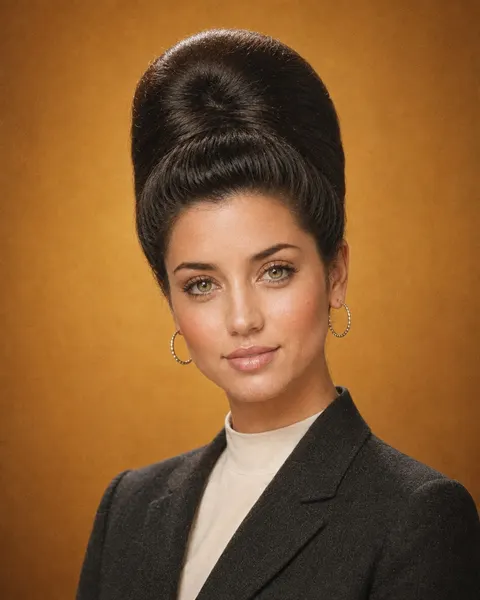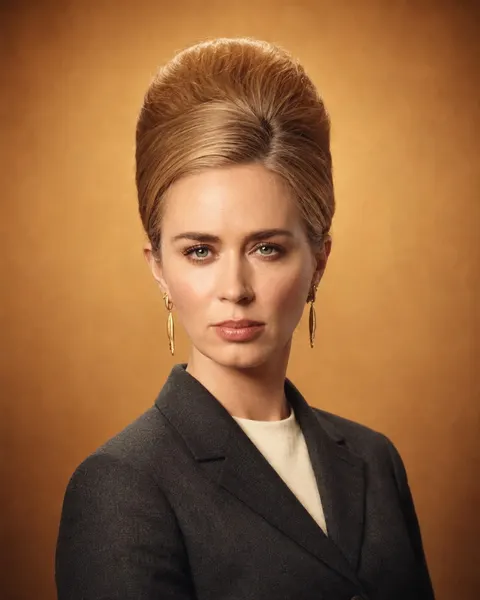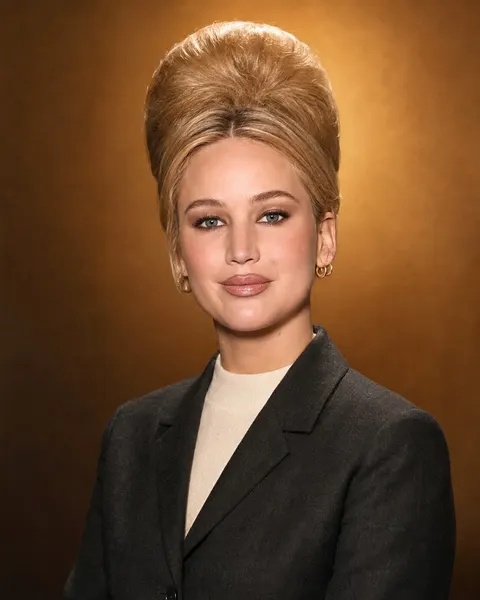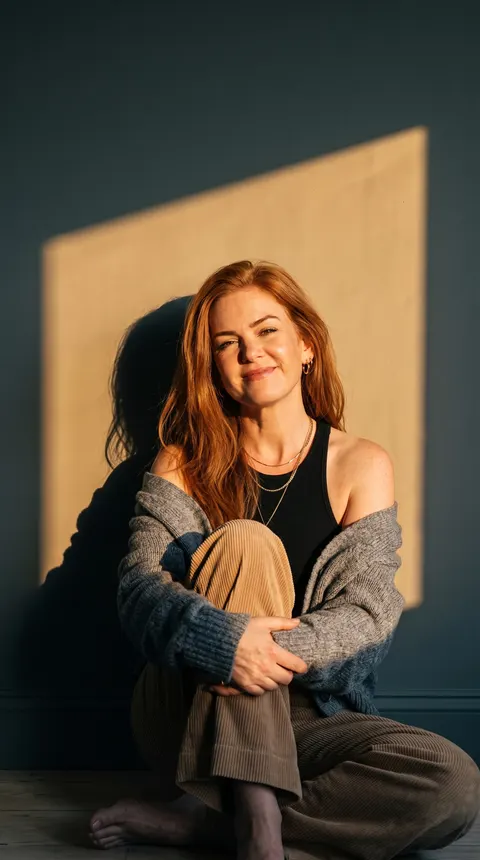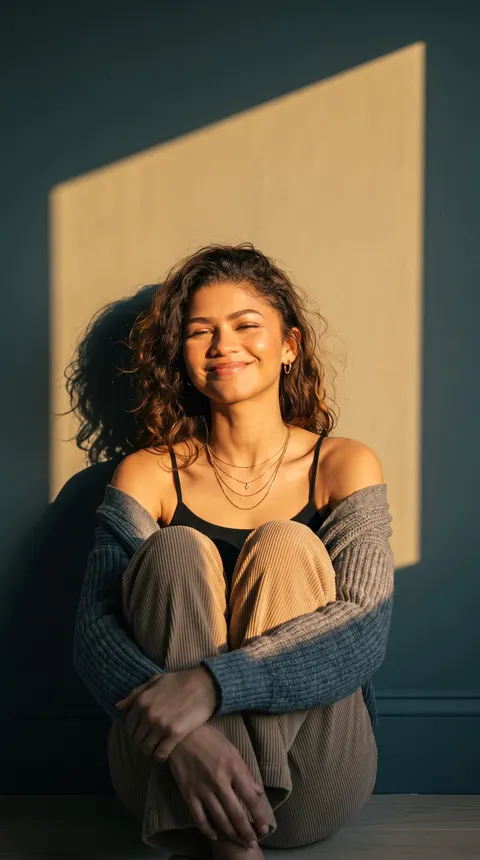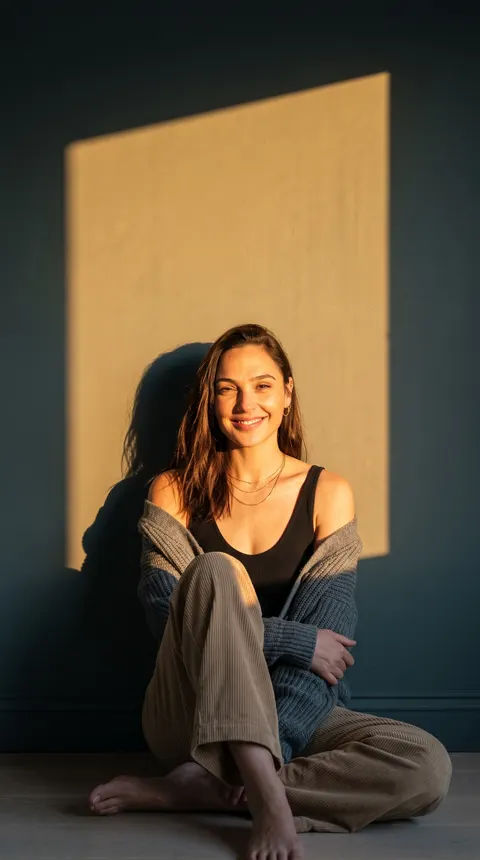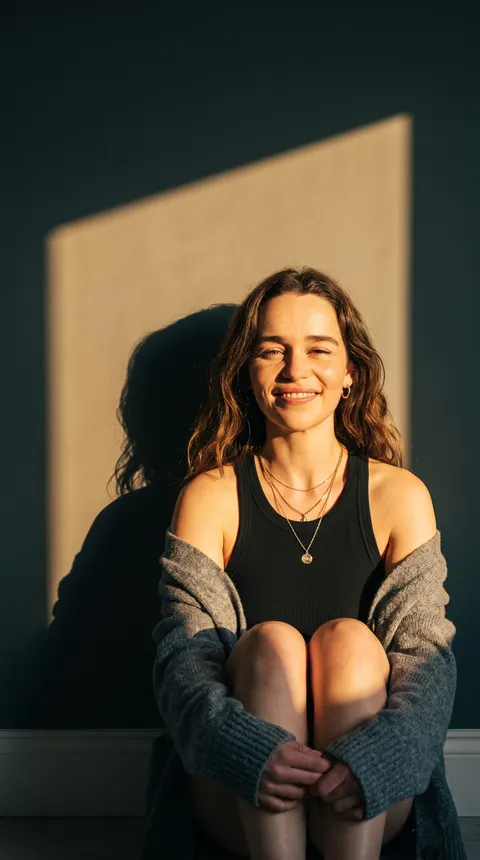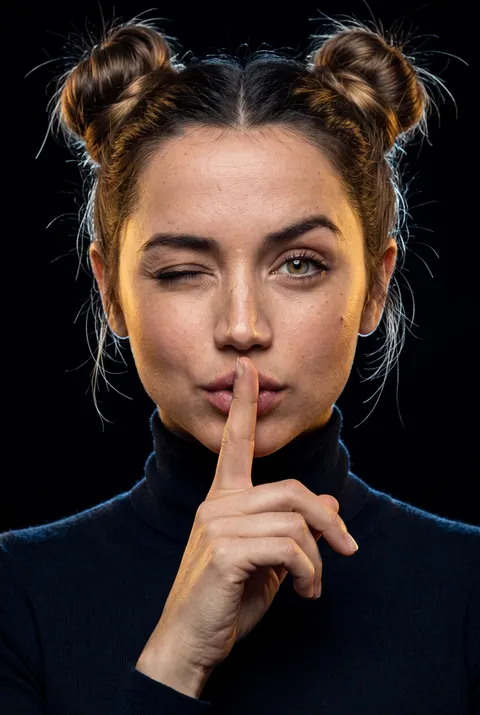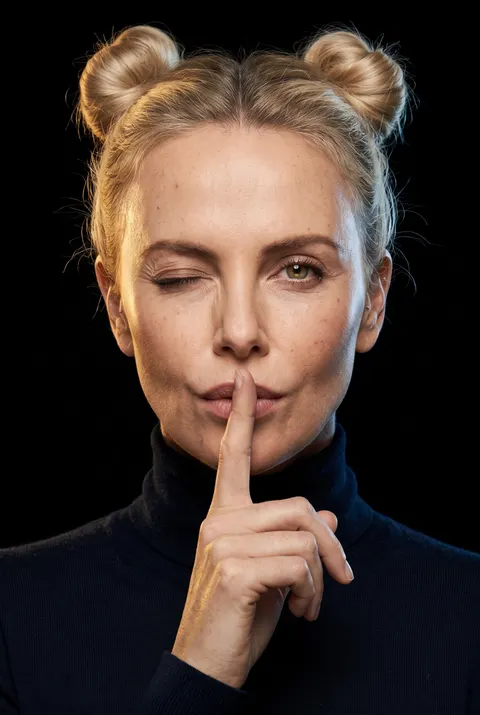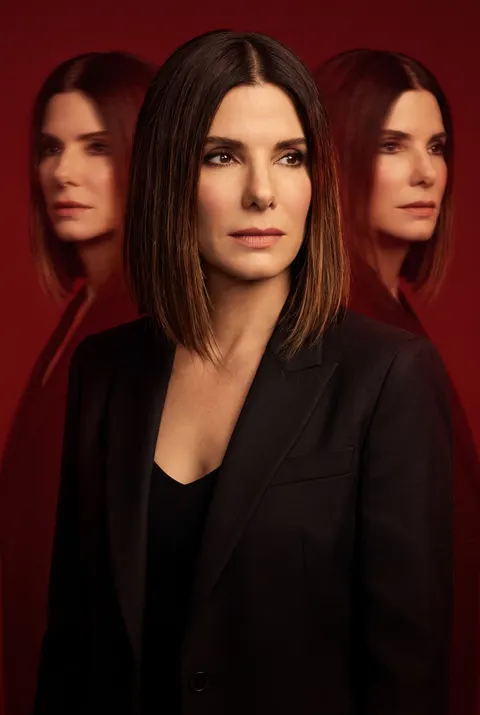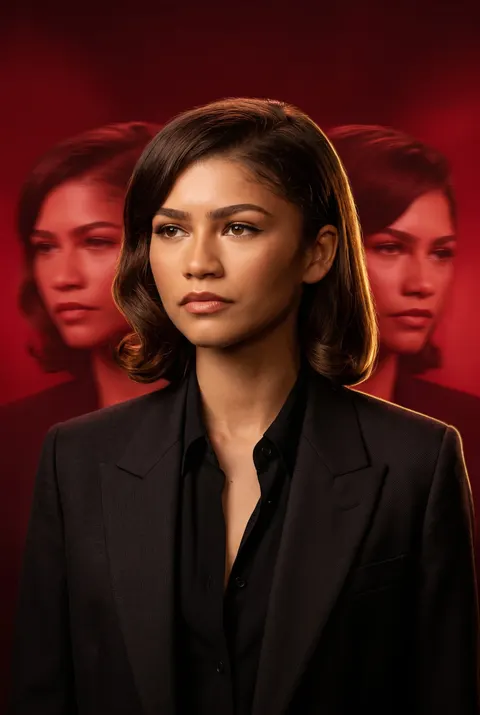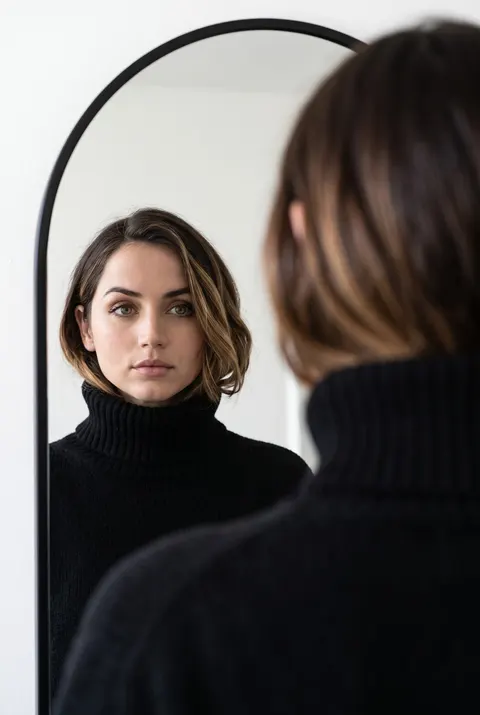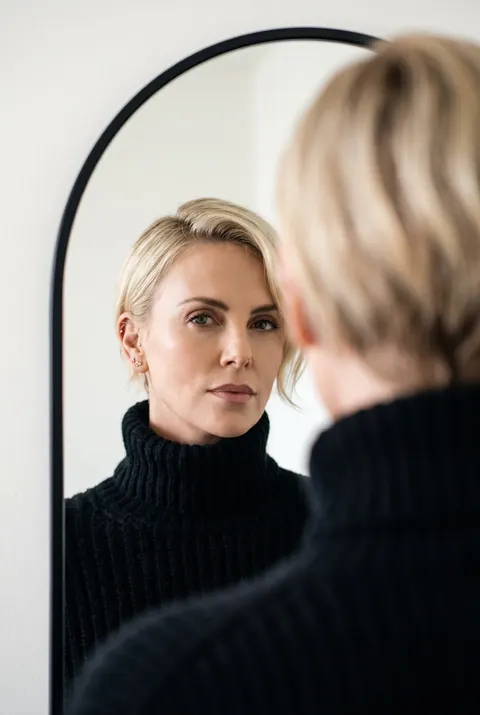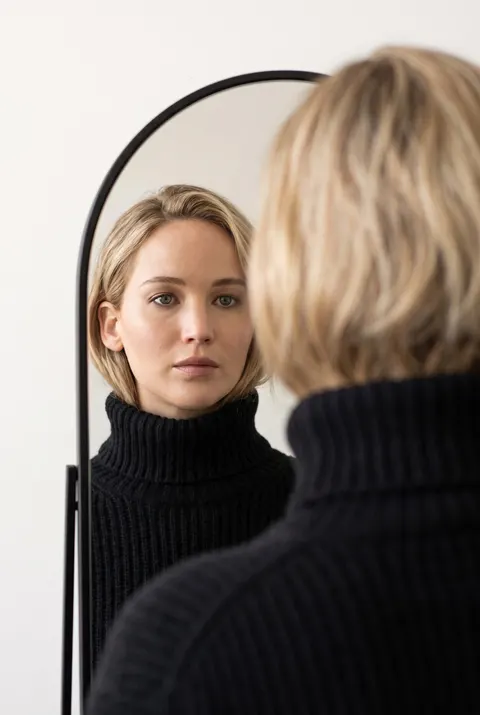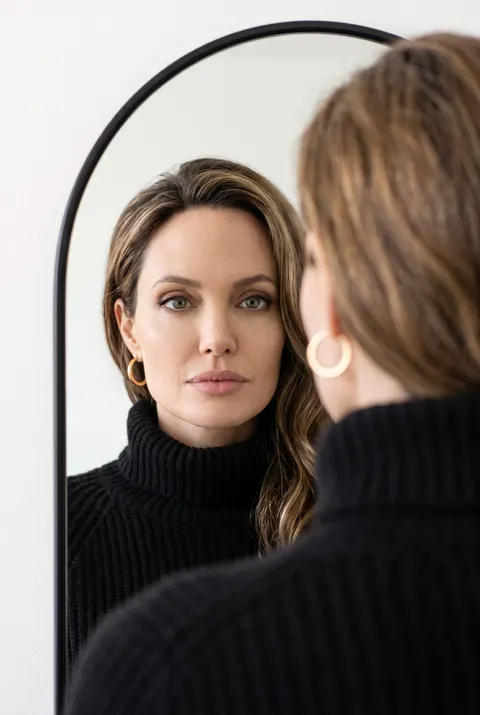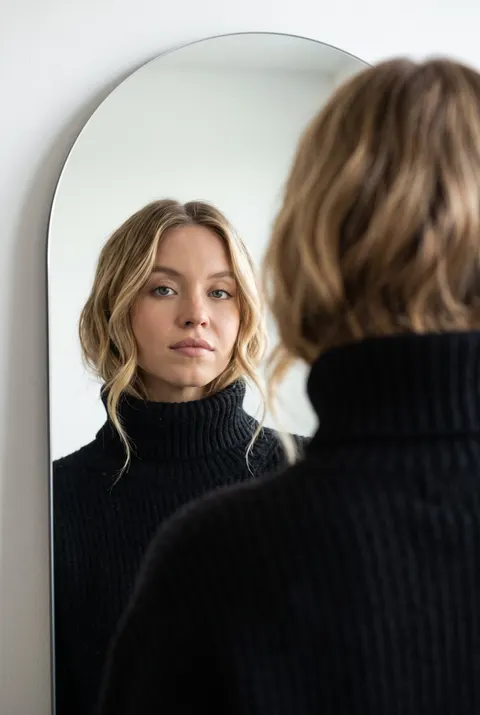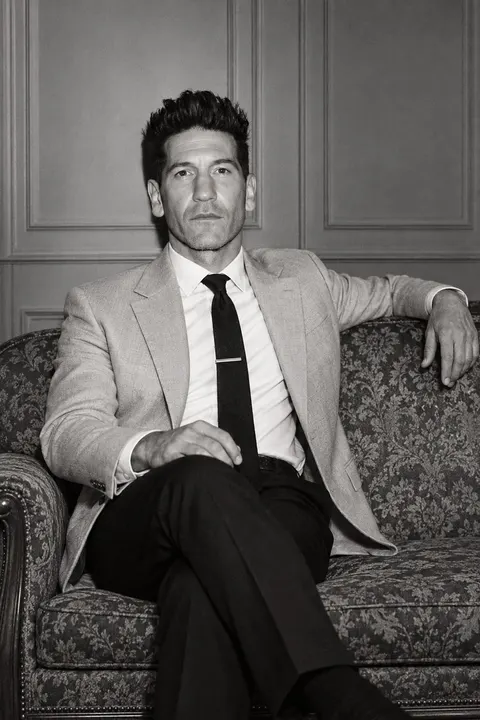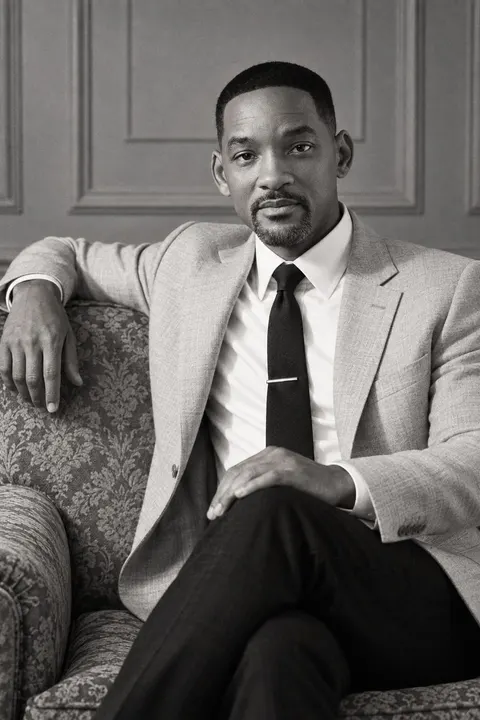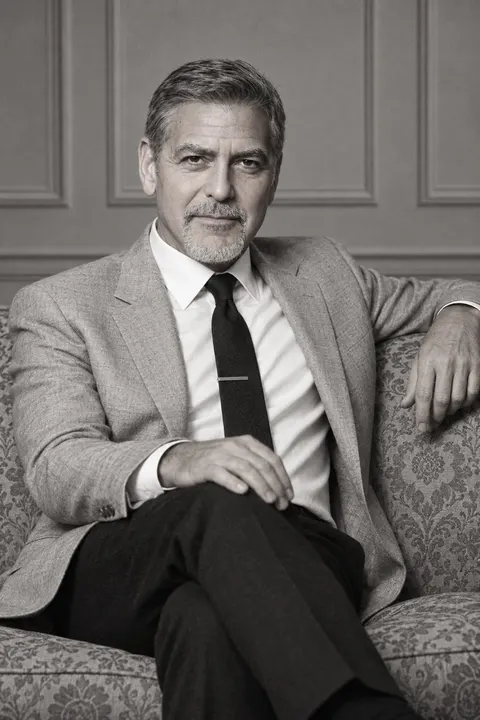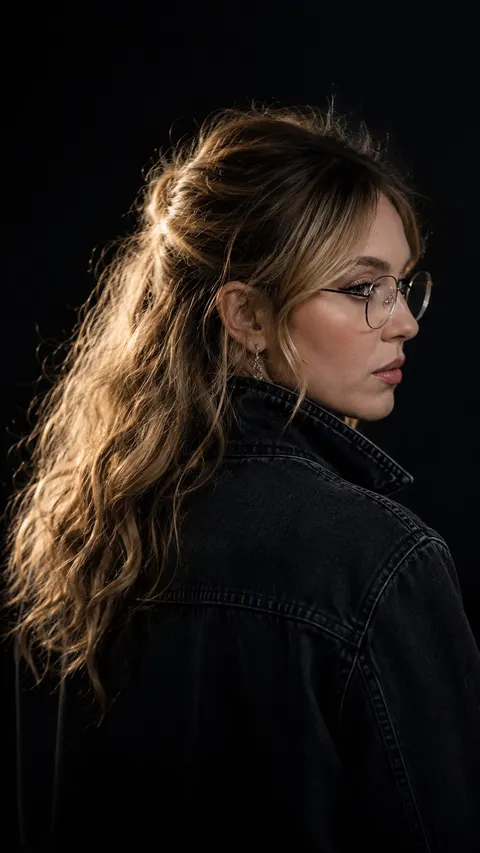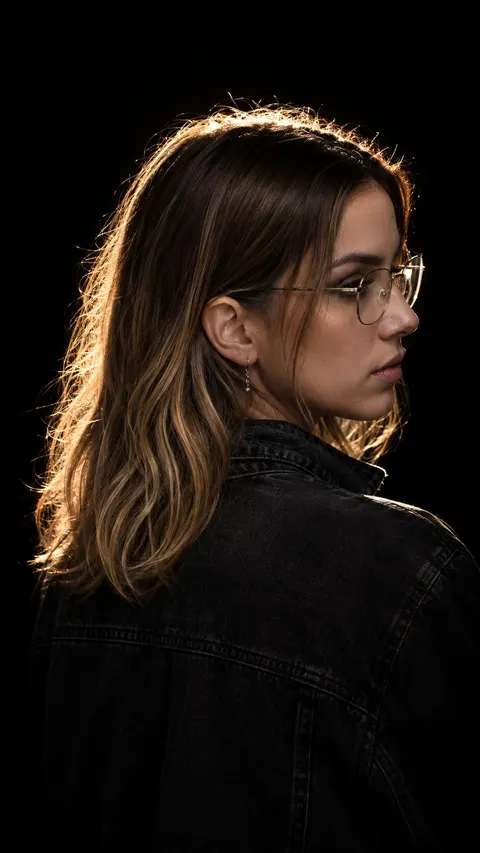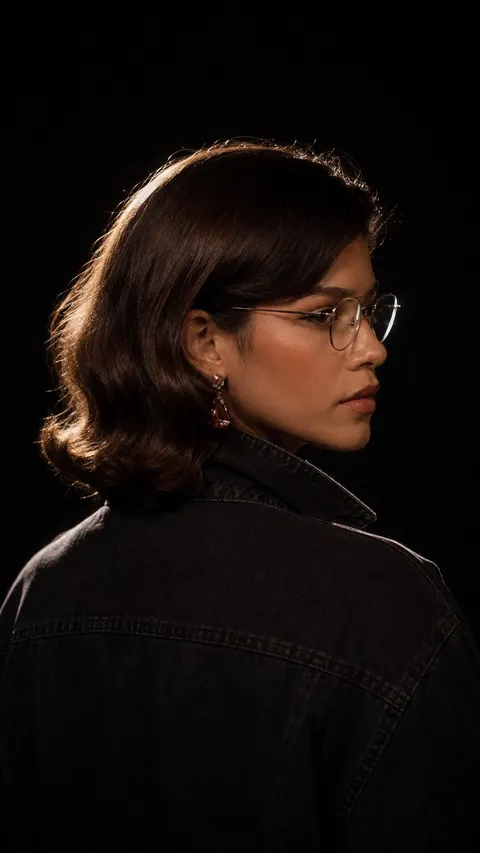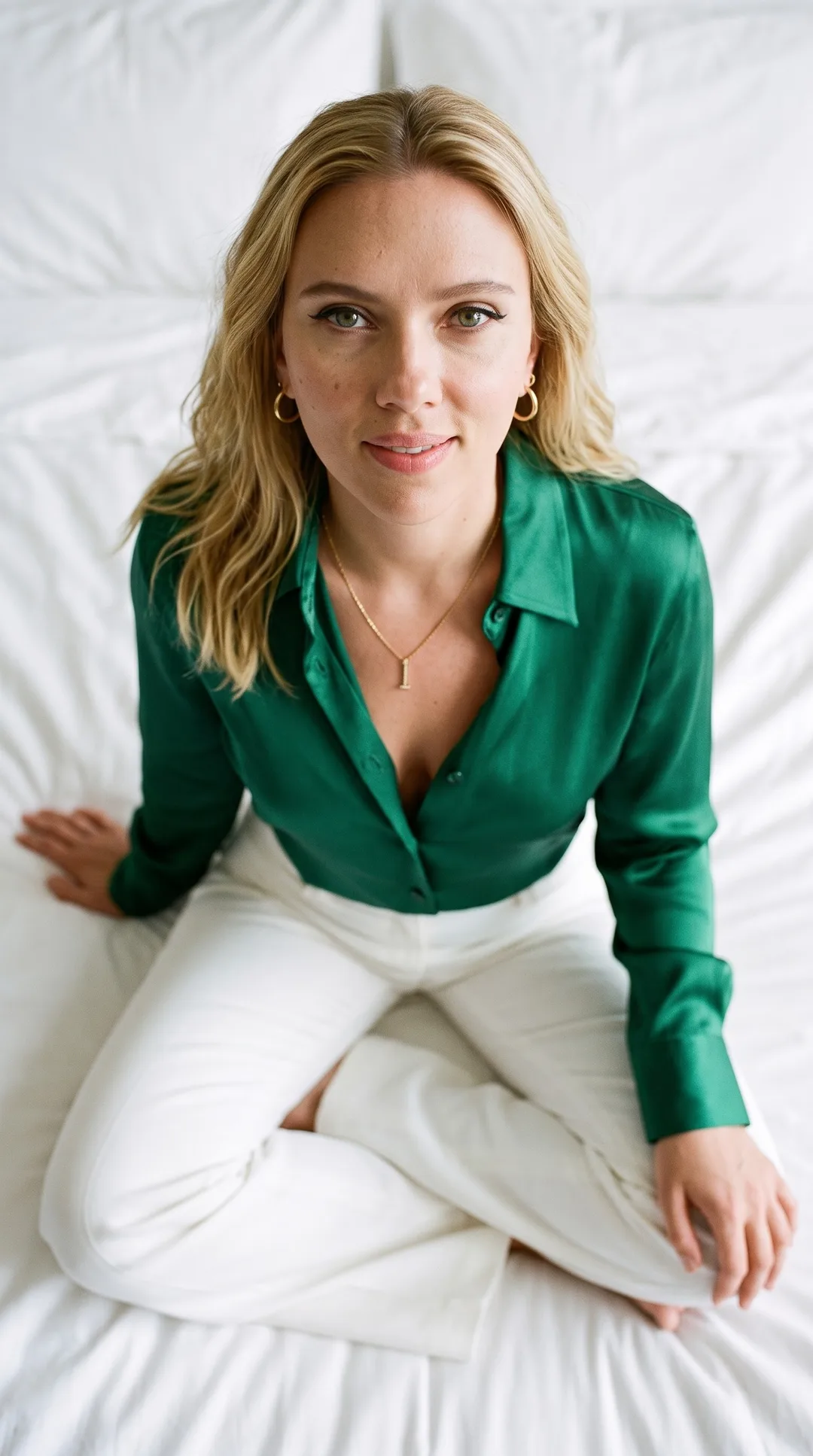
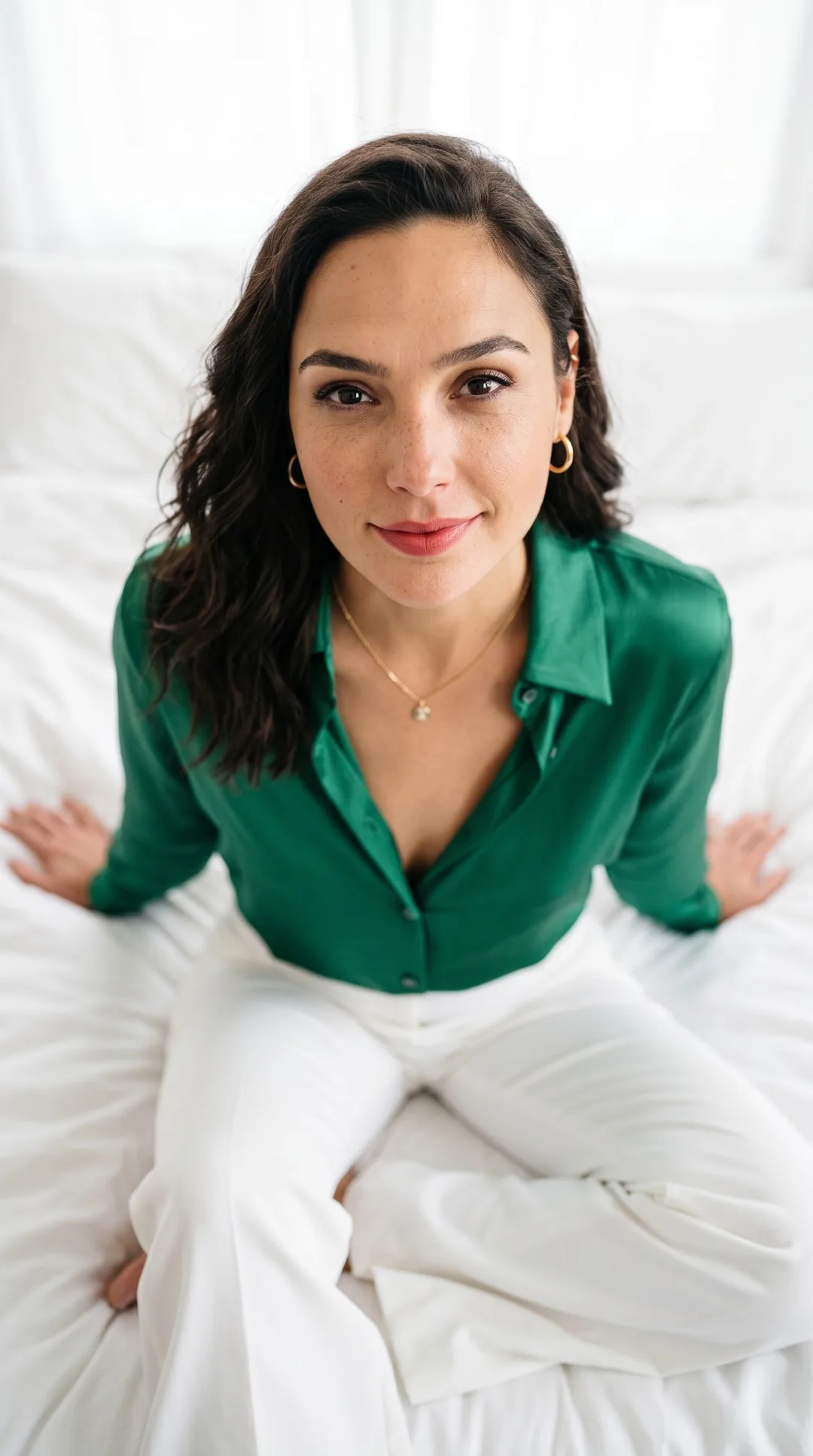
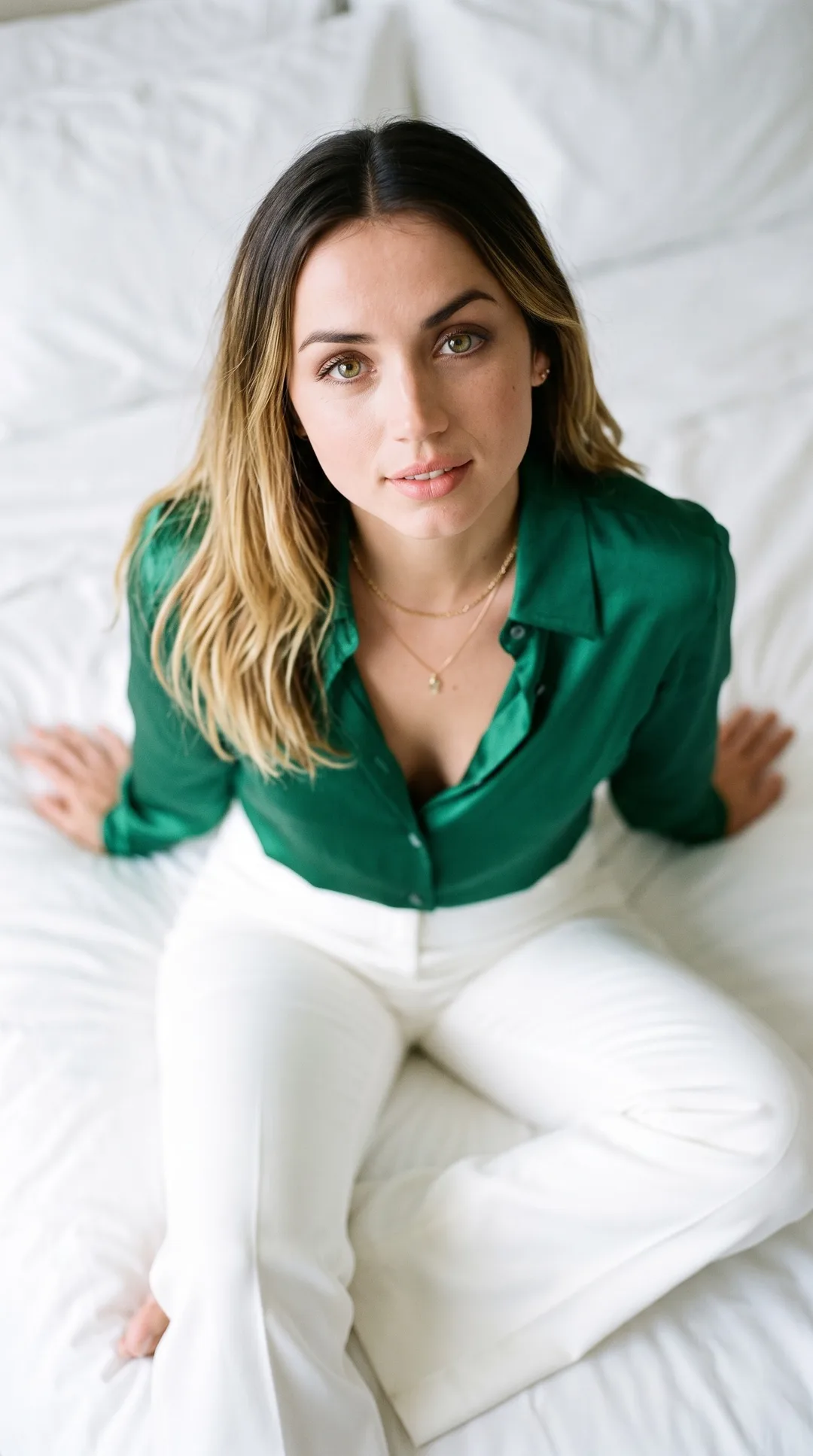
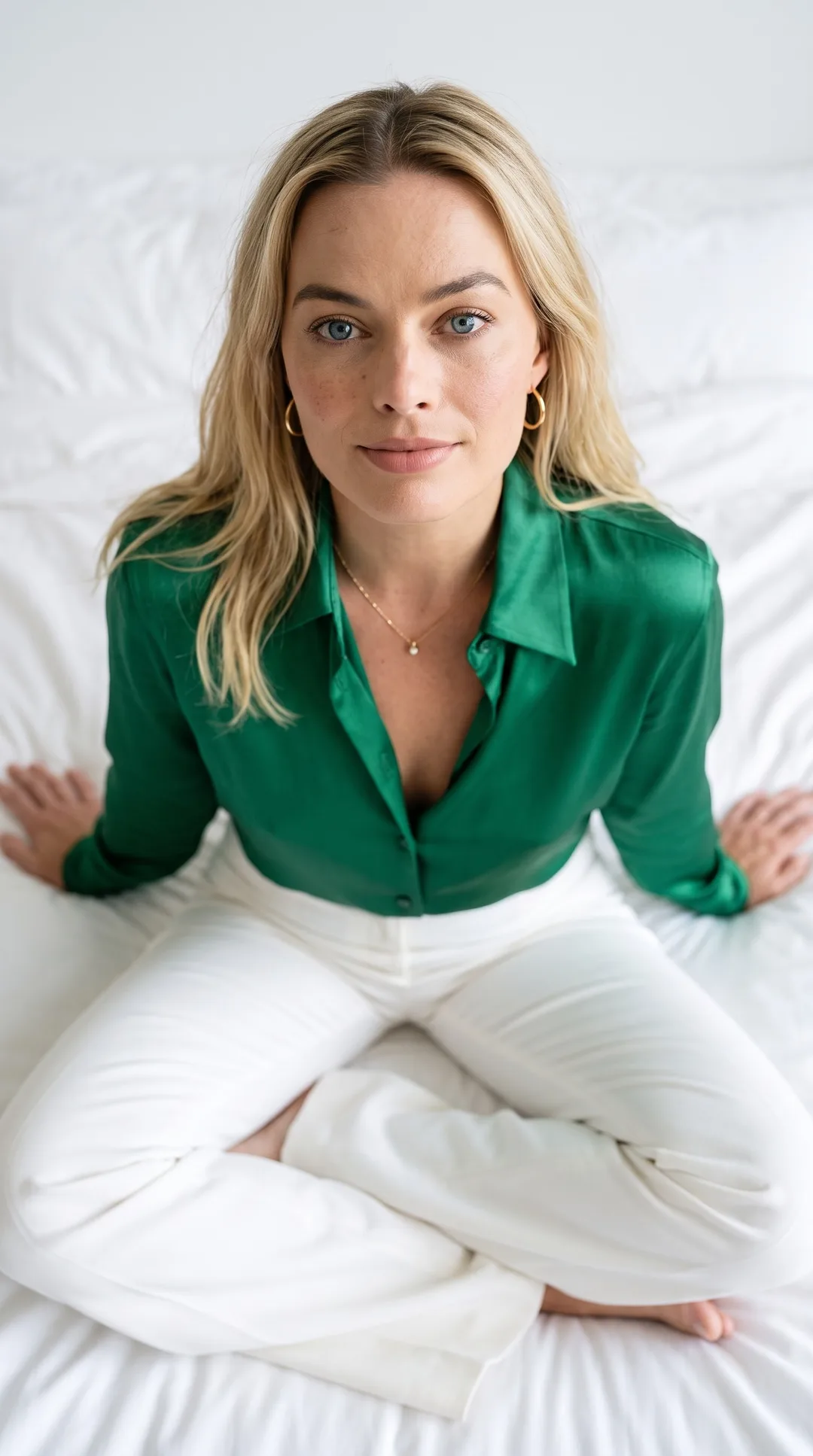
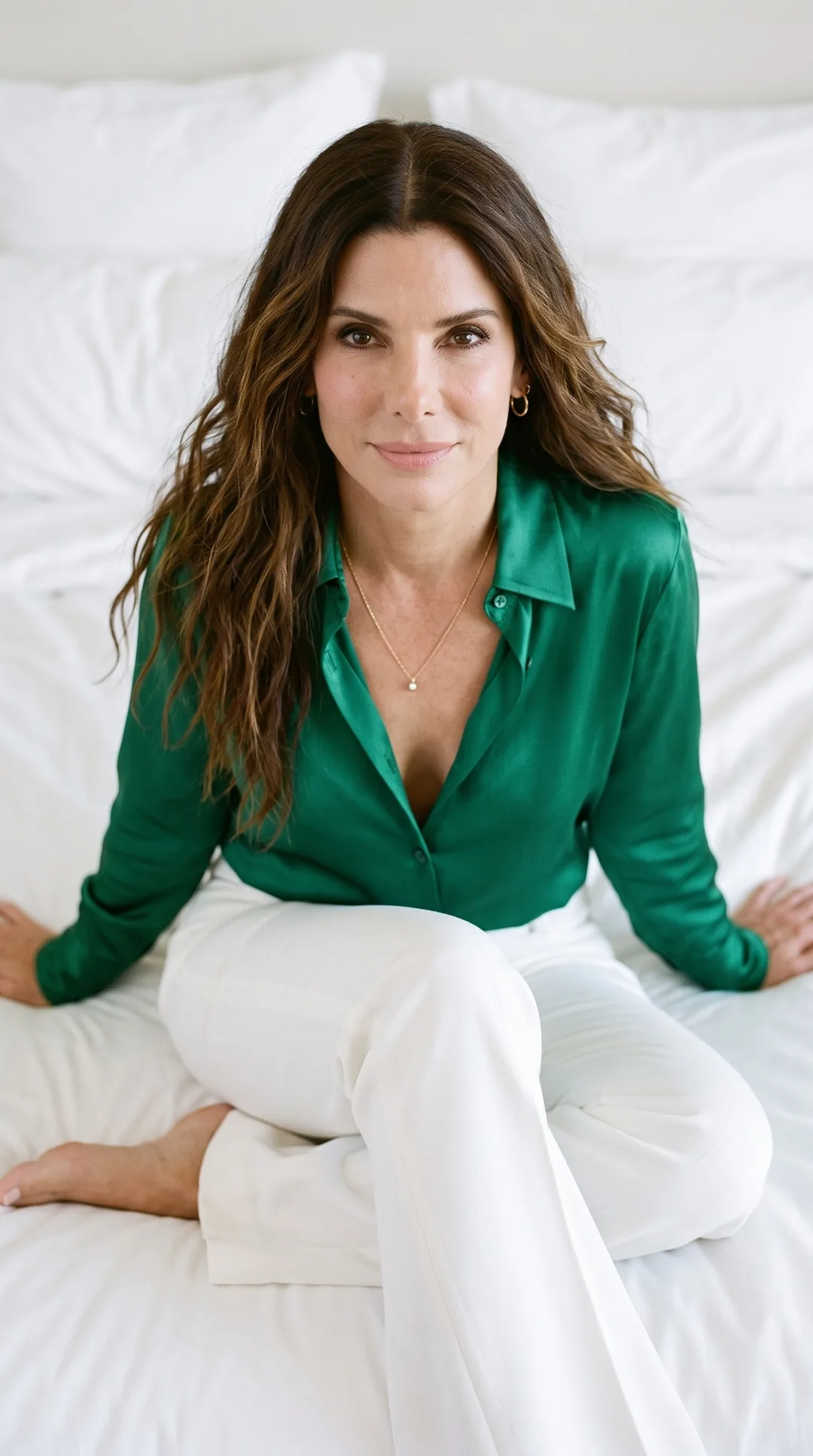
High-Angle Emerald Satin Portrait
High-angle portrait prompt: emerald satin shirt on white bedding, warm Portra-film look, quiet half-smile. Examples: Scarlett Johansson, Gal Gadot, Margot Robbie.
Prompt
LOCKED MASTER PROMPT — HIGH-ANGLE EMERALD SATIN ON WHITE, PORTRA LOOK
ROLE
You are a world-class fashion and lifestyle portrait photographer shooting from above in a white, soft, daylight-filled room, on a fast 85mm and colour negative film.
Create a premium, photorealistic portrait using the ATTACHED REFERENCE IMAGE as the identity source.
The defining idea of this image: the camera is high, looking down; the subject sits on white bedding and looks up into the lens with a quiet, warm half-smile. An emerald green satin shirt, open at the front, is the only saturated colour in a world of white — white sheets, white flared trousers, white light. The face is razor sharp; everything below it dissolves into soft focus. Warm, natural, film-toned. Timeless and easy.
The output must look like a real photograph on colour negative film captured on a high-end full-frame camera — NOT like an AI-generated image, a 3D render, a beauty-filtered portrait, or a stock "lifestyle" shot.
Aspect ratio: 9:16 vertical.
1. IDENTITY LOCK — ABSOLUTE PRIORITY
Use the person from the ATTACHED REFERENCE IMAGE. Preserve identity with maximum fidelity. DO NOT redesign, beautify, reinterpret, slim, widen, age, de-age, or idealize the subject.
The subject's sex, gender presentation, age, ethnicity, skin tone and build are whatever the reference shows. Nothing in this prompt overrides the reference on any of these. The satin shirt, the trousers, the jewellery and the pose are a styling choice applied to whoever the reference shows — they do not imply, require or alter the subject's gender.
Preserve exactly:

Facial geometry and skull proportions
Face shape and width-to-height ratio
Forehead height and hairline shape
Brow ridge projection
Eyebrow shape, thickness, density and spacing — not groomed, thinned, filled or arched
Eye shape, size, spacing, eyelid structure, iris colour, lashes and under-eye character — the eyes and lashes are the reference's own, not lengthened, darkened or recoloured
Nose bridge, tip and nostril structure
Cheekbone height and projection
Jawline definition and angle
Chin shape and projection
Lip shape, thickness, proportions and natural colour
Ear size, shape, position and attachment
Natural facial asymmetry
Skin tone and undertone
Natural skin texture, pores, freckles, lines and surface irregularity — and any natural flush the reference shows, no more
Neck length and thickness, shoulder width, collarbone, chest and torso structure — the seated body is the reference's body
Hand size and proportions, where visible
Apparent age
Any moles, scars or distinguishing marks
The subject must remain unmistakably the same individual as the reference.

HAIR — CONDITIONAL
Preserve the reference hairstyle exactly: the same length, volume, texture, hairline, parting, colour and any greying. Worn down and loose as the reference's hair falls; it may drape over the shoulders and frame the face as its length allows. Do NOT shorten, lengthen, restyle, straighten or curl it. Do NOT recolour.

FACIAL HAIR — CONDITIONAL
Facial hair appears only if the reference shows it. If present, preserve its exact length, density, colour and cheek line. If absent, add none.

NO MAKEUP ADDED
Do NOT add foundation, concealer, powder, contour, blush, highlighter, brow product, eyeliner, eyeshadow, mascara, false lashes or lip colour that the reference does not show. Any warmth on the cheeks is the reference's own skin under warm film, not added blush. If the reference wears makeup, keep it as the reference shows it.
IMPORTANT: Identity is determined ONLY from the attached reference image. Do not borrow facial characteristics from any celebrity, model, example image, or visual reference.
2. CAMERA POSITION & ORIENTATION LOCK — HIGH ANGLE — CRITICAL
Camera
High — approximately 35–50 degrees above the seated subject's eye line, looking down at the face and the body. The lens axis is angled downward; the frame's vertical runs roughly from the top of the head, down the torso, to the folded legs and the bedding beneath.

Subject orientation
The subject is seated on the bedding, facing the camera, the body square to within 15 degrees
The torso leans very slightly forward, approximately 5–10 degrees, toward the camera
The head is tilted back and up toward the high camera so the face presents fully — the chin lifted approximately 20–30 degrees relative to the torso — with the face reading nearly frontal to the lens despite the camera's height
Lateral head tilt of approximately 4–8 degrees, a soft, easy cant to one side
The face is rotated no more than 8 degrees from the lens axis
THE PERSPECTIVE THAT MUST HOLD
The high angle foreshortens the body: the head and shoulders read large and near; the torso recedes; the folded legs and the trousers, furthest from the lens, read compressed and small
The face, tilted up to meet the camera, is not foreshortened — it reads as a normally proportioned face looking up
Do NOT shoot from eye level, chest level or below — the camera is above. Do NOT exceed 50 degrees into a top-down view. Do NOT tilt the camera laterally (no dutch angle). Do NOT turn the head into a three-quarter or profile position. Do NOT lower the chin or let the face look at the camera from under the brow — the face is lifted to it. Do NOT introduce wide-angle distortion on the face — the foreshortening belongs to the body, not the head.
3. FRAMING LOCK — CRITICAL
A medium framing from above — head to the folded legs, with white bedding filling the rest.
Show:

The whole head with the full hair, the hair spilling over the shoulders and onto the bedding
The full face, lifted
The neck, the necklace, both shoulders
The open shirt front, both sleeves
The torso to the waist and the white trousers over the folded legs, receding
The white bedding surrounding and beneath — across the top of the frame behind the head, on both sides, and at the bottom
The head (top of hair to chin) occupies approximately 26–32% of the total frame height. The eye line sits approximately 22–27% down from the top of the frame. The chin sits at approximately 38–42% down from the top. The shirt's open front and the necklace span approximately 42–55% down. The trousers and folded legs occupy approximately 60–85%down, softly out of focus. The shoulders span approximately 60–72% of the frame width.

HEADROOM LOCK
Leave approximately 8–12% of the total frame height as bedding above the top of the hair. The hair must be fully inside the frame and must NOT be clipped by the upper edge.

CROP LOCK
Do NOT crop the top of the head. Do NOT crop the chin, the necklace or either shoulder. Do NOT crop above the waist — the trousers and folded legs must read below. Do NOT extend to include feet or the room beyond the bedding. Do NOT tighten into a head-and-shoulders composition.
4. SUBJECT POSITION
Place the head at approximately 44–52% of frame width, near centre with a slight offset toward the side the head tilts away from. The body descends the centre of the frame, the folded legs spreading slightly wider at the bottom. White bedding surrounds the figure on every side.
Do NOT offset the figure to a frame edge. Do NOT leave a side of the frame empty of bedding.
5. POSE & SEATING LOCK
SEATING
Seated on the bedding, legs folded beneath or to the side — kneeling-sitting or a sideways tuck — so the white trousers gather beneath the torso and spread on the bedding below
Weight settled, the body relaxed into the soft surface
TORSO AND ARMS
The torso leans very slightly forward toward the camera
Both arms relaxed and low: one hand resting on the bedding beside the hip, the other resting on the thigh or the bedding at the other side — both hands low in the frame, soft, out of focus, never a focal element
Shoulders relaxed and down; the shirt's collar falling open with the lean
THE HEAD
Lifted to the camera, softly tilted — see Section 2
The read is relaxed, unhurried, warm — a person at ease on a soft surface, looking up at someone they like.
Do NOT stand, lie down, or sit on a chair or stool. Do NOT raise a hand to the face, hair, collar or chest. Do NOT cross the arms, fold the hands or place them prominently in the lap. Do NOT lean back or slouch. Do NOT produce a stiff, posed, "model" posture.
6. GAZE & EXPRESSION
The subject looks directly up into the lens, with a soft, open, steady gaze. Both eyes fully open and clearly readable, each carrying a single soft, broad catchlight from the diffused light above and in front — high and slightly to one side.
Expression:

A subtle, natural smile — the corners of the mouth lifted gently, the lips closed or barely parted, no teeth
Warm, relaxed, unguarded — a smile that sits mostly in the eyes and the cheeks
Brow relaxed and level
Jaw relaxed
Do NOT show teeth or produce a grin, a laugh or a wide smile. Do NOT produce a serious, neutral, stern or intense expression. Do NOT produce a seductive, smouldering, pouting or theatrical look. Do NOT produce a blank, vacant or bored look. Do NOT direct the gaze away from the lens. Do NOT narrow or widen the eyes.
7. WARDROBE & JEWELLERY LOCK
Every garment is cut to the reference person's build.

Shirt — emerald green satin
A long-sleeved button-front shirt in emerald green satin — a saturated, slightly blue-leaning green, approximately #0F7A4A to #178A56 in the mid-tones, deeper in the folds, brighter on the highlights
Satin: a soft, fluid, lustrous surface that catches broad, gentle highlights along the shoulders, the sleeves and the folds — a sheen, not a mirror
A pointed collar, open and lying flat, its points spreading
Unbuttoned from the collar down to approximately the mid-sternum — the front open, the placket falling to either side, the upper chest and the necklace visible
Relaxed fit, the fabric draping softly and pooling at the waist and the elbows in broad, rounded folds
Long sleeves, cuffs at the wrist, loosely buttoned or open
No logo, pattern, print or contrast trim
Trousers — white flared
Bright white flared trousers in a smooth, matte, mid-weight fabric
High-waisted, the waistband at or just above the natural waist, meeting the shirt's tail
Flaring from the knee, the fabric gathering and spreading on the bedding beneath the folded legs
No pattern, no visible hardware
Softly out of focus — see Section 12
Jewellery
Small gold hoop earrings — thin, polished, approximately 1.5–2.5 cm in diameter, one in each ear
A thin gold chain necklace with a single small pendant — a tiny disc, bar or stone — resting on the sternum inside the open shirt
Both in warm gold, catching small soft highlights
Worn regardless of whether the reference wears jewellery — they are the series' styling; if the reference wears other jewellery, replace it
Do NOT use a black, navy, teal, olive, lime or any non-emerald shirt. Do NOT use a matte, cotton, linen, silk-crepe or non-satin fabric — the sheen must read. Do NOT button the shirt closed, or open it below the sternum. Do NOT use a t-shirt, blouse with ruffles, camisole or any garment other than a button-front shirt. Do NOT use coloured, cream, grey, denim, straight-leg or cropped trousers — bright white, flared. Do NOT use large hoops, drop earrings, studs, silver or coloured jewellery. Do NOT add a watch, ring, bracelet, belt, hat or any other accessory unless present in the identity reference.
8. ENVIRONMENT LOCK — WHITE BEDDING
The subject sits on and against white bedding — not a studio backdrop.

White sheets, a duvet or a soft cover: a smooth cotton or linen surface in bright white, with soft, rounded folds and gentle creases where the fabric gathers around the body and pools at the edges
The bedding fills the entire frame around the figure — behind the head at the top, on both sides, beneath the legs at the bottom — with no edge of the bed, no headboard, no wall, no floor visible
Lit brightly and evenly, reading as near-white with soft grey in the folds, approximately #EDEDEB to #F6F6F4on the surfaces and #D8D8D6 in the deepest creases
Out of focus everywhere except immediately around the face — the folds dissolve into soft tonal shapes with increasing distance from the focal plane
NO headboard, pillow edge, mattress edge, bed frame, wall, window, floor or room detail. NO pattern, print, stripe or coloured bedding. NO objects, props, books, cups, flowers or accessories on the bed. NO second figure or shadow of a figure. NO text, typography, logos, watermarks, borders or graphic elements.
9. LIGHTING LOCK — SOFT DIFFUSED, EVEN — CRITICAL
Soft, diffused, even light — a large window or a large diffused source above and in front, with the white bedding as a giant fill.

KEY
A very large, soft, diffused source — a large window with sheer diffusion, or a 2 m scrim — positioned above and in front of the subject, roughly on the camera's side, approximately 15–30 degrees to one side of the camera-subject axis and 20–40 degrees above the subject's lifted face.

FILL
The white bedding and the white room bounce light into every shadow: key-to-fill approximately 1.5:1 to 2:1.

RESULT
Even, luminous illumination of the face and upper body with gentle modelling: a soft turn on the far cheek, a faint softening under the chin, no shadow with an edge
Skin rendered clean, warm and textured; the natural flush and freckles of the reference visible
A soft, broad catchlight in each eye
Broad, soft satin highlights along the shirt's shoulders, sleeves and folds — the fabric's lustre revealed by the large source
Small warm glints on the earrings and the pendant
The bedding lit to near-white, its folds shaded softly
Do NOT use a hard or small source. Do NOT use dramatic, side, split or chiaroscuro lighting. Do NOT use a ring light. Do NOT add a rim, hair or kicker light. Do NOT let shadows form with defined edges. Do NOT overexpose the face, the trousers or the bedding.
10. LIGHTING DIRECTION LOCK
The lighting setup must remain identical across every generation, regardless of changes in the reference person's gender, age, skin tone, hairstyle, or body.
The identity changes. The lighting does NOT change. Source position, size, softness and fill ratio stay fixed. Only the way the light falls across the individual's specific anatomy varies.
11. EXPOSURE & TONAL BALANCE LOCK
A bright, warm, high-key image with one saturated colour.
Approximate distribution of the frame:

White bedding, near-white with soft grey folds: 38–48%
White trousers, soft: 12–18%
Emerald shirt: 16–22%
Skin — face, neck, chest, hands: 12–18%
Hair: per the reference, 6–14%
Jewellery: under 1%
Behavior:

The face is correctly exposed, bright and warm, with a full, smooth tonal range and no clipped highlights
The bedding and the trousers are bright but not clipped — the folds shade softly, the whites carry texture
The emerald is rich and saturated, its highlights bright but retaining the satin's tonal range
Skin highlights on the forehead, nose bridge and cheekbones are soft and textured
No pure black anywhere; the darkest values in the hair (per the reference) and the shirt's deepest folds
Do NOT overexpose the face, the whites or the bedding. Do NOT desaturate or darken the emerald. Do NOT push contrast into drama. Do NOT flatten into a washed-out, faded result.
12. CAMERA LOOK — 85mm f/1.2, RAZOR FACE — CRITICAL
Portrait photography on a full-frame system with a fast 85mm.
Focal length: 85mm. Aperture: f/1.2 — extremely shallow. The face is sharp; almost nothing else is.
Focus:

Critical focus on the near eye
Both eyes, brows, lashes, nose, lips, the skin of the face — sharp
The plane of focus is so thin that the ears and the far edge of the hair are already softening; the collar points, nearest the face, marginally soft
The necklace and the open shirt front, a few centimetres beyond, soft
The shoulders and sleeves softer; the hands, the trousers and the folded legs dissolved into creamy out-of-focus shapes
The bedding sharp-ish only where it touches the focal plane beside the face; soft everywhere else, melting toward the frame edges
RENDERING CHARACTER
Smooth, creamy, rounded defocus — no harsh edges, no double-line bokeh, no busy highlights
The transition from sharp face to soft body is gradual and continuous
Mild natural vignetting from the fast lens, barely present
Do NOT stop down — the depth of field is a defining trait. Do NOT render the shirt, the trousers or the hands sharp. Do NOT render the face soft. Do NOT render busy, nervous or double-line bokeh. Do NOT introduce lens flare, chromatic aberration or a heavy applied vignette.
13. IMAGE QUALITY — FILM CHARACTER
Photorealistic, with the material character of scanned colour negative film in the manner of a fine-grained daylight portrait stock.

Ultra-detailed natural skin on the face: visible pores across the forehead, nose and cheeks, freckles and natural surface irregularity as the reference carries them, a faint healthy sheen on the nose bridge and cheekbones
The reference's own lashes and brows, hair by hair
Individually resolvable hair strands near the face; the hair mass softening with distance
Facial hair, where the reference shows it, as discrete hairs with visible skin beneath
Satin rendered as real fabric: lustre, soft rounded highlights, broad folds, the weave invisible but the surface alive
Bedding rendered as real cotton: soft, rounded, creased, dissolving
Jewellery with small clean gold highlights
Soft, fine film grain at low intensity, evenly distributed, slightly more visible in the whites and the mid-tones — organic, never digital
Smooth, gentle highlight roll-off — a film shoulder, no clipping
No plastic, waxy or airbrushed skin. No skin smoothing, blemish removal, freckle removal or eye brightening. No lengthened, darkened or added lashes; no added makeup. No excessive sharpening or edge halos. No artificial HDR appearance. No beauty-filter or portrait-mode effect. No CGI, 3D-render or video-game surface quality. No digital "film" artefacts — dust, scratches, light leaks, frame borders, fake fading.
14. COLOUR GRADING — WARM NATURAL FILM
A warm, natural, colour-negative grade — rich but never garish.
Palette:

Whites: soft, warm-neutral — a faint creamy warmth, never cool, never clipped
Emerald: saturated, rich, slightly blue-leaning green, holding its depth in the folds
Skin: natural and colour-accurate to the reference, with the gentle warmth and pleasing tonality of daylight film — the reference's own flush, freckles and undertone intact
Hair: the reference's own colour under warm daylight
Gold: warm, small
Tonal structure:

Moderate, natural saturation on skin; full saturation on the emerald
Low-to-moderate contrast, open shadows, soft highlights with a gentle film shoulder
A faint overall warmth — daylight through a window, on film
Do NOT push the skin toward orange, red, peach or magenta. Do NOT let the emerald cast green onto the skin, the whites or the bedding. Do NOT shift the emerald toward teal, olive, mint or blue. Do NOT cool the whites toward blue or grey. Do NOT introduce a second accent colour. Do NOT apply a heavy vintage, faded, matte or teal-orange look. Do NOT crush or lift the blacks. Do NOT allow banding in the out-of-focus whites.
15. VISUAL HIERARCHY
The eyes, looking up into the lens → The subtle smile → The face, razor sharp and warm → The emerald satin, open at the front, catching the light → The gold pendant and hoops → The hair spilling onto the white → The white trousers and the bedding, dissolving
The face is the subject and the only sharp thing. The emerald is the colour; the white is everything else. The softness is the mood.
16. NON-NEGOTIABLE RULES
These must NEVER change between generations:

Identity, sex, gender presentation, age, skin tone, build, brows, eyes, lashes, lips and skin texture from the reference; styling applied to whoever the reference shows.
Hair and facial hair from the reference; hair worn down and loose; facial hair only if present. No makeup added.
Camera high, 35–50 degrees above the seated eye line, looking down.
Subject seated on white bedding, legs folded beneath or to the side, body square within 15 degrees, torso leaning forward 5–10 degrees.
Head lifted to the camera, chin up 20–30 degrees relative to the torso, tilted 4–8 degrees, face within 8 degrees of the lens axis.
Body foreshortened by the high angle; face normally proportioned.
Direct gaze up into the lens; subtle closed-lip smile, no teeth.
Both hands low, resting on the bedding or thigh, out of focus, never a focal element.
Medium framing from above: head 26–32% of frame height; eye line at 22–27%; chin at 38–42%; trousers and legs at 60–85%.
8–12% headroom of bedding; head at 44–52% of frame width.
Emerald green satin button-front shirt, pointed collar open, unbuttoned to the mid-sternum, long sleeves, relaxed fit.
Bright white high-waisted flared trousers.
Small gold hoops and a thin gold chain with a single small pendant; no other accessories unless in the reference.
White bedding filling the entire frame; no bed edge, headboard, wall, floor or objects.
One large soft diffused source above and in front, 15–30 degrees off axis, 20–40 degrees above the lifted face; fill 1.5:1–2:1 from the white surroundings.
No hard source, rim, hair light, kicker or ring light; no edged shadows.
Face bright and correctly exposed; whites unclipped with soft fold shading; emerald rich.
85mm at f/1.2: face sharp, ears and collar softening, necklace soft, shoulders softer, hands, trousers, legs and bedding dissolved.
Smooth creamy defocus; gradual sharp-to-soft transition.
Soft fine film grain; warm natural colour-negative grade; gentle highlight shoulder.
Visible pores, freckles, natural flush and the reference's own lashes; no smoothing.
Skin colour-accurate; no green cast; no second accent colour.
No text, logos, watermarks, props, second figures or extra accessories.
9:16 vertical aspect ratio.
17. REFERENCE PRIORITY SYSTEM
PRIORITY 1 — IDENTITY
Face, eyes, lashes, brows, lips, skin, hair, facial hair, build, age, sex, gender presentation and natural likeness from the reference.

PRIORITY 2 — CAMERA ANGLE AND HEAD POSITION
The high camera, the seated body foreshortened beneath it, the face lifted and tilted to meet the lens.

PRIORITY 3 — FOCUS
Razor-sharp face at f/1.2 with everything else dissolving in order of distance.

PRIORITY 4 — WARDROBE AND ENVIRONMENT
The emerald satin shirt open to the sternum, the white flares, the gold jewellery, the white bedding filling the frame.

PRIORITY 5 — LIGHTING AND EXPRESSION
The soft diffused even light and the subtle upward smile.

PRIORITY 6 — GRADE AND FILM CHARACTER
The warm natural colour-negative grade and the soft fine grain.
If the reference image conflicts with any of these instructions, preserve identity, anatomy, hair, facial hair, skin, lashes, build and natural likeness from the reference, and preserve the camera angle, head position, focus, wardrobe, environment, lighting, expression, grade and film character from this prompt.
18. NEGATIVE CONSTRAINTS
Camera-angle and pose errors — primary failures
Do NOT generate:

An eye-level, chest-level or low camera
A top-down view beyond 50 degrees
A face looking at the camera from under the brow with a lowered chin
A head level with the torso instead of lifted to the camera
A three-quarter or profile head position
A standing, lying or chair-seated subject
A hand raised to the face, hair, collar or chest
Crossed arms, folded hands or hands prominent in the lap
A leaning-back or slouched torso
A stiff, posed "model" posture
A body without the high-angle foreshortening; a foreshortened or distorted face
A dutch or tilted camera angle
Focus errors — primary failures
Do NOT generate:

A sharp shirt, trousers, hands or bedding
A soft face
Deep depth of field from stopping down
Busy, nervous or double-line bokeh
An abrupt sharp-to-soft edge around the face
Identity and makeup errors
Do NOT generate:

A change in the subject's sex, gender presentation, age, ethnicity, skin tone or build from the reference
A generic "beautiful model" face imposed over the reference
Lengthened, darkened, thickened or added lashes
Recoloured, enlarged or brightened eyes
Groomed, thinned, filled or arched brows
Added blush, foundation, contour, highlighter, liner, shadow, mascara or lip colour
Smoothed, poreless, freckle-free or retouched skin
A restyled, shortened, lengthened, straightened, curled or recoloured hairstyle
Hair worn up, tied or pinned
Added or removed facial hair
An aged, de-aged, beautified, slimmed or widened face
A body build not matching the reference
Wardrobe and jewellery errors
Do NOT generate:

A black, navy, teal, olive, lime or non-emerald shirt
A matte, cotton, linen or non-satin shirt
A shirt buttoned closed, or opened below the sternum
A t-shirt, ruffled blouse, camisole or non-button-front garment
Coloured, cream, grey, denim, straight-leg or cropped trousers
Large hoops, drop earrings, studs, silver or coloured jewellery
A missing necklace or missing earrings
A watch, ring, bracelet, belt, hat or accessory not in the reference
Logos, prints, patterns or contrast trim
Environment errors
Do NOT generate:

A studio backdrop, a wall, a floor or a plain seamless instead of bedding
A headboard, pillow edge, mattress edge, bed frame, window or room detail
Patterned, striped or coloured bedding
Objects, props, books, cups, flowers or accessories on the bed
Bedding stopping short of any frame edge
A second figure or a figure's shadow
Lighting, exposure and grade errors
Do NOT generate:

A hard or small source; dramatic, side, split or chiaroscuro lighting
Ring-light illumination
A rim, hair or kicker light
Shadows with defined edges
An overexposed face, whites or bedding
A desaturated, darkened or shifted emerald — teal, olive, mint or blue
Green cast on the skin, whites or bedding
Skin pushed toward orange, red, peach or magenta
Cool, blue or grey whites
A second accent colour
A heavy vintage, faded, matte or teal-orange look
Crushed or lifted blacks
Banding in the out-of-focus whites
Rendering errors
Do NOT generate:

Plastic, waxy or airbrushed skin; beauty-filter or portrait-mode effects
Satin rendered flat, matte or mirror-like
Bedding rendered as a flat white plane without folds
Over-sharpened edges or halos; artificial HDR appearance
Heavy digital noise mistaken for film grain
Digital film artefacts — dust, scratches, light leaks, frame borders, fake fading
Asymmetrical or misaligned eyes caused by generation error; mismatched or missing catchlights
Deformed ears; distorted teeth; extra, missing or fused fingers
Melted or discontinuous hair
CGI, 3D render or video-game look; illustration, painting or stylized rendering
Text, typography, logos, watermarks, borders or frames
FINAL INSTRUCTION
Create the image as if the same photographer, same white room and white bedding, same soft diffused window light, same high camera position, same 85mm lens at f/1.2, same emerald satin shirt open to the sternum, same white flares, same small gold hoops and pendant, same seated lifted-face pose and subtle smile, same framing and same warm colour-negative film character photographed a completely different person — whoever the reference shows.
Only the identity of the subject should change. The satin drapes over whoever wears it; the face that looks up is whoever's face it is.
The result must belong to a single, consistent portrait series — not a set of unrelated AI generations.
IDENTITY CHANGES. EVERYTHING ELSE STAYS LOCKED.
Prompt copied — just paste it (Ctrl/Cmd+V) in the chat.