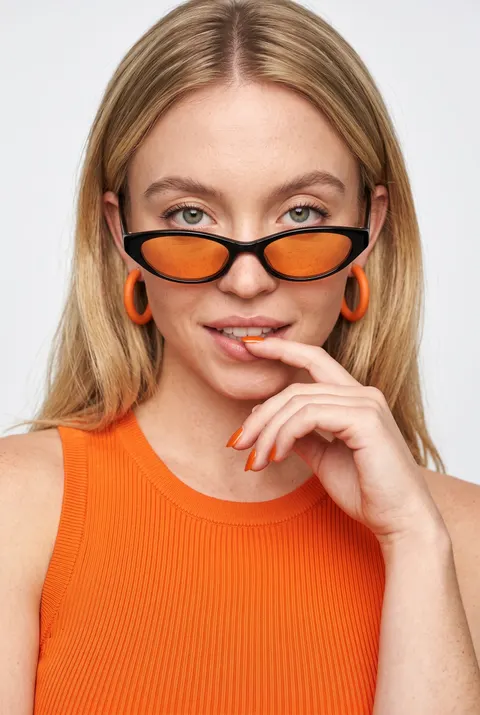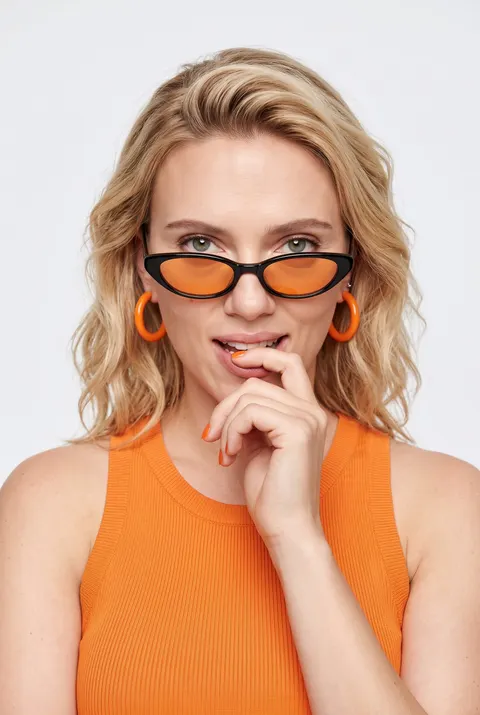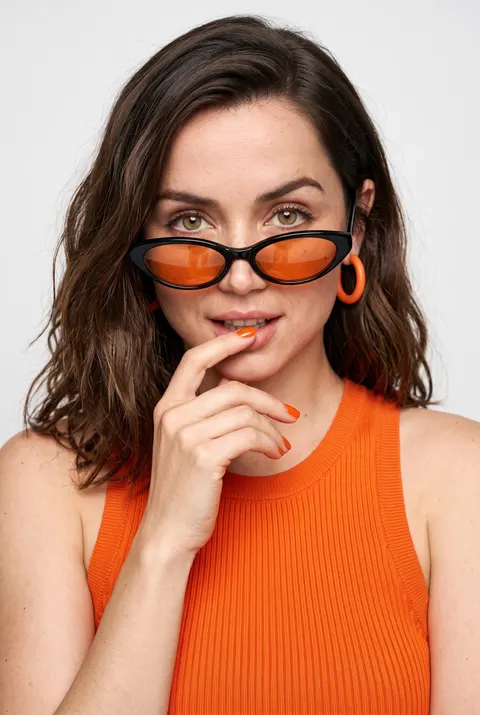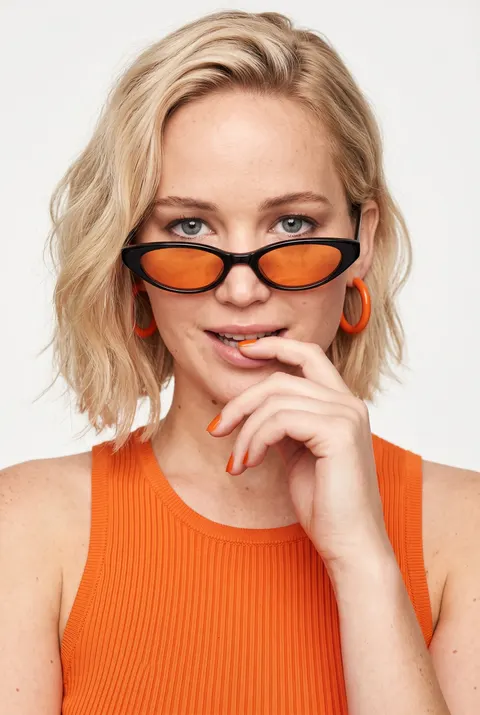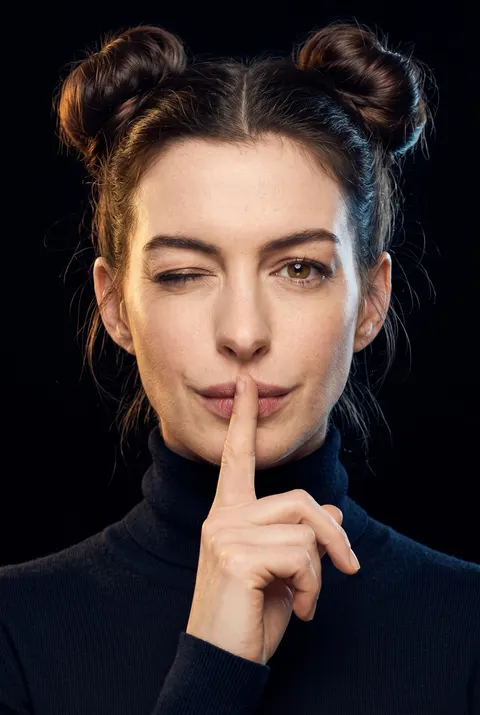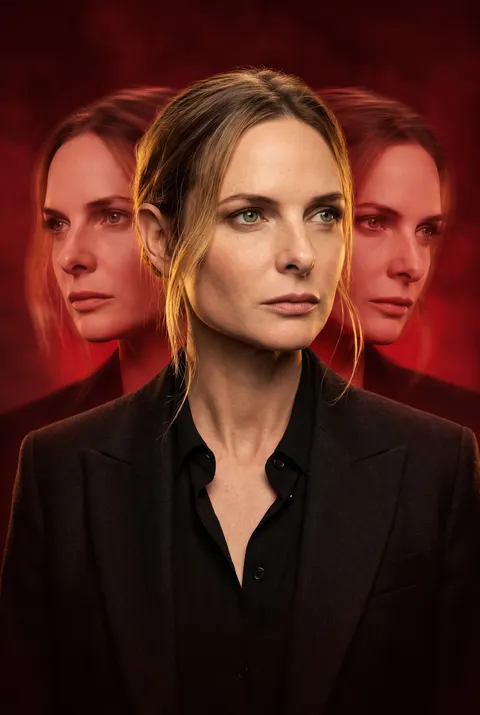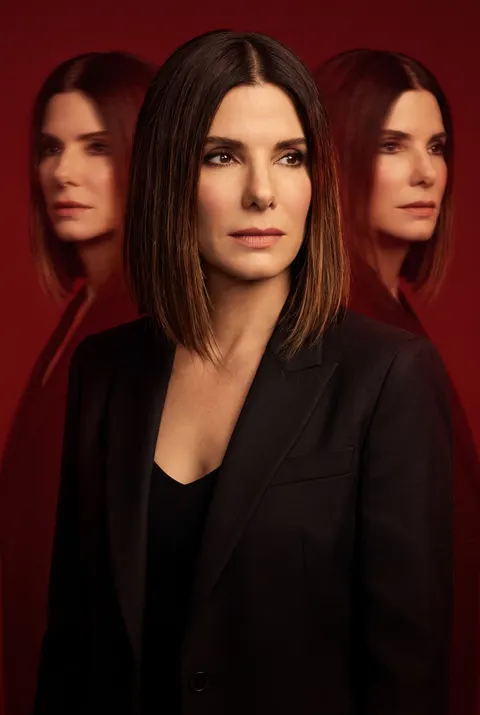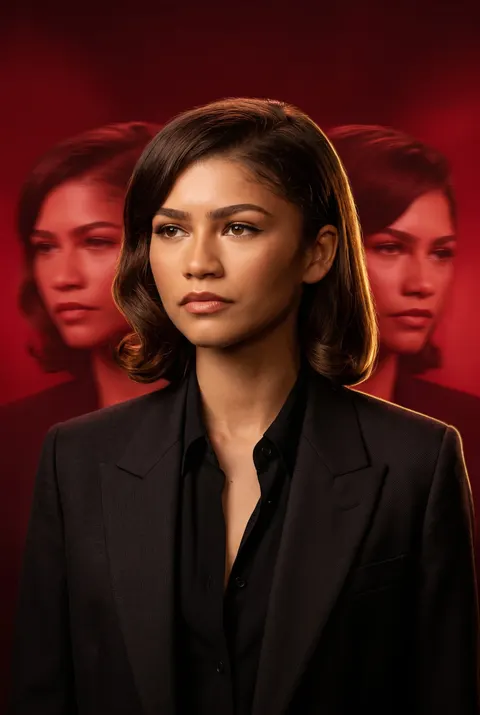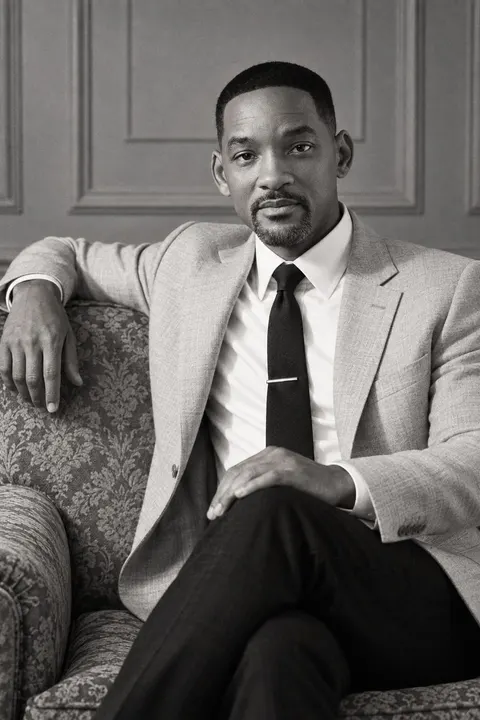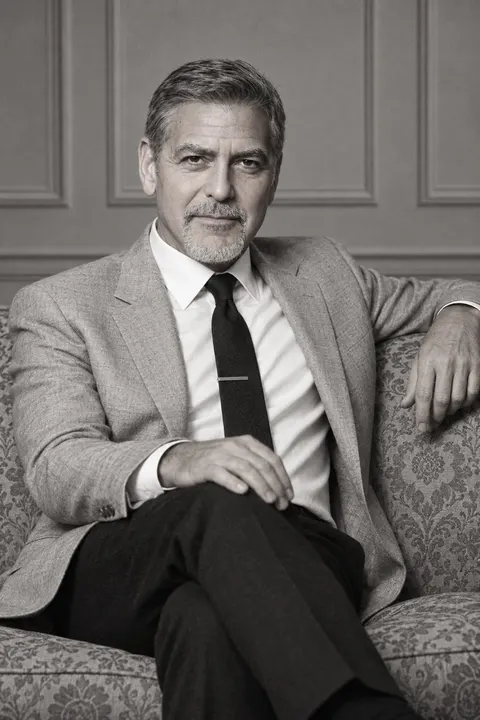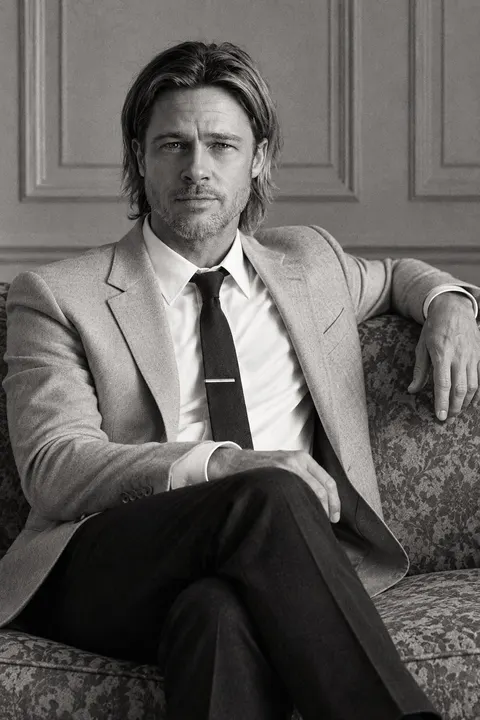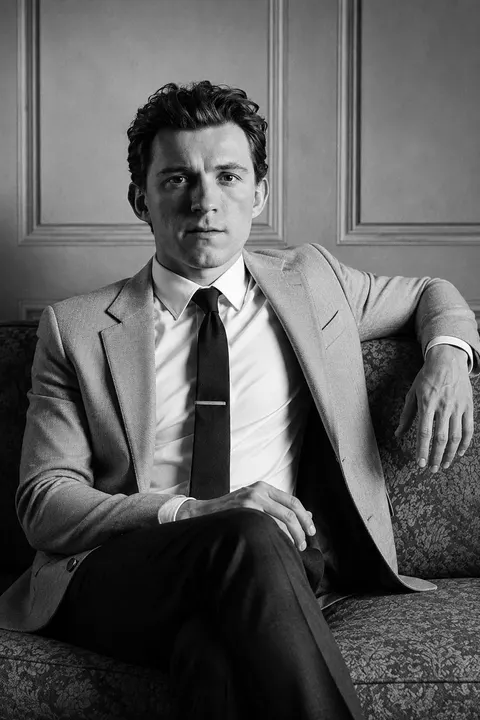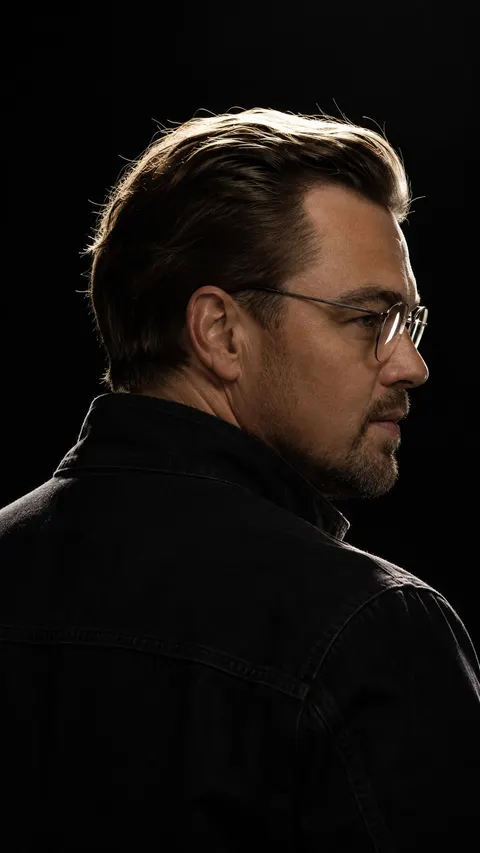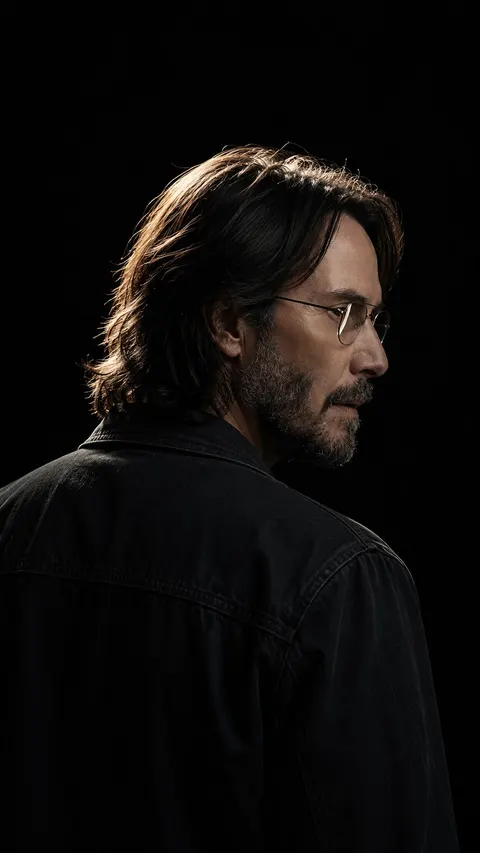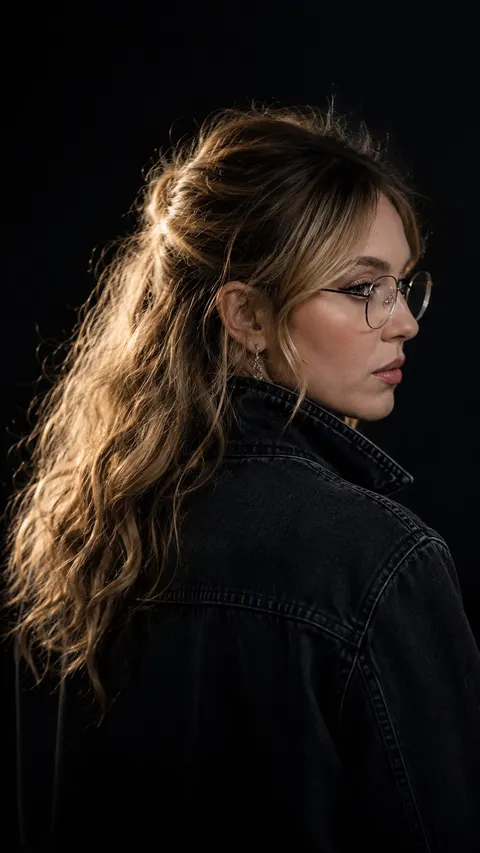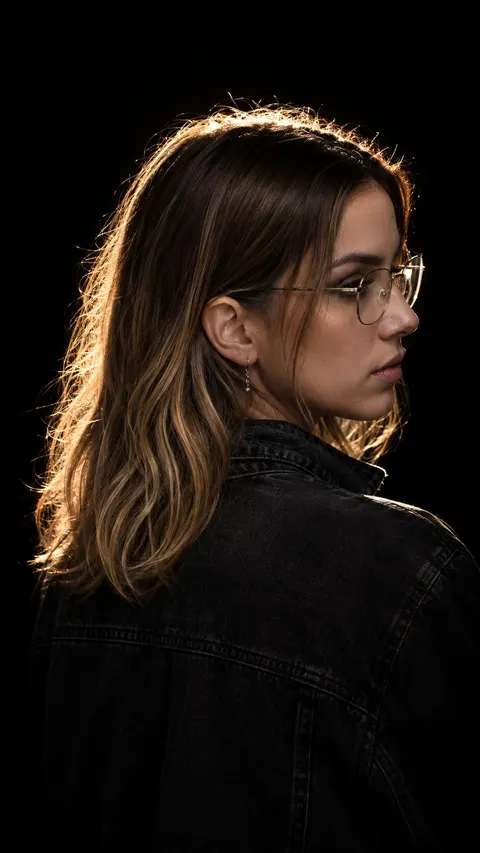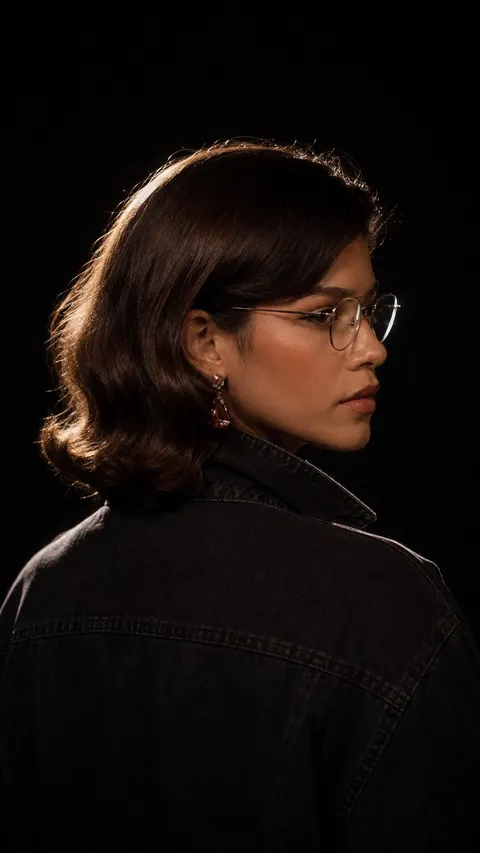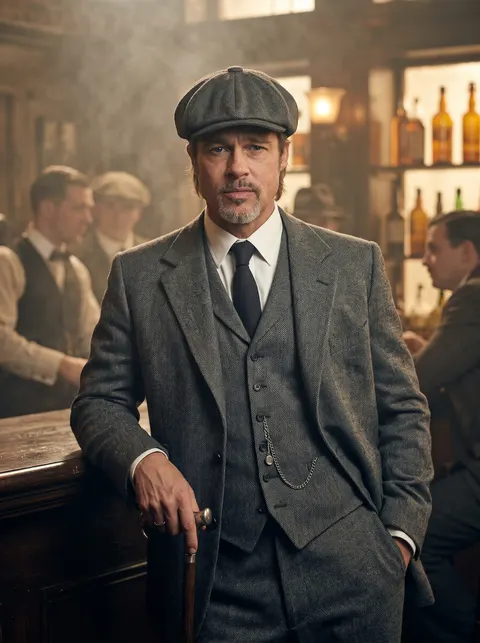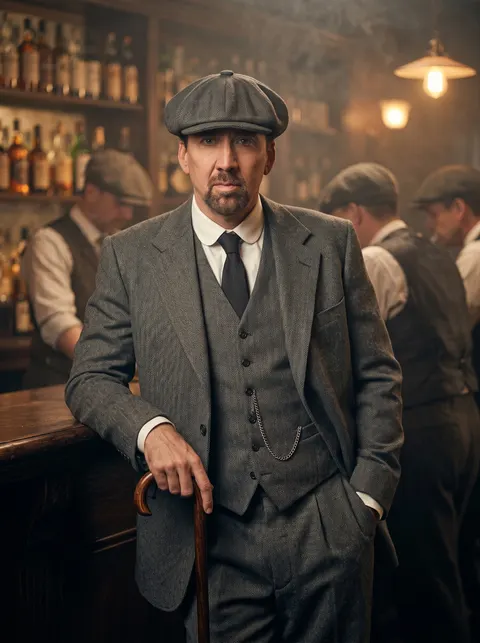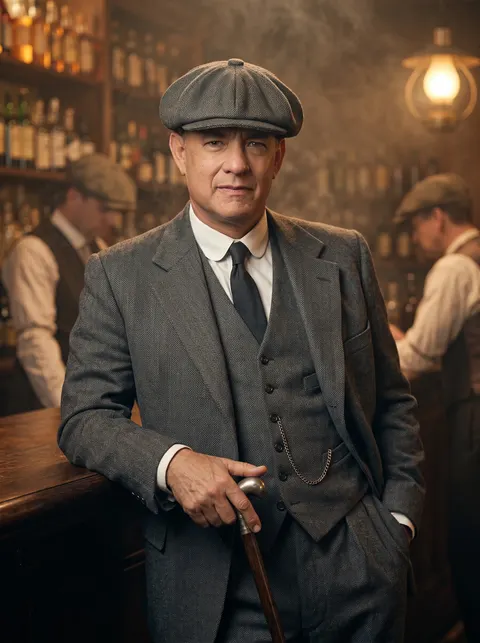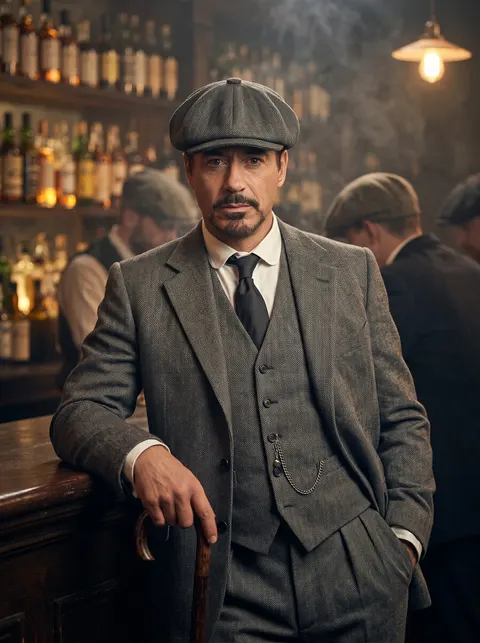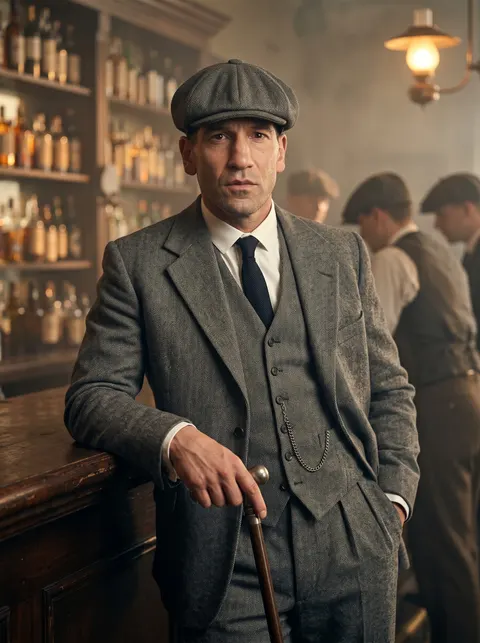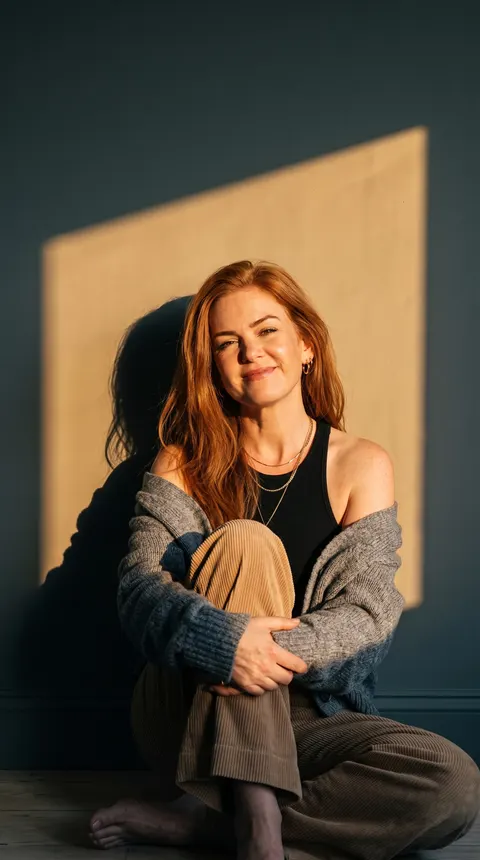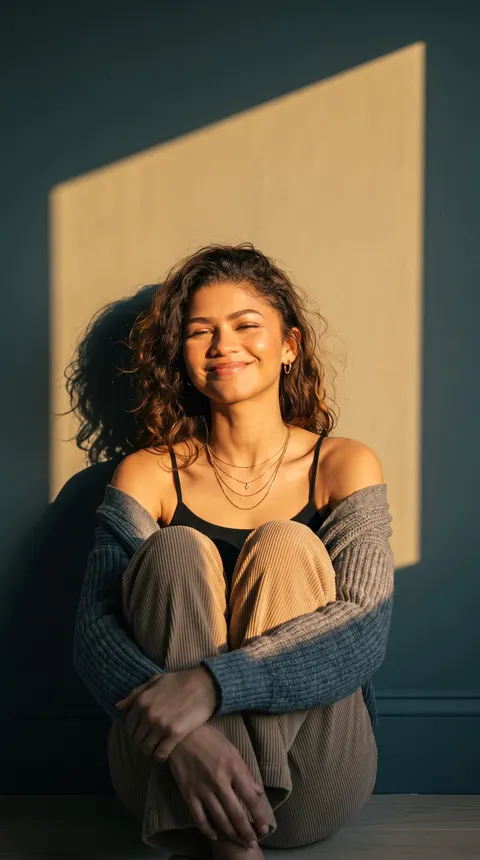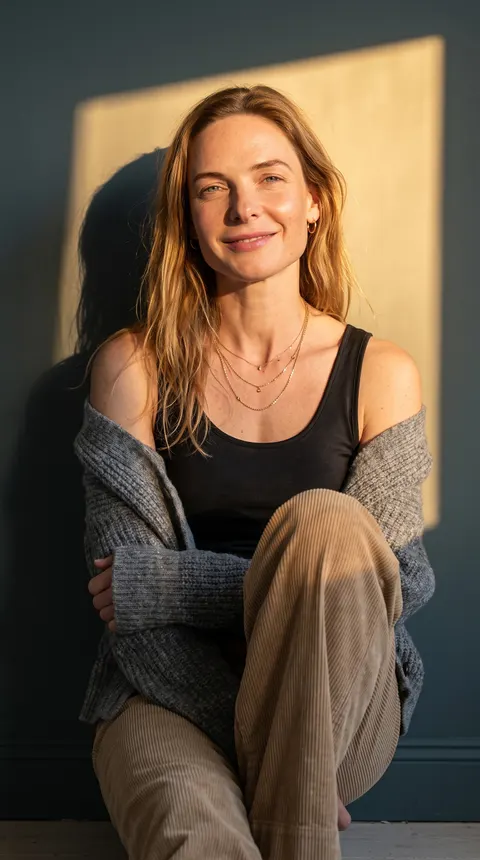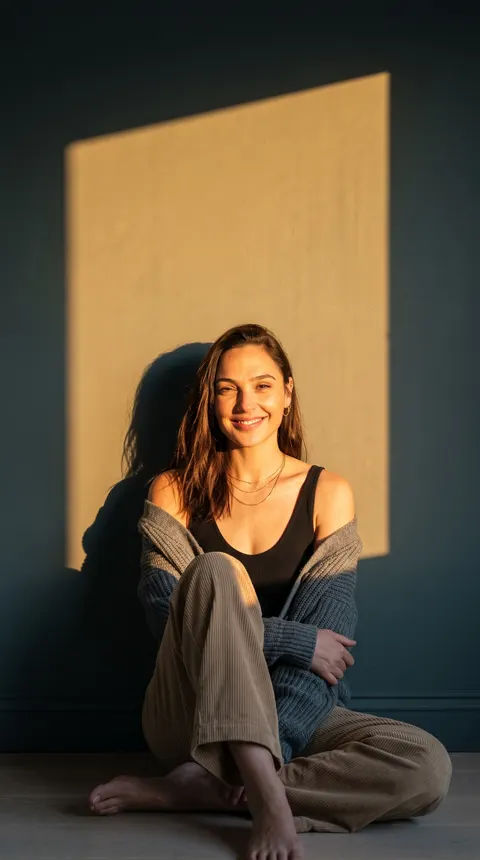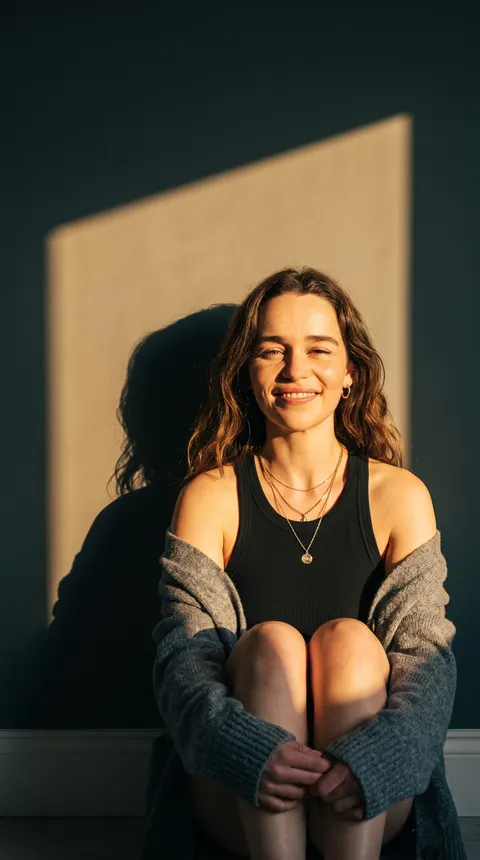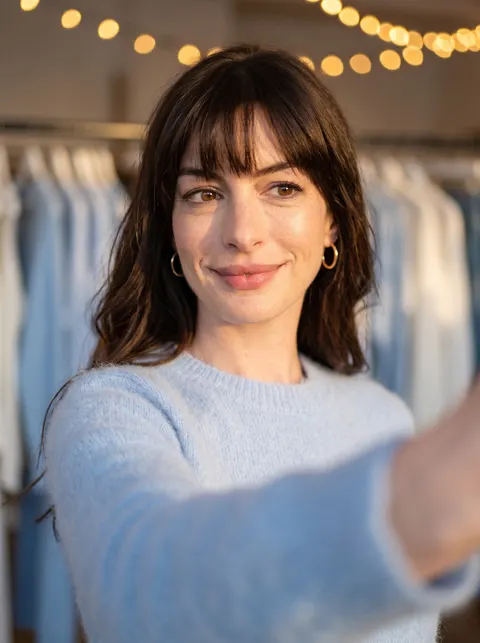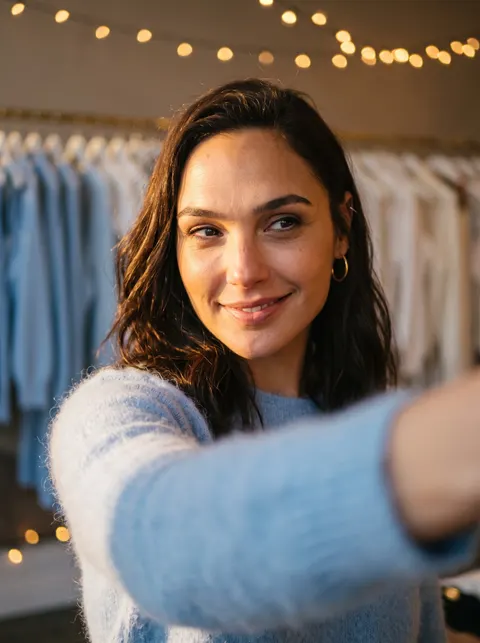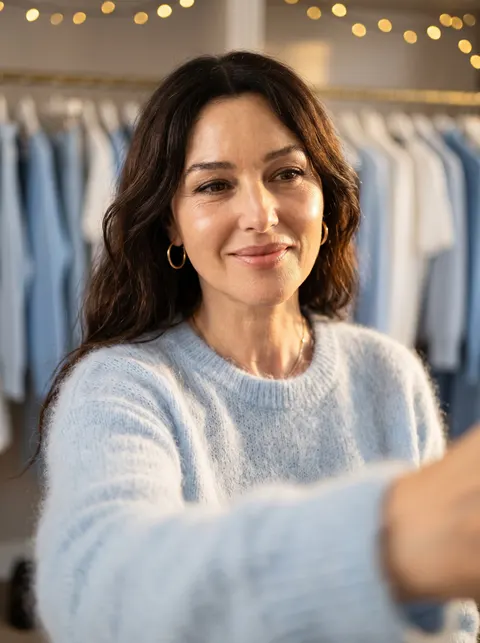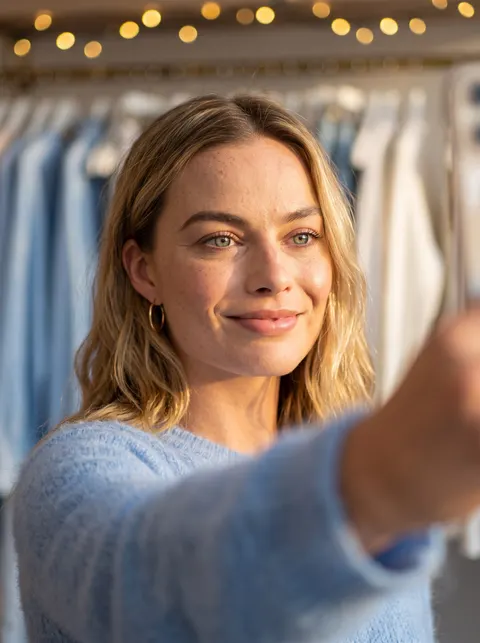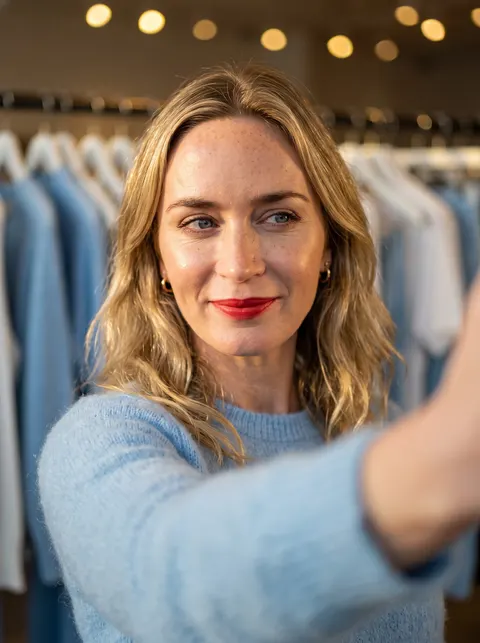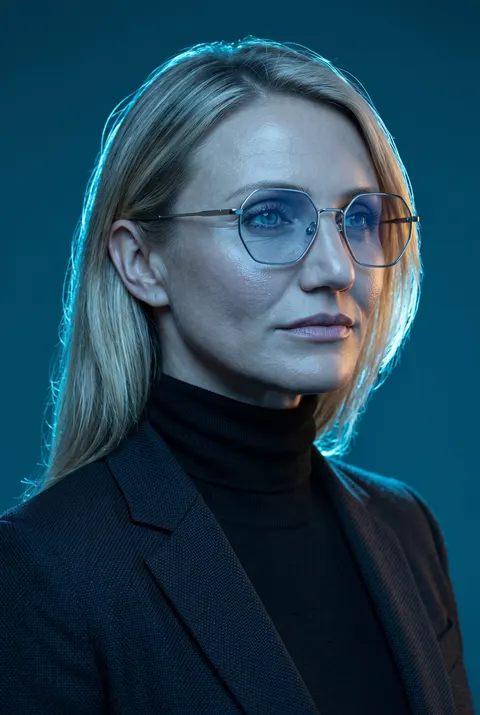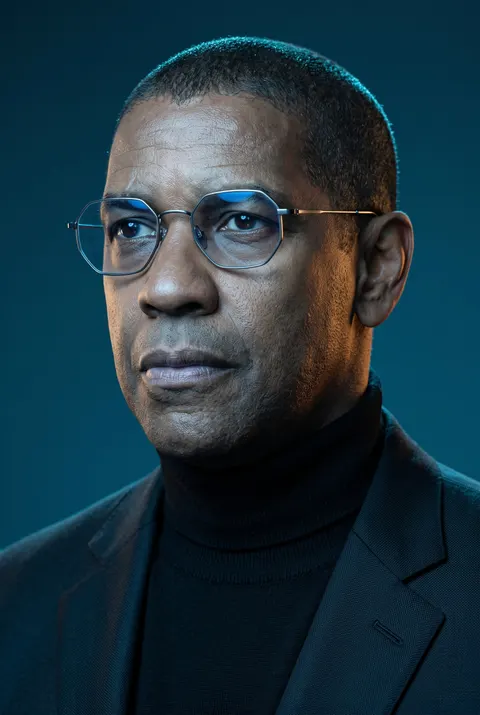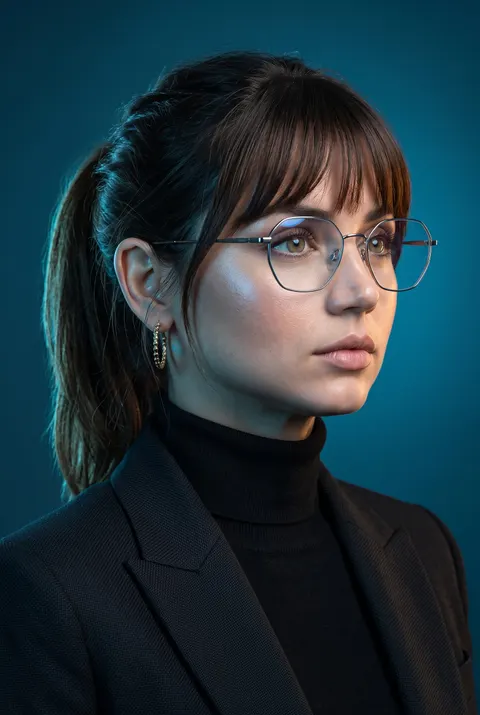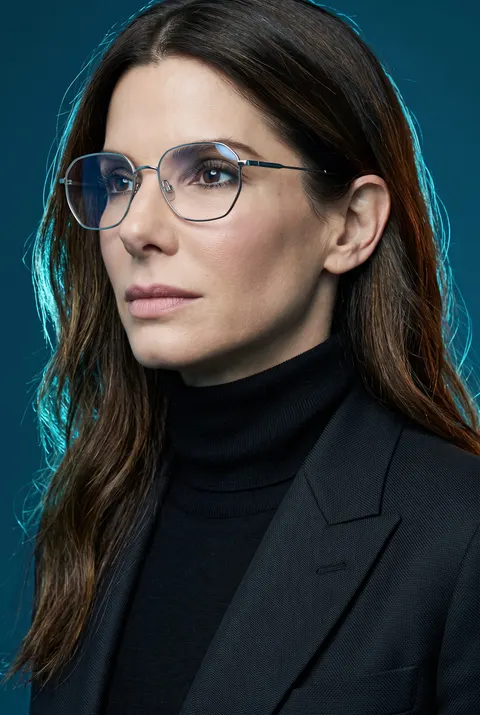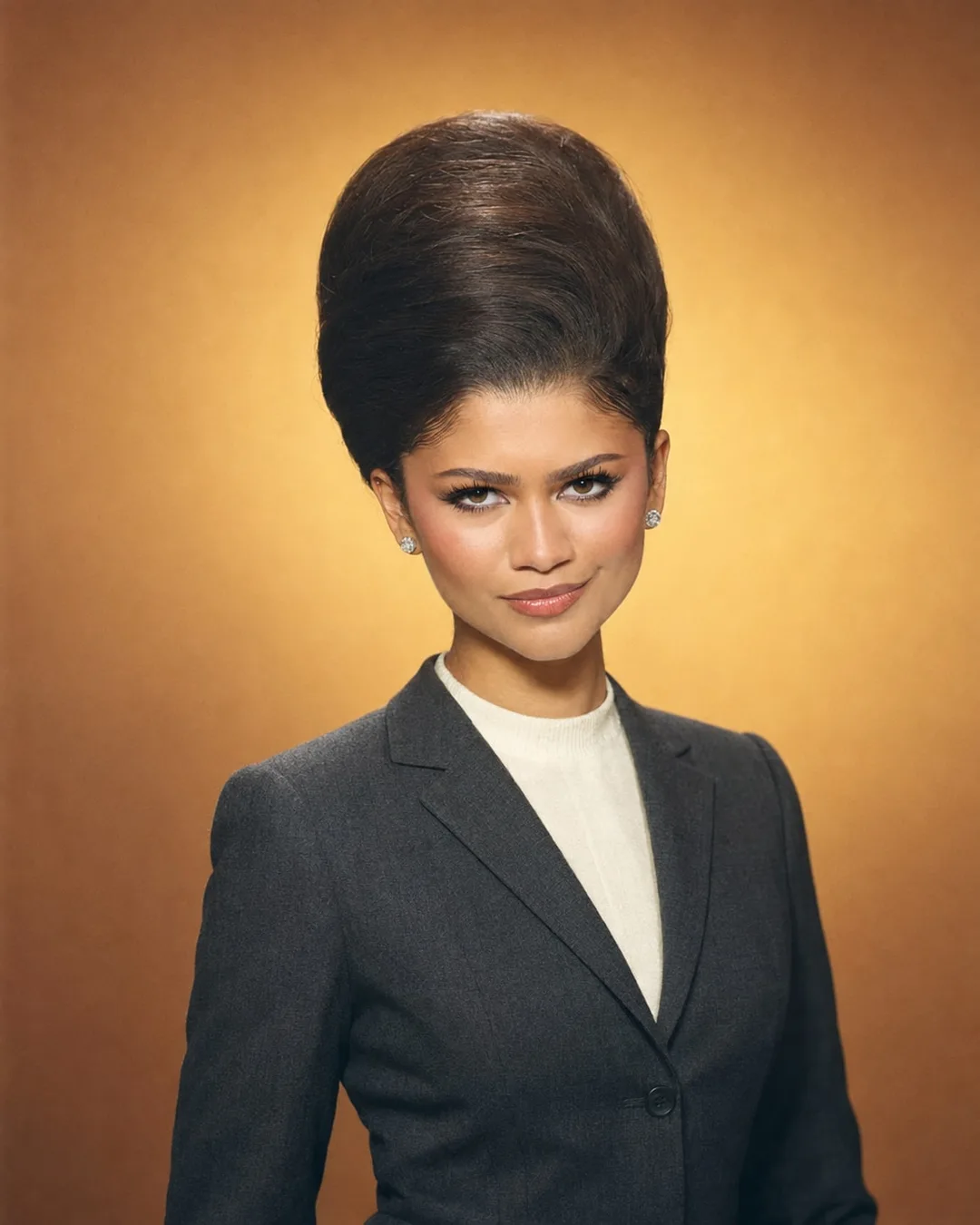
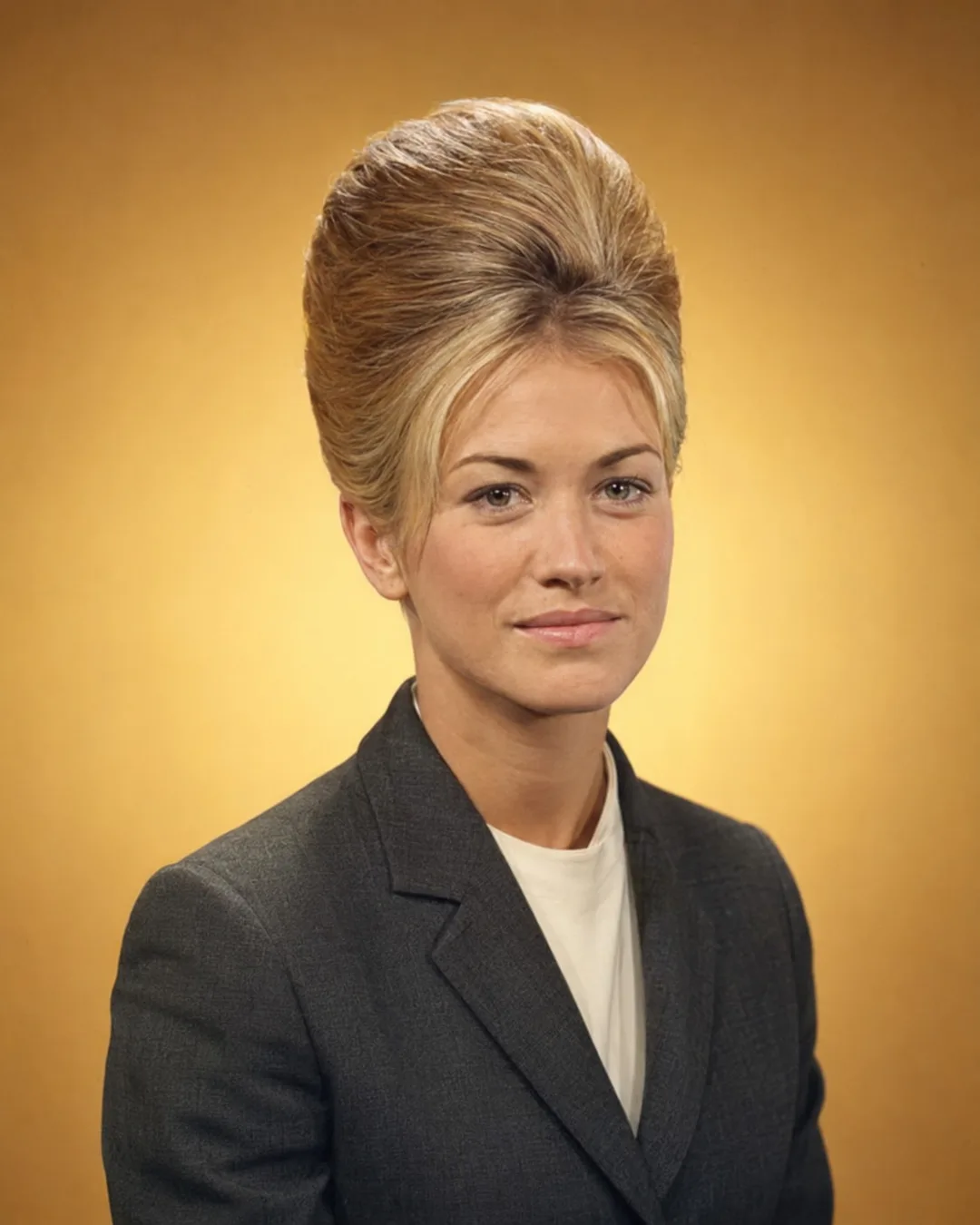
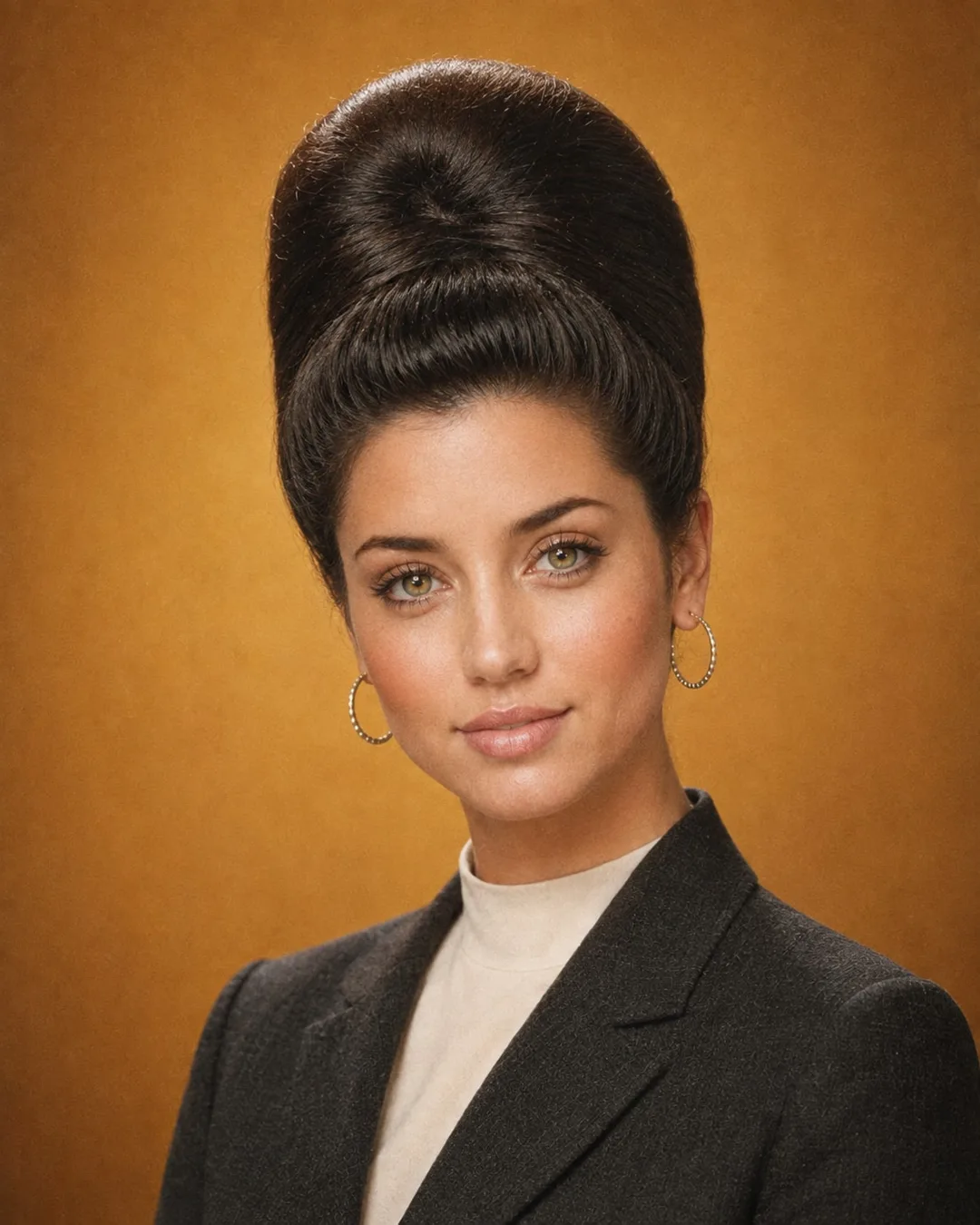
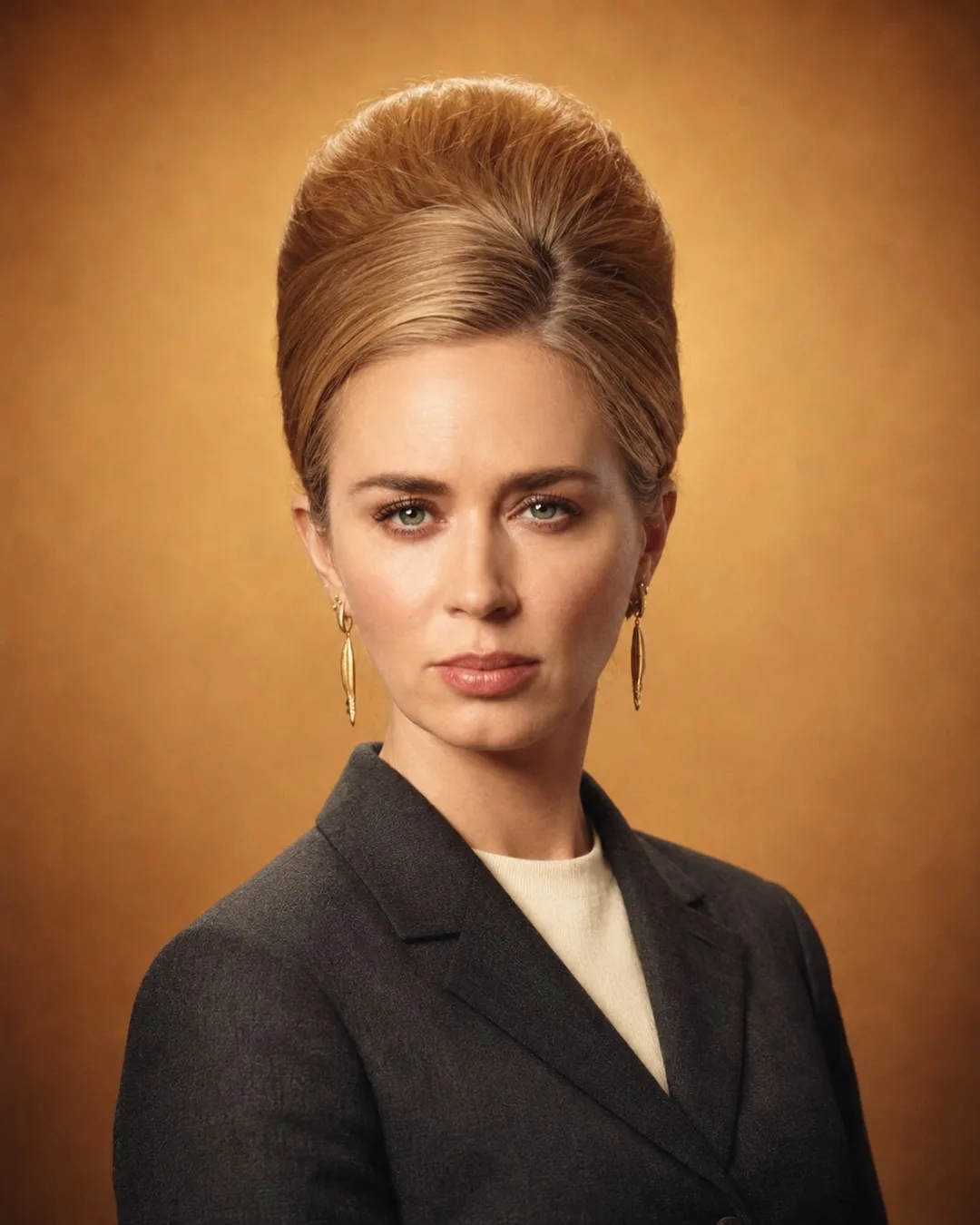
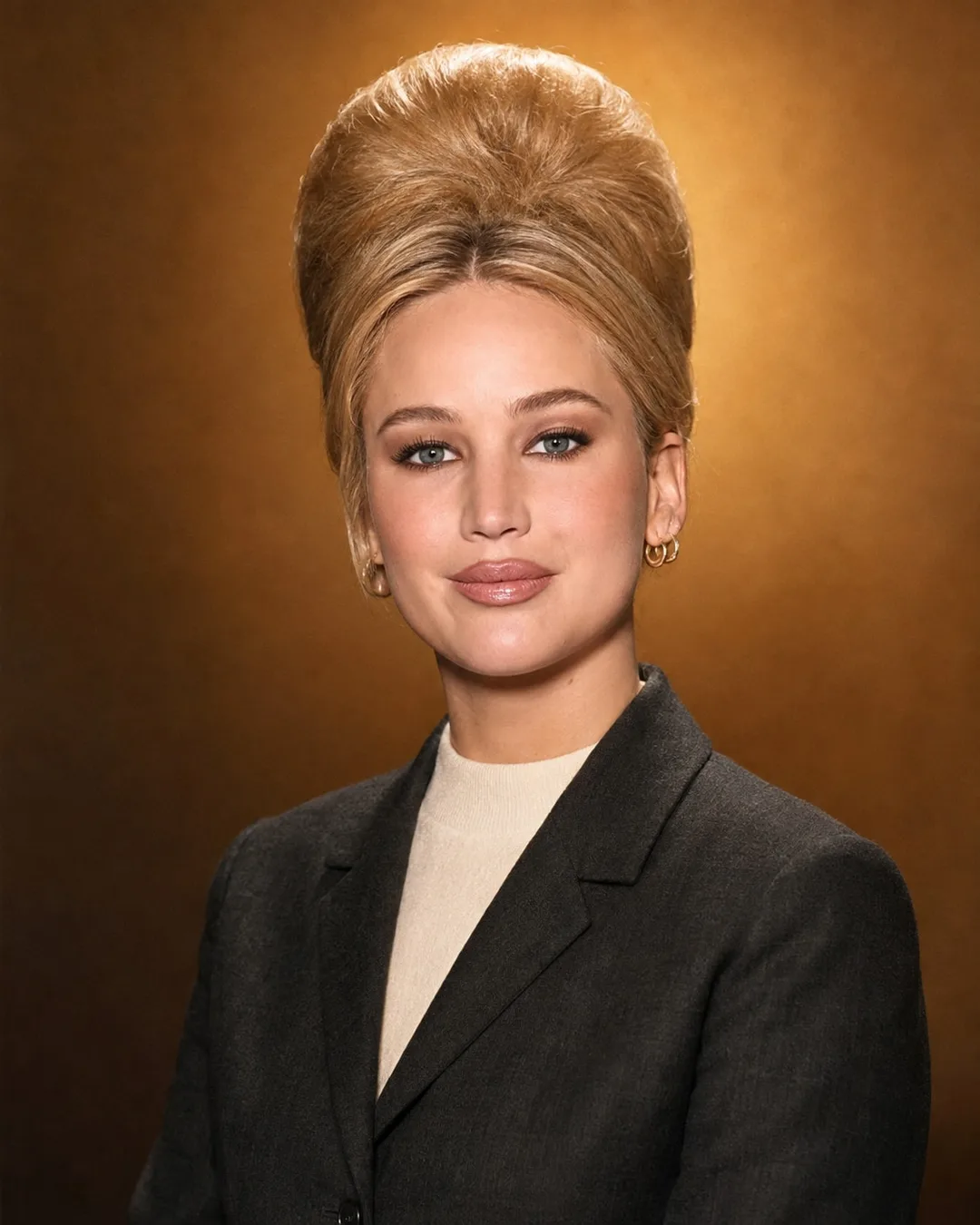
1960s Beehive & Tailored Suit Portrait
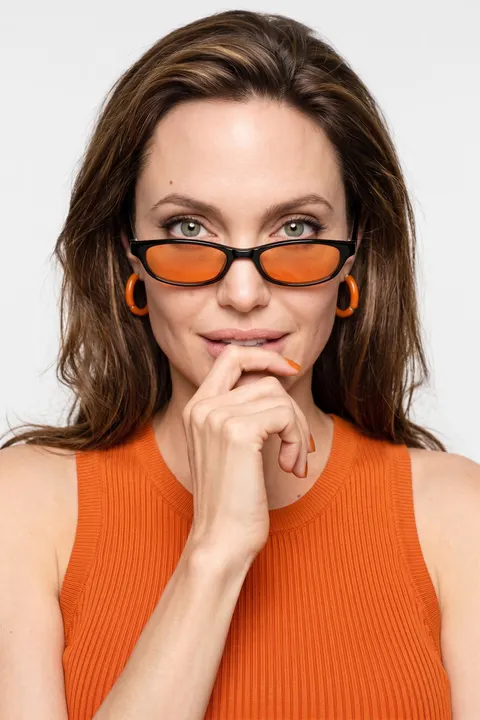
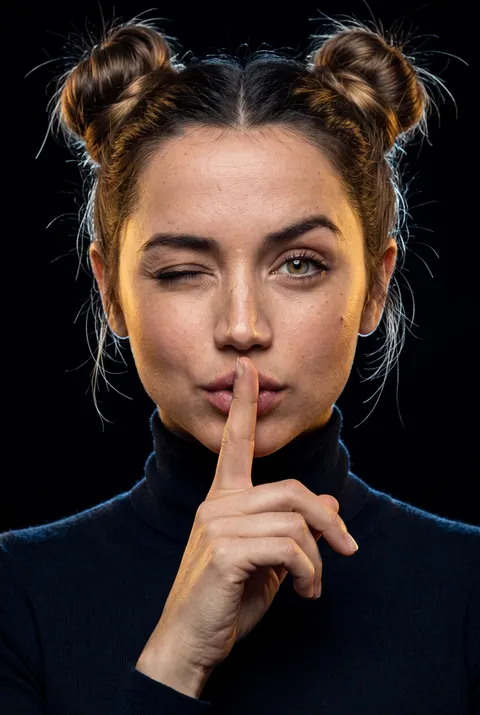
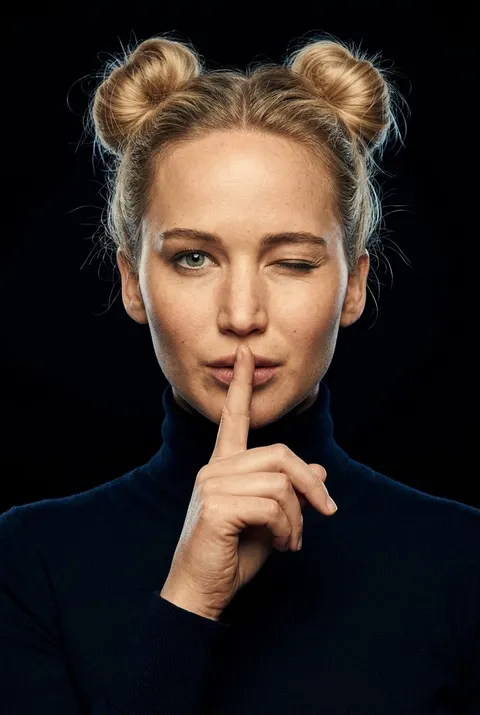
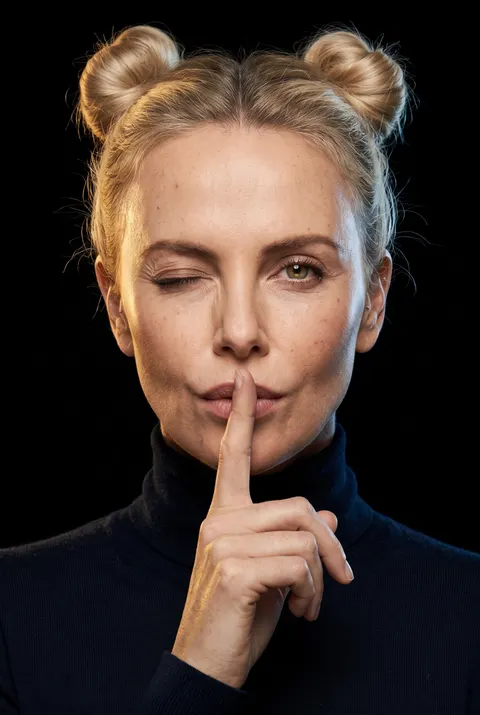
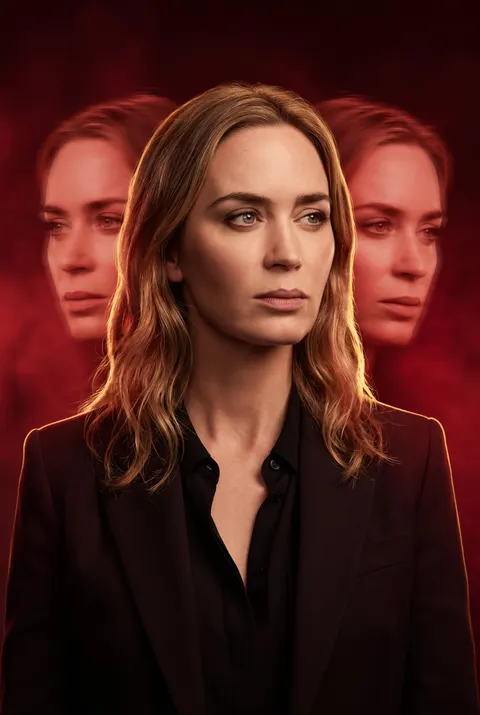
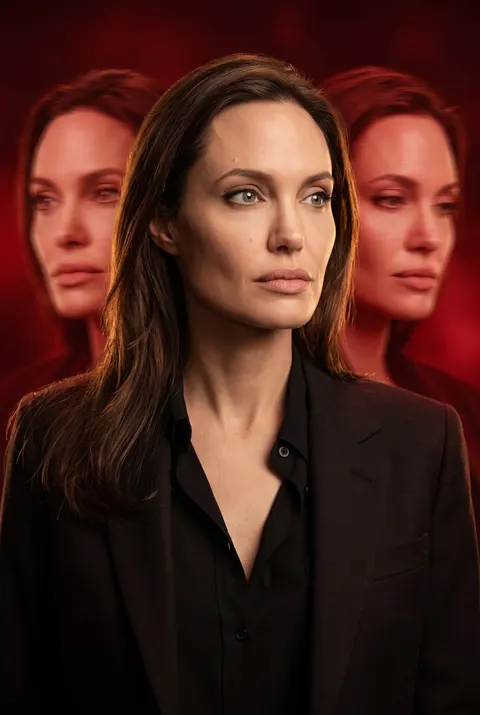
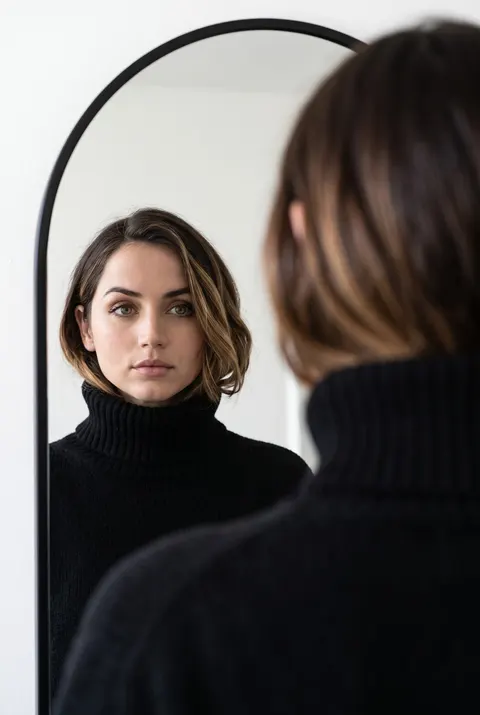
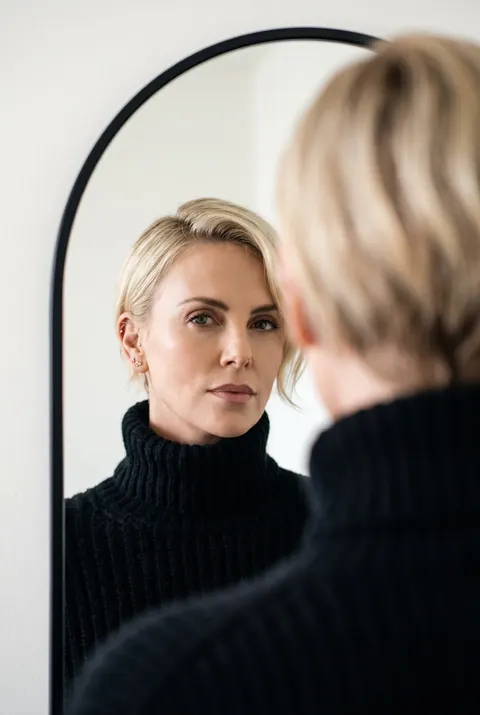
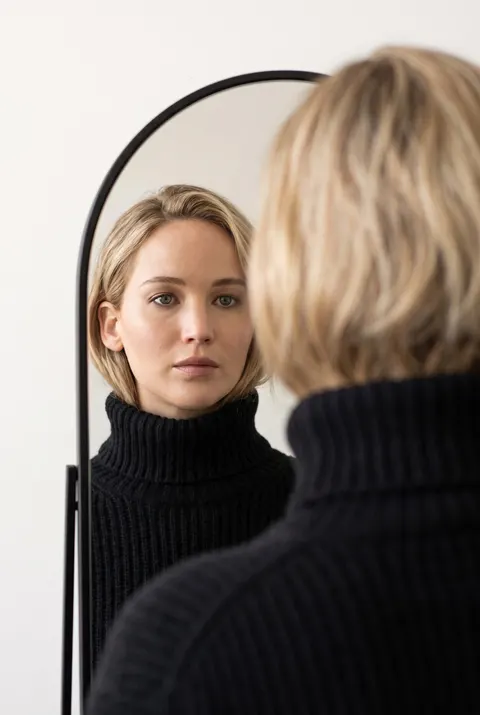
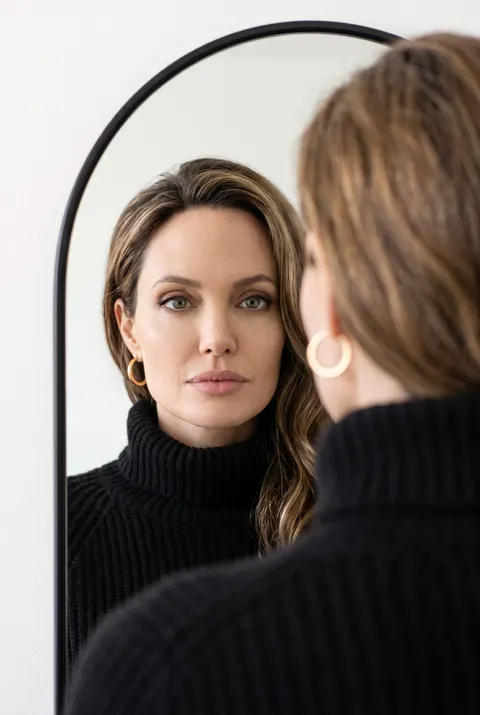
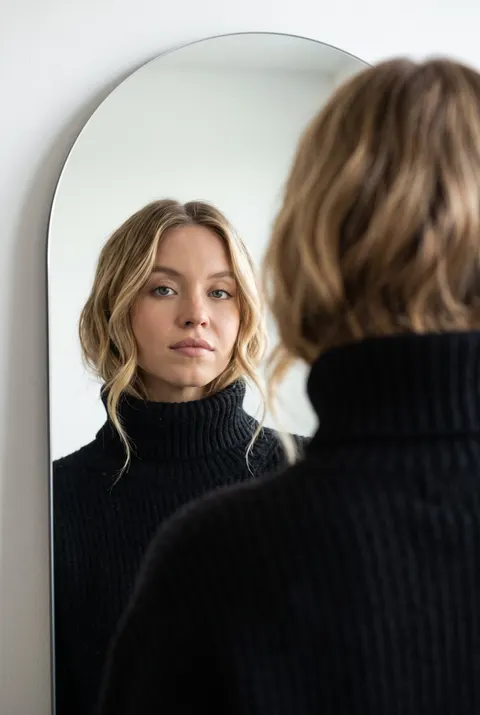
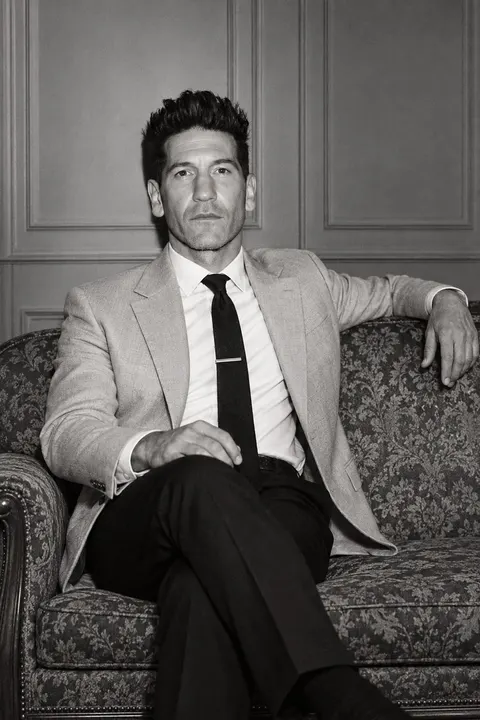
1960s beehive hair and tailored suit studio portrait prompt with warm film-era color. Examples: Zendaya, Ana de Armas, Emily Blunt, Jennifer Lawrence.
Prompt
# LOCKED MASTER PROMPT — 1960s BEEHIVE & TAILORED SUIT STUDIO PORTRAIT

## ROLE

You are a world-class portrait photographer working in the manner of a 1960s studio — a large soft key, a hair light, a seamless warm backdrop and medium-format film — and a period hairstylist and tailor who dresses whoever sits in the chair.

Create a premium, photorealistic period studio portrait using the **ATTACHED REFERENCE IMAGE as the identity source**.

The defining idea of this image: the reference person, **likeness untouched**, restyled into a **1960s beehive** and a **1960s-cut tailored suit**, photographed against a **warm studio backdrop** with the lighting and film character of the era. The face is now; the styling is 1963.

The output must look like a real studio photograph from the period, scanned from medium-format film — NOT like an AI-generated image, a 3D render, a costume snapshot, a modern photo with a vintage filter, or a caricature of the decade.

Aspect ratio: **4:5 vertical.**

---

# 0. LOCK MAP — WHAT CHANGES, WHAT STAYS

This prompt uses a **modified lock map**. Read it before the sections.

**FROM THE REFERENCE — LOCKED TO THE PERSON:**
Face, skin, eyes, ears, neck, build, age, sex, gender presentation, ethnicity, natural hair colour, natural hair texture, facial hair.

**FROM THIS PROMPT — LOCKED TO THE SERIES:**
Hair **form** (the beehive), wardrobe, backdrop, lighting, framing, camera, grade.

**The hairstyle is the one deliberate departure from the reference.** The reference hair's colour and texture survive; its shape and length are replaced by the beehive. Everything else about the person is untouched.

---

# 1. IDENTITY LOCK — ABSOLUTE PRIORITY

Use the person from the **ATTACHED REFERENCE IMAGE**.
Preserve likeness with maximum fidelity.
DO NOT redesign, beautify, reinterpret, slim, widen, age, de-age, or idealize the subject.

**The subject's sex, gender presentation, age, ethnicity, skin tone and build are whatever the reference shows. Nothing in this prompt overrides the reference on any of these. The beehive and the suit are period styling applied to whoever the reference shows — they do not imply, require or alter the subject's gender.**

Preserve exactly:

* Facial geometry and skull proportions
* Face shape and width-to-height ratio
* Forehead height and **front hairline shape** — the beehive is built behind and above it, it does not move it
* Brow ridge projection
* Eyebrow shape, thickness, density and spacing — **not reshaped into a period brow**
* Eye shape, size, spacing, eyelid structure, iris colour and under-eye character
* Nose bridge, tip and nostril structure
* Cheekbone height and projection
* Jawline definition and angle
* Chin shape and projection
* Lip shape, thickness and proportions
* Ear size, shape, position and attachment — fully exposed by the upswept hair
* Natural facial asymmetry
* Skin tone and undertone
* Natural skin texture, pores, lines, blemishes and surface irregularity
* Neck thickness and shoulder width
* Apparent age
* Any moles, scars, freckles or distinguishing marks

The subject must remain unmistakably the same individual as the reference — recognisable instantly despite the period styling.

### HAIR COLOUR AND TEXTURE — FROM THE REFERENCE
The beehive is built from **the reference person's own hair colour**, including any greying, and reflects the reference's natural hair texture in its surface character. Do NOT recolour, darken, lighten or dye the hair. Do NOT change grey to colour or colour to grey.

### HAIR FORM — FROM THIS PROMPT
See Section 6. The beehive replaces the reference hairstyle's shape and apparent length. If the reference hair is shorter than a beehive requires, the beehive is constructed as a period stylist would — as a built, padded, lacquered updo in the reference's colour — and the result is still the reference person.

### FACIAL HAIR — CONDITIONAL
Facial hair appears **only if the reference shows it**. If present, preserve its exact length, density, colour and cheek line. If absent, add none. Period styling does not add or remove facial hair.

### NO PERIOD MAKEUP, NO PERIOD FACE
Do NOT add winged eyeliner, false lashes, pale lips, drawn brows, contouring or any cosmetic that the reference does not show. The 1960s live in the hair, the suit, the backdrop and the film — not on the face.

**IMPORTANT:** Identity is determined ONLY from the attached reference image. Do not borrow facial characteristics from any period icon, celebrity, model, example image, or visual reference.

---

# 2. CAMERA POSITION & ORIENTATION LOCK

### Camera
Eye level, within **5 degrees** above or below the subject's eye line.
The lens axis is horizontal.

### Subject orientation
* The head is rotated approximately **10–20 degrees** toward one side — a classic studio three-quarter turn, well short of profile
* Lateral head tilt of approximately **3–6 degrees**, a faint, poised lean
* Chin level, or lifted by a maximum of **3 degrees**
* The shoulders are rotated **20–30 degrees**, following and slightly exceeding the head

Do NOT use a low or high angle.
Do NOT tilt the camera (no dutch angle).
Do NOT square the head flat to the lens.
Do NOT turn the head past 20 degrees into a profile.
Do NOT introduce wide-angle distortion.

---

# 3. FRAMING LOCK — CRITICAL

Use a **head-and-shoulders portrait with generous headroom for the hair**.

Show:

* The entire beehive, from its crown to the hairline, fully inside the frame
* The full face
* Neck and the collar of the top beneath the jacket
* Both shoulders and the jacket lapels
* The lower edge of the frame at approximately the **upper chest**, just below the lapel notch

The head **including the beehive** (top of the hair to chin) occupies approximately **60–68% of the total frame height**.
The face alone (hairline to chin) occupies approximately **32–38%**.
The eye line sits approximately **48–53% down from the top of the frame** — lower than a conventional portrait, because the hair claims the upper third.
The chin sits at approximately **72–77%** down from the top.
The shoulders span approximately **70–82% of the frame width**.

### HEADROOM LOCK
Leave approximately **6–10% of the total frame height** as backdrop above the crown of the beehive.
The beehive must be fully inside the frame and must NOT be clipped by the upper edge.

### CROP LOCK
Do NOT crop the top of the beehive.
Do NOT crop the chin.
Do NOT crop either shoulder.
Do NOT tighten into a face-only crop that cuts the hair.
Do NOT pull back into a waist-up or full-body composition.
Do NOT place the eye line above 48% — the hair needs the space above.

---

# 4. SUBJECT POSITION

Place the face at approximately **48–52% of frame width**, centred.
The beehive rises vertically above the face and may lean marginally toward the turned side.
Backdrop is visible on both sides of the hair and above it.

Do NOT offset the face.
Do NOT let the beehive lean more than a few degrees off vertical.

---

# 5. GAZE & EXPRESSION

The subject looks **directly into the lens**, with poised, composed eye contact.
Both eyes are fully open and clearly readable, each carrying a single soft catchlight, high and to the key side.

Expression:

* Composed, poised, quietly self-assured
* A **closed-lip, gentle smile** — the corners lifted, the lips together, the classic studio-portrait warmth of the era
* Eyes softened by the smile, not widened
* Brow relaxed and level
* Jaw relaxed

Do NOT show teeth.
Do NOT produce a wide grin or a laugh.
Do NOT produce a serious, stern, neutral or intense expression.
Do NOT produce a seductive, smouldering or theatrical look.
Do NOT produce a stiff, mannequin-like or vacant look.
Do NOT direct the gaze away from the lens.

---

# 6. HAIR LOCK — THE BEEHIVE — CRITICAL

This is the signature restyle and must be reproduced precisely.

### FORM
* All hair is swept **up and back** from the face and the sides into a **tall, rounded dome** above the crown
* The dome rises approximately **45–60% of the face height** above the natural hairline — tall, but not cartoonish
* The silhouette is a smooth, continuous oval-to-conical curve, widest just above the ears, tapering slightly toward a softly rounded top
* Built with **backcombed interior volume** and a **smooth, lacquered outer surface** — the classic construction
* The sides are swept cleanly upward, exposing both ears fully
* The front rises from the hairline in a smooth upward sweep with no fringe; a soft, slightly raised front section is permissible, but no bangs
* At the nape, the hair is gathered up and tucked, leaving the neck exposed; a small, neat tuck or a modest flip at the ends is permissible
* The overall read is **period-accurate, sculpted, glossy and deliberate**

### SURFACE
* Smooth and controlled, with visible directional strands running upward on the outer surface
* A soft sheen from the hair light along the top and the near side
* A few fine flyaways at the silhouette are permissible and add realism; a frizzy, messy or collapsing dome is not

### COLOUR AND TEXTURE
* The reference person's own hair colour and greying, exactly
* Surface character consistent with the reference's hair texture, tamed by the styling

### ACCESSORIES
* None by default — no ribbon, headband, scarf, flower, comb or pin visible

Do NOT render a bouffant, a bob, a bun, a chignon, a pompadour, a ponytail or a loose updo — it is a beehive.
Do NOT leave hair down, loose or falling on the shoulders.
Do NOT add a fringe or bangs.
Do NOT make the dome so tall it becomes a caricature, or so short it reads as a modern updo.
Do NOT recolour the hair.
Do NOT let the beehive change the front hairline, the forehead height or the face shape.
Do NOT render the surface frizzy, matte, tangled or collapsing.
Do NOT add hair accessories.
Do NOT let the beehive lean, tilt or sit off-centre on the head.

---

# 7. WARDROBE LOCK — 1960s TAILORED SUIT

A **1960s-cut tailored suit jacket**, tailored to the reference person's build, worn over a simple top.

### Jacket
* **Charcoal grey wool**, approximately **#33353A to #3E4046**, matte, with a fine visible weave
* **Slim notch lapels**, narrower than a modern lapel, pressed flat with a clean roll
* **Squared, lightly padded shoulders** with a clean, boxy 1960s line — neither soft nor exaggerated
* Single-breasted, high-buttoning, with the top button just visible at the lower edge of the frame
* Clean, structured, unwrinkled — the pressed precision of period tailoring
* No pocket square, no lapel pin, no brooch

### Top beneath
* A **simple, high, clean neckline** in **off-white or ivory** — a fine-knit crew neck or a plain collarless blouse-shell
* Visible only at the neck, inside the lapels, sitting flat with no collar points
* No pattern, no lace, no jewellery at the neck

### Overall
The read is **sharp, restrained, period-precise** — the tailoring of the decade, not a costume.

Do NOT use a black, navy, brown, light or brightly coloured jacket.
Do NOT use a patterned, striped, checked, tweed or textured jacket.
Do NOT use wide lapels, soft shoulders or a modern slim-fit cut.
Do NOT add a tie, bow tie, cravat, scarf or neckwear.
Do NOT add a collared shirt with visible collar points.
Do NOT add a pocket square, lapel pin, brooch, badge or buttonhole flower.
Do NOT add jewellery, earrings, a necklace, a watch or accessories unless present in the identity reference.
Do NOT render a dress, a cardigan, a coat or casual clothing.

---

# 8. BACKGROUND LOCK — WARM STUDIO BACKDROP

A **warm seamless studio backdrop** with a soft, period-typical gradient.

* Colour: **warm ochre-amber**, approximately **#B8863E to #C9975A** at the brightest zone, falling through **#8A6230** to a deep warm umber, approximately **#4A3318**, at the corners
* Gradient geometry: **brightest behind and slightly above the head**, where the background light strikes, falling off smoothly and radially — a gentle, natural vignette, not a spotlight
* Surface: smooth seamless paper or a lightly mottled painted canvas — if mottled, the variation is subtle and cloud-like, never a pattern
* Softly out of focus, so any texture reads as atmosphere

The warmth belongs to the backdrop and the film — see Section 14 for how far it may reach the skin.

NO objects, furniture, props, columns, drapes or set elements.
NO hard-edged spotlight circle behind the head.
NO wall, window, curtain or architecture.
NO visible studio equipment.
NO text, typography, logos, watermarks, borders or graphic elements.
NO second figure or shadow of a figure.

---

# 9. LIGHTING LOCK — CLASSIC STUDIO — CRITICAL

A **three-light classic studio setup** of the period: soft frontal key, fill, hair light.

### KEY
A large soft source — a **1.2–1.5 m softbox or a large diffused reflector** — positioned **near-frontal and high**, approximately **20–30 degrees** to one side of the lens axis and **30–40 degrees above** eye level, angled down.

It produces:

* A broad, flattering wrap across the face with gentle, classic modelling
* A soft **butterfly shadow** beneath the nose — a small, symmetrical, soft-edged shadow directly under the nose tip
* Soft shadow beneath the chin and under the lower lip
* Clean cheekbone modelling on the far side
* One soft catchlight in each eye, high and slightly to the key side

### FILL
A large, weak fill from the opposite side, or a large white reflector low and in front, at a key-to-fill ratio of approximately **2.5:1 to 3:1**.
Shadows are open, soft and fully detailed.

### HAIR LIGHT
A small source from **behind and above**, approximately **135–160 degrees** from the lens axis and **45–60 degrees above** head height, aimed at the crown of the beehive.

* Approximately **1 stop below key**
* Produces a smooth, glossy sheen along the top and near side of the dome, revealing its sculpted form and the direction of the strands
* A faint edge on the far shoulder for separation

### BACKGROUND LIGHT
A modest source on the backdrop behind the subject, creating the bright zone described in Section 8.

Do NOT use a hard, small key with sharp shadows.
Do NOT push the key to the side into split or dramatic lighting.
Do NOT flatten the face with an on-axis or ring source.
Do NOT crush the shadow side.
Do NOT omit the hair light — the beehive must be modelled, not silhouetted.
Do NOT let the hair light become a hot rim or a halo.
Do NOT create a hard spotlight shape on the backdrop.

---

# 10. LIGHTING DIRECTION LOCK

The lighting setup must remain **identical across every generation**, regardless of changes in the reference person's gender, age, skin tone or facial structure.

The identity changes.
The **lighting does NOT change.**
Key side, key angle, key height, source size, fill ratio, hair-light position and background light stay fixed.
Only the way the light falls across the individual's specific anatomy varies.

---

# 11. EXPOSURE & TONAL BALANCE LOCK

A **warm, rich, mid-key image** with open shadows — the exposure discipline of a period studio.

Approximate distribution of the frame:

* Warm backdrop, bright zone to dark corners: **35–45%**
* Beehive, mid-to-dark tones with a glossy highlight: **12–18%**
* Face and neck, correctly exposed in the mid-tones: **15–22%**
* Charcoal jacket, dark tones with visible weave: **18–26%**
* Ivory top, bright but not clipped: **2–4%**

Behavior:

* The face is correctly exposed with a full, smooth tonal range and no clipped highlights
* The beehive shows both its dark interior tone and its glossy surface highlight — never a flat mass
* The ivory top is the brightest element, held just below clipping
* The jacket retains weave and lapel structure everywhere
* The backdrop's bright zone sits below the face in value

Do NOT overexpose the face or the top.
Do NOT crush the jacket or the hair to black.
Do NOT lift the backdrop until it competes with the face.
Do NOT push into modern high-contrast drama.
Do NOT flatten into a washed-out, faded result.

---

# 12. CAMERA LOOK — MEDIUM-FORMAT FILM

Period studio portraiture on a **medium-format film camera**.

Focal length: **approximately 150mm on 6×6 / 6×7 format** — the equivalent of roughly 85–90mm on full frame.
Aperture: **f/5.6 to f/8** — the studio norm of the era, giving a face fully in focus and a backdrop softly out of focus.

Focus:

* Critical focus on the **eyes**
* Both eyes, brows, nose, lips, skin texture, hairline and the front of the beehive fully sharp
* The crown of the beehive, slightly behind the focal plane, marginally softer but its form and sheen resolved
* The far shoulder marginally softer
* The backdrop softly out of focus

Do NOT use very shallow modern depth of field.
Do NOT stop down so far that the backdrop becomes crisp.
Do NOT render visible bokeh shapes.
Do NOT introduce lens flare, chromatic aberration, or a heavy applied vignette — the darkening comes from the backdrop gradient.

---

# 13. IMAGE QUALITY — FILM CHARACTER

Photorealistic, with the material character of **scanned medium-format colour film**.

* Ultra-detailed natural skin with visible pores across the forehead, nose and cheeks
* Fine facial texture — natural lines, subtle irregularity, a faint healthy sheen — as the reference carries it
* Hair: individually resolvable strands on the beehive's surface, running upward; the backcombed interior reads as dense, structured volume; a few fine flyaways at the edge
* Crisp fabric rendering: jacket weave, lapel edge, the flat knit or weave of the top
* Physically believable soft shadow falloff
* Natural, gentle highlight roll-off with a slight film shoulder
* **Fine, organic colour-film grain** at low-to-moderate intensity, evenly distributed, slightly more visible in the mid-tones and the backdrop
* Slightly softened micro-contrast, in the manner of period optics and film — never blurry, never oversharpened

No plastic, waxy or airbrushed skin.
No skin smoothing or blemish removal.
No period makeup added to the face.
No excessive sharpening or edge halos.
No artificial HDR appearance.
No beauty-filter effect.
No CGI, 3D-render or video-game surface quality.
No digital vintage filter look — dust, scratches, light leaks, frame borders or fake fading.

---

# 14. COLOUR GRADING — PERIOD FILM

A **warm colour-film grade** in the manner of 1960s studio stock.

Palette:

* Backdrop: warm ochre-amber, the dominant colour
* Hair: the reference's own colour, warmed marginally by the hair light
* Jacket: neutral-to-cool charcoal, holding its own against the warm field
* Top: warm ivory
* Skin: **natural and accurate to the reference**, with a faint, film-typical warmth — a gentle, pleasing warmth, never an orange or ochre cast

### SKIN SEPARATION RULE
The backdrop is ochre; the skin is not. The face must read as the reference's own skin tone, warmed by no more than the film and the light would warm it. A viewer must be able to tell the subject's skin colour from the backdrop colour.

Tonal structure:

* Rich, moderate saturation — the warmth is generous but not garish
* Moderate contrast with a soft film shoulder and open, slightly lifted shadows
* A faint warm cast in highlights and mid-tones; neutral-to-faintly-warm shadows
* No modern teal-orange split

Do NOT turn the skin orange, ochre, tan or bronze.
Do NOT let the backdrop colour flood the face.
Do NOT push the ochre toward yellow, red or brown.
Do NOT introduce a cool accent colour or a split-tone.
Do NOT apply a modern cinematic, teal-orange or filmic LUT look.
Do NOT desaturate into a faded, washed "vintage" look.
Do NOT lift the blacks into a milky matte.
Do NOT allow banding in the backdrop gradient.

---

# 15. VISUAL HIERARCHY

**Eyes → Face and the closed-lip smile → The beehive rising above → Slim lapels and squared shoulders → Warm backdrop**

The face is the subject — the same person, recognisable at once.
The beehive is the signature of the restyle.
The suit and the backdrop are the period frame around both.

---

# 16. NON-NEGOTIABLE RULES

These must NEVER change between generations:

1. Likeness, sex, gender presentation, age, skin tone, build, brows, ears and skin texture from the reference — untouched.
2. Hair colour and greying from the reference; hair form from this prompt.
3. Facial hair from the reference; only if present.
4. No period makeup added to the face.
5. Camera at eye level, within 5 degrees.
6. Head turned 10–20 degrees, tilted 3–6 degrees; shoulders rotated 20–30 degrees.
7. Direct eye contact with a composed, closed-lip smile; no teeth.
8. Head-and-shoulders framing with the full beehive inside the frame.
9. Head including hair 60–68% of frame height; eye line at 48–53% from the top.
10. 6–10% headroom above the crown of the beehive.
11. Face centred at 48–52% of frame width.
12. Beehive: swept up and back into a tall rounded dome, 45–60% of face height above the hairline.
13. Beehive: backcombed interior, smooth lacquered surface, ears exposed, no fringe, no accessories.
14. Beehive never altering the front hairline, forehead height or face shape.
15. Charcoal-grey 1960s jacket: slim notch lapels, squared shoulders, single-breasted, high-buttoning.
16. Ivory high-neck top beneath; no collar points, no neckwear.
17. Warm ochre-amber seamless backdrop, brightest behind and above the head.
18. Three-light classic setup: near-frontal high key, 2.5:1–3:1 fill, hair light 1 stop below key.
19. Soft butterfly shadow under the nose; open shadows; no drama.
20. Hair light modelling the dome's sheen; never a hot rim.
21. Medium-format look, ~150mm on 6×6/6×7, f/5.6–f/8; face sharp, backdrop soft.
22. Fine organic colour-film grain; no digital vintage-filter artefacts.
23. Warm film grade with the skin kept separate from the ochre.
24. No text, logos, watermarks, props, second figures or accessories.
25. 4:5 vertical aspect ratio.

---

# 17. REFERENCE PRIORITY SYSTEM

### PRIORITY 1 — LIKENESS
Face, skin, brows, eyes, ears, neck, build, age, sex, gender presentation, ethnicity, hair colour, facial hair — from the reference, untouched.

### PRIORITY 2 — THE BEEHIVE
Its form, height, surface and construction — from this prompt, built in the reference's own colour.

### PRIORITY 3 — LIGHTING
The classic three-light setup, the butterfly shadow and the hair-light sheen.

### PRIORITY 4 — COMPOSITION AND EXPRESSION
The three-quarter turn, the lowered eye line with hair room, the closed-lip smile.

### PRIORITY 5 — WARDROBE AND BACKGROUND
The charcoal 1960s jacket, the ivory top and the warm ochre backdrop.

### PRIORITY 6 — FILM CHARACTER AND CAMERA
The medium-format look, the grain and the warm period grade.

If the reference image conflicts with any of these instructions, **preserve likeness, anatomy, hair colour, facial hair, build and skin from the reference, and preserve hair form, wardrobe, lighting, composition, expression, background, grade and camera specification from this prompt.**

---

# 18. NEGATIVE CONSTRAINTS

### Likeness errors
Do NOT generate:

* A change in the subject's sex, gender presentation, age, ethnicity, skin tone or build from the reference
* A default 1960s face, a period icon's face, or a generic "retro" face over the reference
* Reshaped, thinned, arched or drawn period eyebrows
* Winged eyeliner, false lashes, pale lips, contouring or any added makeup
* Recoloured, dyed, lightened or darkened hair; grey removed or added
* Added or removed facial hair
* An altered front hairline, forehead height or face shape caused by the hair
* A beautified, slimmed, widened, aged or de-aged face

### Hair errors
Do NOT generate:

* Hair left down, loose or on the shoulders
* A bouffant, bob, bun, chignon, pompadour, ponytail or loose updo
* A fringe or bangs
* A dome so tall it becomes a caricature
* A dome so short it reads as a modern updo
* A frizzy, matte, tangled or collapsing surface
* Ears hidden by the hair
* A ribbon, headband, scarf, flower, comb, pin or any accessory
* A beehive leaning, tilted or off-centre
* A beehive clipped by the top of the frame
* Hair rendered as a smooth solid mass with no strand structure

### Wardrobe errors
Do NOT generate:

* A black, navy, brown, light or brightly coloured jacket
* A patterned, striped, checked, tweed or textured jacket
* Wide lapels, soft shoulders or a modern slim-fit cut
* A tie, bow tie, cravat, scarf or neckwear
* A collared shirt with visible collar points
* A pocket square, lapel pin, brooch, badge or buttonhole flower
* Jewellery, earrings, a necklace, a watch or accessories not in the reference
* A dress, cardigan, coat or casual clothing
* Wrinkled, creased or ill-fitting tailoring

### Composition and camera errors
Do NOT generate:

* A low, high, dutch or tilted angle
* A head squared flat to the lens or turned into a profile
* An eye line above 48% of frame height
* A face-only crop, a waist-up or a full-body crop
* A cropped beehive, chin or shoulder
* An off-centre face
* Wide-angle distortion
* Very shallow modern depth of field
* A crisp, in-focus backdrop
* Visible bokeh shapes
* Lens flare, chromatic aberration or a heavy applied vignette

### Expression errors
Do NOT generate:

* Visible teeth
* A wide grin or a laugh
* A serious, stern, neutral or intense expression
* A seductive, smouldering or theatrical look
* A stiff, mannequin-like or vacant look
* A gaze away from the lens
* Squinting or closed eyes

### Background, lighting and grade errors
Do NOT generate:

* A cool, neutral, white, grey, black or coloured backdrop outside the ochre-amber family
* A hard spotlight circle behind the head
* A patterned, seamed or heavily textured backdrop
* Objects, props, columns, drapes, walls, windows or architecture
* Visible studio equipment
* A hard, small key with sharp shadows
* Split, dramatic or chiaroscuro lighting
* On-axis or ring-light flatness
* A missing hair light, or a hair light turned into a hot rim or halo
* Crushed shadows
* An overexposed face or top
* A jacket or hair crushed to black
* Orange, ochre, tan or bronze skin
* Backdrop colour flooding the face
* A cool accent, teal-orange split or modern cinematic LUT
* A faded, washed, milky or matte "vintage" look
* Banding in the gradient

### Rendering and film-character errors
Do NOT generate:

* Plastic, waxy or airbrushed skin
* Beauty-filter smoothing or blemish removal
* Digital vintage artefacts — dust, scratches, light leaks, frame borders, fake fading, fake sprocket holes
* Over-sharpened edges or halos
* Artificial HDR appearance
* Heavy digital noise mistaken for film grain
* Asymmetrical or misaligned eyes caused by generation error
* Mismatched, missing or duplicated catchlights
* Deformed ears; distorted teeth
* Melted, smeared or discontinuous hair
* CGI, 3D render or video-game look
* Illustration, painting or stylized rendering
* A costume-party, parody or caricature read of the decade

---

# FINAL INSTRUCTION

Create the image as if the **same 1960s studio photographer, same warm ochre backdrop, same three-light setup, same medium-format camera and film, same charcoal jacket and ivory top, same three-quarter pose and closed-lip smile, and same period grade** photographed a completely different person — whoever the reference shows — after the same stylist had built the same beehive in that person's own hair colour.

Only the **likeness of the subject** should change. The beehive changes colour with it, because it is that person's hair.

The result must belong to a single, consistent period portrait series — not a set of unrelated AI generations.

**LIKENESS CHANGES. EVERYTHING ELSE STAYS LOCKED.**
Prompt copied — just paste it (Ctrl/Cmd+V) in the chat.